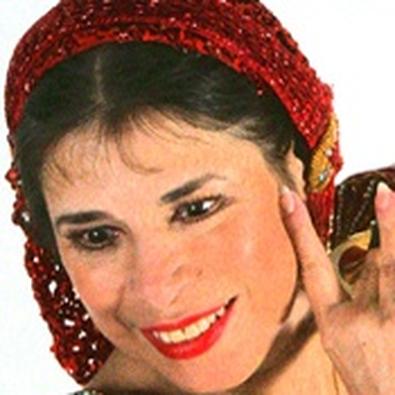
As you are undoubtedly aware, a great deal of America's attention of late has been focused on the Middle East, what with the war in Iraq, the ever-simmering Arab-Israeli conflict, and the outrageous behavior of the president of Iran. But while efforts to learn more about the Middle East are abounding throughout the United States, what about the region's dance traditions? In our quest to more deeply understand the cultures of Middle Easterners, have we paid enough attention to what we might learn from studying their dances? I recently enjoyed an insightful conversation with Morocco, a friendly, sharp-witted woman whom many consider our nation's leading expert on Middle Eastern dance.
It's Not Belly Dancing
"First of all, I'm glad you didn't use the common misnomer," Morocco said when I began our interview by asking her to define Middle Eastern dance. Morocco is adamantly against the use of the term belly dancing, which she explains is "a term that was deliberately and cynically coined in 1893 by Saul Bloom to titillate the mid-Victorians, who were quite racist and xenophobic. It was at the World's Fair. Bloom, who eventually became a congressman from New York, had hired dancers from North Africa who weren't attracting much attention, so he advertised what they were doing as belly dancing in order to sell more tickets." Continuing to use the term to refer to the dances of the Middle East can be seen as an endorsement of their blatant commercialization when they were introduced to Americans. "It is really a folk and social dance form practiced in a large part of the world. It's done throughout the Near and Middle East, North Africa, in all the Turkic-speaking areas, and in pretty much everywhere the Ottoman Empire managed to crop," Morocco explains. So what term should we use when talking about dances of the Mideast? "Well, in Arabic it's called raks sharki, and in Turkish it's called oryantal tansi. They both translate as 'Oriental dance.' These are the cultures to which the dance belongs, so as far as I'm concerned they should know what to call it."
In its traditional context, Middle Eastern dance is done in homes by everyone -- men, women, and children. While some may find it difficult to imagine males doing what we've come to know as belly dancing, "that's actually a very racist, colonialist misperception," says Morocco. "It's the kind of common misperception that led Edward Said to come up with his designation of 'Orientalism.' There's a good book, Veils and Daggers by Linda Steet, that explains just how our racist notions of Orientalist art developed, starting back in the late 1800s with the promotion of that woman-as-sexy-schmexy-in-harem-sharem thing. That's not at all what Oriental dance is about."
So when we see belly dancers performing today, are they doing authentic Middle Eastern dance? "It depends on who's doing it," Morocco says. "There's a lot of hoochie-kooch going on out there which is not authentic. But the dance form is based on torso muscle isolations and hip articulations. The legs and feet are not the major focus, which is one of the biggest differences between this and the Western dance disciplines. The use of the space is very important in most Western dance forms, which usually involve the legs and arms dragging the torso around as large a space as possible, making figures and motions around the floor. Most Western dance is very torso-denying. In Oriental dance, however, the person works in his or her own individual space. It's as if the legs are the pedestal, the torso is the sculpture, and the arms are the frame. Then what you're doing within that movement vocabulary is 'being' the music. This is why I'm still involved in this art form after 47 years. It's very complex and extremely challenging -- to do it well, that is. To do it badly or to know enough to have fun at a party, that's no problem. But it's not just miscellaneous wiggle-schmiggle. It's that same mindset that led us to misinterpret hula dance."
Morocco claims that the popular stereotyped style of belly dancing is a result of "an assimilation of an outdated Victorian mindset, which has allowed us to misview the art of Oriental dance." She finds it interesting that Oriental dancers today are looked at in the same way that 19th-century ballet girls were -- as sex objects just a step away from prostitutes.
An Ancient Form Under Assault
Because dance anthropology is such a new field of study, there is not a lot of historical documentation of the origins and development of Oriental dance. "The dances of the common people were never really noted or recorded," Morocco says. "It was only the royalty or the conquerors whose activities were carefully documented. We can give you a very complete, detailed timeline of the history of ballet as it developed in the courts of Europe, but even though Oriental dance is much, much older than classical ballet, there's very little written about its history. We do know, however, of contracts for cymbal dancers extant from as long ago as the time of the Ptolemaic dynasty in Egypt. And there is an anecdotal account from that period of a young boy who had died after falling off a wall which he had climbed up onto after hearing finger cymbals and wanting to see the dancer. We also know of a Roman general in Iberia lamenting about the dancing girls there who 'sank with quivering, lascivious thighs to the ground' -- unlike anything he had seen in Rome. Oriental dance has been embedded in the culture of much of the world for thousands of years. It's as old as African dance."
Morocco first encountered Oriental dance by accident, when she auditioned for a job as a flamenco dancer and discovered that they really wanted a belly dancer. But as soon as she started doing it, she says, "I fell in love with the music. It spoke to me as deeply as flamenco had, even deeper. Of course, after a bit of research, I learned that flamenco had come from the Moors, so no wonder. The very word flamenco is derived from the Arabic."
When Morocco began her studies of Middle Eastern dance in the early 1960s, she had to obtain all her information from native sources. Today, however, one can find classes in Middle Eastern dance throughout the United States. Ironically, it is in Middle Eastern countries that one would probably have the most difficult time finding places to study the form. "We are the ones who invented courses in this," Morocco explains. "In the cultures from which it comes, they don't learn it in a school. They assimilate it in the home. It's part of the family and communal dynamic. Largely because of our Puritan roots, we don't integrate dance as firmly into our growing up -- unless maybe you're from the black or Latin cultures. But in the Middle East you'd be dancing on any celebratory occasion. Even in the very conservative Muslim societies, it's obligatory at a wedding for the mother of the bride to dance to show her joy. But the problem in the Mideast today is the fundamentalists. In Iran, for example, not too long ago one of the country's leading dancers got permission from the Ministry of Culture to present a performance with a group of all women. It was to be a performance of what they're now calling 'movement to rhythm' -- they aren't allowed to use the word dance. She had official permission to do this performance -- by women and for women only. But the ayatollahs didn't like it, so they threw her and her entire dance company in prison. In order to get released, the dancers had to sign a form stating that they would never dance again."
For further information about the many different styles of Middle Eastern dance, some of which are developing in the United States, as well as schedules of the classes, performances, and workshops Morocco offers, visit www.casbahdance.org.
Lisa Jo Sagolla can be reached at ljsagolla@juno.com.