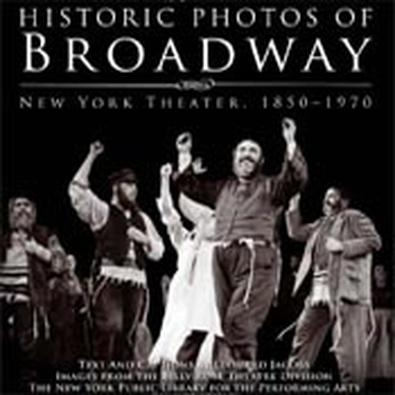
With approximately 3 million photographs, the Billy Rose Theatre Collection of the New York Public Library for the Performing Arts is an overwhelming resource for theatrical history. In Historic Photos of Broadway: New York Theater, 1850-1970, Leonard Jacobs, Back Stage's national theatre editor and co-chief theatre critic, makes this mass of memories a bit more manageable and meaningful, selecting 240 works that chronicle the story of Broadway over more than a century's worth of theatre.
The volume covers a wide swath of theatrical trivia, much of it lesser-known. The first photos in the book depict actors in The Black Crook, often heralded as America's first musical comedy; Jacobs' captions reveal amusing anecdotes about the show's origins, which involve a homeless French ballet troupe, bribery, and a creative squabble between backer and playwright. From posed portraits to city scenes to a few candid backstage shots — check out Robert Goulet diligently rehearsing for Camelot — the range of images is wide and captures the imagination. Watching style, sets, and New York itself transform over the course of the book is a wonder to behold.
Jacobs is adept at weaving this hodgepodge of photos into a coherent story line through his glib captions. The hilarious behind-the-scenes moments he relates create a sense of intimacy with history that could not be conveyed through the photographs alone, because the carefully posed nature of the period images, while pleasing to the eye, creates a sense of detachment for the modern viewer.
His words, however, often betray nostalgia for the bygone time he chronicles. Jacobs bemoans the creation of the "brainless, bland, blah-looking skyscraper condos" that characterize his present city, and his view of contemporary Broadway seems no less bleak. This somewhat downcast editorializing persists throughout the volume, idealizing the past while lamenting the present. While mementos of the past are enlightening and entertaining, they perhaps serve us best as inspiration for the future, something Jacobs never addresses.