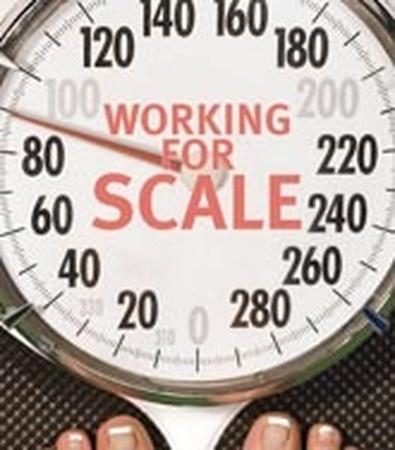
The adage "One can never be too rich or too thin" can certainly be applied to the entertainment industry, especially if you believe that the two factors are inextricably linked. The skinnier or more ripped you are, the thinking goes, the better your chances of success. Just look at size-0 starlet A or buffed-up hottie B.
But with those goals in mind, suppose an actor's working and nonprofessional life revolves entirely and obsessively around food choices: when to eat, what to eat, and how big a portion size. Imagine an actor wondering, When and how often should I skip a meal so that I'll fill out that dress perfectly, nail that audition, or not embarrass myself when I have to take my shirt off?
Or, taking it further, when does an actor's disordered eating turn into a full-blown eating disorder? How do actors who are doing their work and receiving constant reinforcement that they look great in the process know when it's time to seek help?
You're (Not) So Vain
Eating disorders resulting in extreme weight gain or loss are often symptoms of anxiety and depression. And if a person already has a genetic tendency toward overeating or starvation, an image-driven profession such as acting — which may require weight gain or loss for a given part — could easily exacerbate the problem. Dancers and models, who are often not allowed to have fluctuating body weights, are even more at risk. "People say, 'This isn't maladaptive behavior; this is adaptive behavior. I'm doing what I need to do here,'" says Dale Daley, a social worker who conducts mental health assessments for the nonprofit Actors Fund. "When are you too skinny? Probably when you pass out in public."
And when a problem develops, say people who have battled an eating disorder, it's probably not simply about getting and keeping a role or a figure. "A lot of people think [an eating disorder is] a symptom that people who are vain get and develop," says actor Scarlett Pomers, 19. "For most people, it eventually doesn't have to do with how they look but about how they're dealing with hard things in their lives or emotions they can't handle. It's very similar to somebody who would turn to drugs or alcohol to escape a problem."
When she was 16, Pomers faced the "perfect storm" of a rocky relationship; uncertainty over the fate of her TV show, Reba; frustration over the progress of her music career; and a work ethic and personality that, she acknowledges, tend toward perfectionism. A few extra pounds she had gained in the holiday season didn't help matters.
"Weight was the thing I hyperfocused on," says Pomers, who played Reba McEntire's daughter Kyra on the show. "It went from me losing a few pounds to slowly over time losing more and more weight and becoming more and more focused on it."
She took to hiding or throwing away food and figuring out ways to avoid meetings where she would be expected to eat. Suspecting that matters were getting out of hand, Pomers began conducting research on eating disorders and even stumbled upon pro-anorexia websites that gave readers advice on how to successfully starve themselves and hide their behavior from family and friends.
Rail Against the Machine
"It was one of those things where everything came together at once and at the wrong time," says Pomers, who eventually underwent rehabilitation at an eating-disorders clinic and became a celebrity ambassador for the National Eating Disorders Association. "Based on the statistics I've seen, it seems like it can happen to anybody. It would have happened to me anyway based on my personality type."
NEDA, formed in 2001, estimates that upward of 10 million Americans may suffer from an eating disorder such as anorexia (self-starvation and extreme weight loss), bulimia (a cycle of binge eating and purging), or binge eating (compulsive overeating). There is no way of determining with any accuracy how prevalent such disorders are in the acting community; an actor who publicly seeks treatment — as with any addiction — risks career repercussions such as loss of work or insurance difficulties.
Although there are instances of entertainers admitting to having battled the disease — such as Growing Pains' Tracey Gold, The Sopranos' Jamie-Lynn Sigler, and singer Wynonna Judd — and even the occasional death, most notably singer Karen Carpenter, it's far more common to hear of actors entering rehab for drug or alcohol abuse.
Still, acknowledged or otherwise, a celebrity's weight makes for constant speculation in the tabloids or among red-carpet watchers: Look how skeletal she looks! What's her diet? Do you think she might have a problem? Entertainment websites are abuzz with photographs of personalities and conjecture about who's too thin. Keira Knightley successfully sued a British tabloid that contended she had lied when she denied being anorexic. Knightley gave the money to charity.
Some celebrities have stepped forward and brought attention to a disease that, because it revolves around thinness — and after all, the camera adds 10 pounds, right? — is frequently ignored. Paula Abdul admitted to struggling with bulimia in the early 1990s, at the height of her singing career. Pomers, through her Arch-Angels Fund, regularly does fundraising and public awareness events for NEDA. Sigler is also a NEDA spokeswoman and established the Jamie-Lynn Sigler Foundation to educate people about eating disorders.
Without the rare admission from a star or publicist, of course, there's no way of knowing if a particular star has had a clinical issue. The shrewd star might even find a way to have publicity-minded fun with the speculation. Anyone remember ultra-thin Calista Flockhart and Lara Flynn Boyle sharing an elevator ride on an episode of The Practice? Boyle suggests Flockhart eat a cookie, to which Flockhart proposes they share one.
"There's a belief in the acting community that bodies are modifiable," says Cynthia Bulik, director of the University of North Carolina at Chapel Hill's Eating Disorders Program and a spokeswoman for the Academy for Eating Disorders. "We've seen so many situations where an actor has had to gain or lose weight for a role. Actors' bodies respond to extreme deprivation just like everyone else's even if they do have a trainer monitoring them 24 hours a day."
"If you're bulimic, unless someone is following you around, people don't know until it's chronic to the point that you're losing your hair and your teeth," says Lynn Grefe, chief executive officer of NEDA. "Anorexics are always avoiding food. They get so chronically ill that they almost need a feeding tube and people are praising them for how they look."
In her capacity as a top administrator for an eating-disorders nonprofit, Grefe is often interviewed when a celebrity's weight — or lack thereof — makes news. Grefe can speak to the dangers and prevalence of the disorder regardless of its application to a specific person. "I'm not going to diagnose Lindsay Lohan from afar," Grefe notes. "I'm not a doctor."
In her four to five years of going on camera, Grefe estimates that 75 percent of the female makeup artists who have fixed her hair or touched up her face, upon learning of Grefe's position, have confessed to dealing with an eating disorder at some point in their lives. "I was shocked," she says. "It seems larger in that population than in any one field. Maybe some of them wanted to be actresses and they ended up behind the scenes in the industry."
Model Actress, Whatever
Women are at far greater risk for eating disorders than men, especially in acting, where girls are told from adolescence on that their best chance of steady work depends on their being attractive and thin. Every so often a Tracy Turnblad (Hairspray) or Betty Suarez (Ugly Betty) type may grab the spotlight. More often than not, a few extra pounds relegate an actor to the realm of best friend or sidekick — which is more than a little ironic when you consider that the classic bombshell Marilyn Monroe was most likely a size 12.
"I tell all my actresses in their teens and early 20s to watch Meryl Streep, watch Jessica Lange," says Elaine Hall, a veteran acting coach who works frequently with children. "They're so brilliant, and they're not waifs. It's really important for [my students] to get a better image of what a woman's body can look like, and it doesn't have to be anorexic to be beautiful."
"There is huge anxiety in our culture about eating," adds Donna Fish, a New York-based therapist and former dancer who works with people who have food issues. "Look at the magazines: There are at least one or two headlines in every issue about diets. What does that say about the world? So much mental energy is used thinking about food that could be freed up in other ways. People could be freed up and become much less anxious about the way they're eating."
When she was a teenager in Europe, Yvonne Jung — one of Fish's former clients — was a professional ballerina. Reaching 5-foot-10, she eventually outgrew the profession and turned instead to acting, where she racked up roles in a handful of New York plays and earned a regular role on the final season of NBC's Third Watch.
Told by managers that she was not attractive enough to be a leading lady and not homely enough for character roles, Jung began turning her attention to her food choices when she was barely into her teens. "You want to be able to take control," she says. "You can't change your face, but you can change your body, and the people who succeed seem to be really anorexic. Look at the actresses who are stars."
Jung, who characterizes herself as a former binge eater who would then go on extreme diets, began to see her sense of self revolve around her food intake. "From the time I woke up to when I was asleep, whether I felt good or bad depended on how much I ate," Jung says. "It was a great day if I ate a salad and some fruit, and then I'd have a binging day where I'd eat 12 doughnuts and carrot cake and candy bars and feel terrible about myself."
In their home, Jung and her husband have a slew of Godiva chocolates, several of which are long past their sell-by date. Part of the disease? No, part of the treatment, says Jung. Fish had told Jung to listen to her body's needs and give herself permission to eat favorite foods. Godiva chocolates fell into that category, although they have long since lost their appeal.
Satisfaction and Progress
"Nobody can tell you when to diet or how much food to eat," Jung says. "If you're chronically dieting, you start to lose awareness of when you're hungry. I didn't understand those gray zones. Donna starts having you be aware of when you're satisfied and having you know that you can always come back and have more and not panic and need to hoard it."
Despite never having battled an eating disorder, American operatic tenor Joseph Kaiser has made awareness a part of his professional life. From as early as seventh grade, he has had friends who have faced a problem that, Kaiser believes, is neither taken seriously enough nor gets the recognition it deserves. "A lot of people look at it and say, 'There are so many people in the world who don't have enough food, and here are people with plenty of food and have issues with it,' " says Kaiser. "It's the problem that gets under my skin. It really bothered me, and I always said that if I was going to have the opportunity to raise awareness, this would be it."
Kaiser once dropped 60 pounds to play the soldier Tamino in the cinematic version of The Magic Flute, directed by Kenneth Branagh. The first 25 pounds came off easily enough, and Kaiser recalls being in a health-food store and looking at a bottle of pills that promised to help make a workout regime more efficient.
The performer, whose seventh-grade friend confessed to taking diet pills when she was 11, considered the medication — which was not illegal — and passed. "I avoided taking something I was going to regret," he says. "I could sort of see how I had started to make progress, and I felt like I had come to a plateau, and I had at least sought something that would help me retain an edge. It sort of helped me retain a philosophy that if you can be healthy in a way that's responsible to yourself, you don't put yourself at risk of going down more-difficult paths."
Instead, in a natural way, Kaiser went "positively nuts," eating the same healthy meal on a regular basis and increasing his workout. He reached his goal weight of 200 pounds. "Now I'm back to 220, and I feel good," says the 6-foot-4 Kaiser. "I remember so vividly the moment with the weight-loss pills. It's interesting to be standing on that precipice, small as it might seem. Could I have been more ripped or something? Maybe, but I didn't go that route."
Candy's Not So Dandy
As an on-set acting coach for Disney, Universal Studios, and Nickelodeon, Hall sometimes witnessed the seeds of future problems being sown early on. Parents would bribe their young charges with candy to keep up the kids' enthusiasm for the work or offer a sugary soda to perk them up.
"I discourage it intensely, and I know the parents are not aware of repercussions," says Hall, referring to a pattern of using food as a reward, which can foster an eating disorder in adolescence. "I feel for the parents who want the child to be able to produce and function. But if it's not fun for the kid, they should stop."
By the time actors reach their teens, there is no escaping the industry's perception of body image. Hall coached an actor who had thick thighs. "Supertalented girl. Beautiful, beautiful, and she thought she was fat all the time," says Hall. "No, it's just genetics. She could weigh nothing, and her genetics are going to make her have chunkier thighs." In June 2007 the New York State Assembly established the Child Performers Advisory Board to oversee the development of guidelines and recommendations. The board is meant to ensure that child actors suffering from or at risk for eating disorders are identified and have access to treatment. And companies such as Target and Old Navy have created marketing campaigns that feature children of all shapes, colors, and sizes.
Hall doesn't fault the entertainment industry for negative messages. "I feel it's all about what's inside the home that builds what's inside the child," says Hall. "If the right messages are given, the child is not going to see all that external fluff. The right message is how wonderfully extraordinary they are just for who they are." Cultural perceptions of beauty need to change. Unfortunately, the industry remains a pressurizing force in keeping actors thin. Perhaps the impetus for change will come from our children.
For further information, visit www.achievesolutions.net/SAG, www.nationaleatingdisorders.org, or www.kidshealth.org.