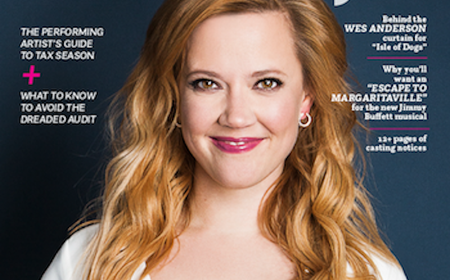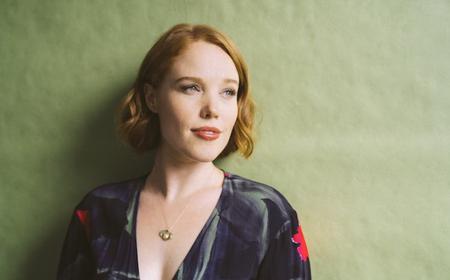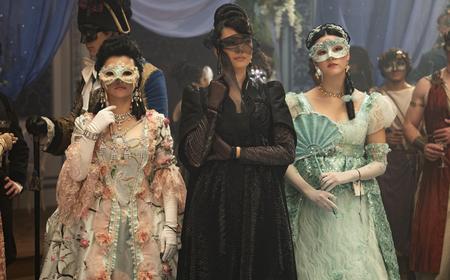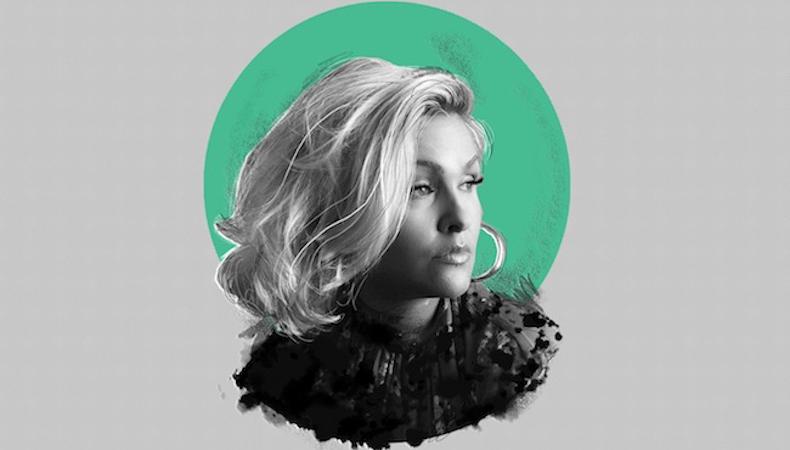
As a trained theater actor, Jenn Lyon had to learn how to make big stage moments intimate for the screen. Her first recurring television role came in 2012, when she began playing Lindsey Salazar, a thieving bartender on FX’s “Justified.” Her first series regular role came in 2014 on FX opposite George Lopez on “Saint George,” a job that gave her the confidence to make it through a long day on set. She took that experience with her to TNT’s “Claws,” the drama where she plays spirited, loyal manicurist Jennifer Husser. Season 2 returns June 10.
How does the long shooting schedule for TV impact your approach to a character?
I’m a theater girl. Coming from the theater, it’s always a marathon. Eight shows a week, you run for months, you’re in rehearsal, you’re in previews, you’re in tech. If you come from a background in theater, you understand the long game of it. With a play, you have it all under your belt, and unless it’s a new work that’s constantly changing, you know how it’s going to end. You can chart your arc accordingly. With TV, I don’t know what’s happening in the next episode. We’ll beg the writers, “Will you please just give us a hint because I don’t want to pitch this emotionally here if my children are going to be kidnapped in the next episode.”
Considering your theater background, what advice would you give actors making the jump from stage to screen?
Whenever anybody’s like, “It’s the same: If you can act on the stage, you can act on the screen and vice versa,” I really disagree. It’s a totally different medium. I was straight theater before I did anything on camera. I don’t play to the balcony, I play to the check cashing place across the street, [so] you need to put yourself on tape and see what you’re doing onscreen. We’re used to playing to a big house, and all of a sudden you see yourself on tape, and you’re like, “Oh, my God, if this was on TV, everybody would think I was yelling,” which happened to me. The first thing I ever did on camera was for “All My Children.” We were rehearsing, and the director pulled me aside and was like, “Can you tell that you’re talking really loudly?” And I was like, “That’s interesting, because I was going to ask you why everyone is whispering.” And he was like, “They’re not, they’re talking at a normal volume.” I was projecting so hard because that’s what I was used to doing. You play the room and you play even smaller than the room. You watch something on TV and they’re talking in a club. You know if you were talking in a club you’d be yelling, leaning. There’s a level of intimacy you have to bring that into your work.
How do you bring that intimacy to “Claws,” a show that’s larger than life in some ways? Is that something the role has added to your acting skills?
I would say theater actors are used to acting with their whole bodies. With “Claws,” these are archetypal characters but set within the backwoods of a Florida swamp culture. It really gives you permission to play it big when the scene demands it. When you’re in a strip club and it’s a fight scene, you can pull it all out. But if you’re in the backyard with your husband talking about sobriety, you might want to rein it in. The language and the circumstances will always reveal to you how you should behave.
How do you prepare for an audition for this sort of character?
This particular character, I’m very familiar with. I grew up with her; I’m close to her. I’m not as rough and ready as she is, but I know what it’s like to not have any money and scrape by and do what you have to do. The way I actually prepared for it [was being] in New York, working at a pizza restaurant. I put on a tank top and a little bit too much makeup and worked on the script a lot the night before. Then I went on the train and I walked into Warner Bros., they worked with me, and [then] I went to the pizza shop and worked my shift. A lot of times, that’s the prep. You have the language, you’ve got to make bold choices, and then you’ve got to work your day job.
Other than the pizza restaurant, what was your most memorable survival job?
Being a waitress was always tough for me because everything gets taken out on you: the kitchen gets mad at you, the customers get mad at you. I take on the suffering of whatever’s happening around me, so I was like, “Let’s work in an ice-cream shop.” They let me put my headshot on the bathroom door because I was always running in the bathroom to get ready for an audition.
Have you used Backstage in the past?
When I found out I got to do an interview with you guys, I felt like I’d finally arrived. Backstage was my bible. When I moved to New York, I moved from a very small town in North Carolina, and I would pore through Backstage for castings [and] advice from other actors. I bought it constantly and kept it with me.
Did your work on “Justified” help prepare you for a series regular role?
That was a brutal training ground—not brutal in the fact that it was terribly difficult, but I had never done anything with multiple cameras swinging around you. You never want to be like, “Hey, I’ve never done this. Please be patient with me.” I was just like, “Alright, I’m going to do all this shit that I think I’m supposed to be doing and I’m going to trust myself.” Learning to work the camera in that way, watching the other actors ask about what the frame is. Learning to pace yourself. If you have to do a big crying scene, trying not to blow it. You might do eight or nine wide master shots, and by the time you do your coverage, which may be hours later, it’s not as accessible. Also, doing “Saint George” with George Lopez was my first series regular and that was a multicam sitcom, so it was different, but I was on camera all the time and expected to have good ideas and pitch alternate lines. I’m great at the work; I’m not great at the networking and press. “Saint George” really helped me with that. “Justified” really helped me learn about being in different locations, cameras, it was my first sex scenes. All of the things you have to navigate all happened at once.
What other skills have you acquired along the way?
Maintaining your energy level over long days of shooting is a thing you have to learn. You have to learn how to conserve and allocate your energy in the right ways. Any kind of sex scenes are a whole other beast. You have to learn to cover yourself in appropriate ways, how to say yes and no to what you’re comfortable with. It’s hard in a room full of people to say no or to negotiate what is good for you. That’s been a huge lesson for me in being a strong woman: How do I say no and not appear difficult? Or how do I say no, appear difficult, and be fine with it because it’s my body?
How do you do that?
It’s a balancing act. The current #MeToo movement and Time’s Up—I’m involved in the Time’s Up organization, and being a part of that has given us this level of consensus, you feel like you’re backed by people around you. What has happened is very vocal and visible, so now when we do say no, we feel like SAG is behind us, we feel other women are behind us. Before, you felt alone. [You thought,] If I say no, this person I’m doing it with is going to be mad, the director is going to be mad, I’m taking the crew’s time. It’s hard. But now it’s getting easier and we have brave women and men to thank for it. It makes everyone understand each other a little more. She’s saying no because she’s being difficult, but she believes in her heart she has to protect herself and the people around her. I think that everybody is knowing that now. It feels really good.
Check out Backstage’s TV audition listings!