Maris Curran’s “Five Nights in Maine” feeds on the uncomfortable. In a culture that usually shies away from death, Curran’s feature film directorial debut is instead propelled by its wake.
“We treat grief as an isolating, individual, and alone experience, and I’m interested in fostering conversations about that process,” says the filmmaker. “What happens when you’re feeling the most pain? And then what happens if you see someone else’s pain? Empathy can be a transformative experience.”
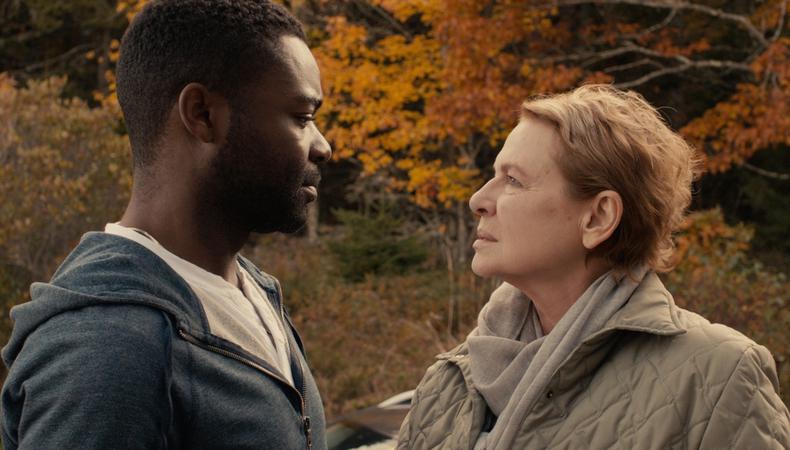
Starring David Oyelowo as Sherwin, a widower, and Dianne Wiest as Lucinda, his cantankerous mother-in-law, Curran’s film follows them through a landscape of grief. Days after her daughter and his wife Fiona (Hani Furstenberg) dies unexpectedly, the estranged Lucinda invites Sherwin to her home in rural Maine. As these two polar opposites test each other’s waters, they explore the brutal honesty of shared despair and forge a cautious relationship in the newly empty space between them.
Curran, a Georgia-born artist, wrote the script while dealing with a sort of death of her own: Curran’s marriage had fallen apart and she was left to pick up the pieces alone on the other side of divorce. While the film isn’t autobiographical, the questions her protagonist asks himself in the aftermath of his wife’s death resemble hers in that moment: “What happens when the floor falls out from under you? When your ideas about your future and your vision of yourself and your future family disappear in an instant?”
The personal writing process gave Curran a clear idea of the type of actors needed to play this emotionally broken man and stoic New England matriarch. It was the “edge” in Wiest’s comedic work that caused the director to offer the two-time Oscar winner the role. When she took it, Curran remembers Wiest asking, “How did you know I had Lucinda in me?”
“I want to see Dianne as Lucinda,” Curran says. “I want to see this prickly, difficult, but also soulful woman. As women we don’t get to see complicated, difficult characters onscreen very often, but there are women like that in all of our lives, and I think it’s important that we do [see them].”
For Oyelowo, the technical skills required to convey Sherwin’s “emotional weight” without veering into melodrama were paramount. Curran and her cinematographer Sofian El Fani (“Blue Is the Warmest Color”) chose to use tight shots and long takes to bring an air of intimacy to the film. Oyelowo read the script after an introduction to Curran from mutual friend and “Selma” director Ava DuVernay, and was on board as the film’s lead and producer within days. Curran fleshed out the rest of her cast with supporting players Rosie Perez as the comedic relief and Lucinda’s caretaker, Ann, and Teyonah Parris (“Chi-Raq”) as Sherwin’s sister, Penelope.
READ: “Why the First Read of a Script Is Crucial”
From there, the filmmaker spent months raising funds—by and large the most difficult hurdle in the process—for a 19-day shoot that tested the whole cast and crew. While filming one of the most climactic scenes, a nor’easter hit the isolated location, knocking down trees and cutting the power and plumbing. “And we’re in the middle of nowhere about to shoot the most important scene in the film!” Curran recalls, laughing. “But we had this amazing grip and electric team. They rigged the house with a [generator], and I went up and rehearsed with the actors by candlelight—that was my job. We rehearsed for half an hour and by the time we were ready, they were ready to shoot.”
Building the relationship with her actors beforehand helped smooth those inevitable bumps on an indie film shoot.
“I think it’s about mutual openness,” Curran says. “Learning from each other and approaching each role and project as something new—that’s how you’re able to make exciting and engaging work that ultimately moves an audience.”
Inspired by this post? Check out our film audition listings!