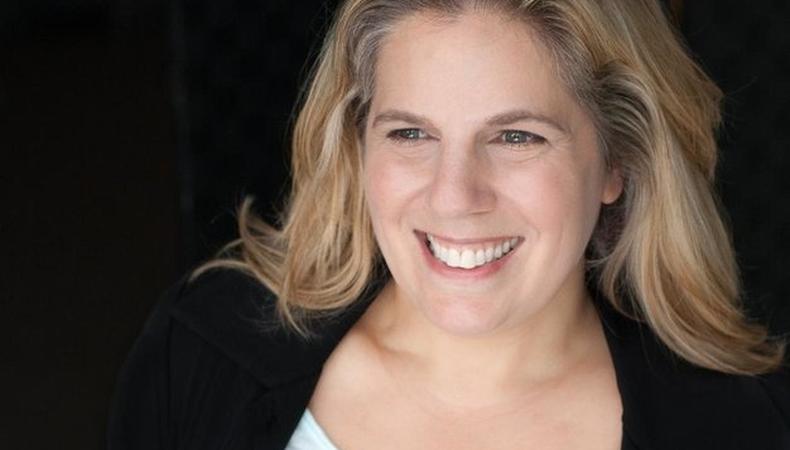
As a kid growing up in New York City, Lisina Stoneburner was always going to the theater, and began studying acting at the age of 12. From there she attended the School of Performing Arts and went on to study at Boston University. After living and working in the industry in Los Angeles, Lisina eventually settled in Atlanta, and in 1996 opened The Company Acting Studio. Through little advertising and largely word of mouth, The Company Acting Studio has become a successful studio within the community and Lisina a sought-after acting coach. Here, she talks about her teaching style and the different techniques that go into preparing for roles in theater, film, and TV.
How much of your program is what you learned and how much is what you came up with on your own?
It's all what I learned, and then enhanced through my experience both on-set and in the classroom. I am continually expanding the way that I approach actors all the time. But I am always teaching what I’ve learned. Always.
Do you teach a specific method?
I teach Stanislavski’s system the way Stella Adler taught it in America, with the influence of other teachers and other experiences that I’ve had. I’m not so strict in that skill set that there isn’t room for other influences.
Walk us through a class.
You’re on time. If you’re not on time we lock the doors and you can’t come in. The beginning is a warm up, and then it turns into energizing the body and getting it ready to work. There is a physical component, a body and voice technique component, and an exercise component to every class. There is scene and-or monologue work in every class. We do more work with scripts in hand than with talking. You will learn more by your doing than anything else.
How do you choose students for your master class?
Mainly if I feel we can have a great working relationship. I also need them to have some of the techniques and skills they’re already working with. I look for people with strong script comprehension so I’m not retelling stories for them. I look for people who are making strong emotional choices and that when they play for me they are already invested in the emotional moment.
How does an actor prepare for a role in theater as opposed to film or TV?
I teach actors how to work within the different rehearsal processes of all three. Actors discover their characters through rehearsal. In theater they have three weeks of rehearsal to explore and discover the moments. In film they might have a good two-week process if they’re the lead. In TV they have none. So it’s very important for them to find their process of rehearsal so they can discover the moments of the story and the character.
Each type of script is written differently to guide the actor on how to find that story and know the strongest thing to play. A teacher is responsible for helping the actor fulfill the story with their best connection to it.
You do a lot of on-set work. What does that involve?
Often a movie or a television show will hire an acting coach to help the actors do their job better. Be stronger at their job. A lot of times what I’m hired to do is prep. Or I’m hired to help the actor find the scene and the character. When I'm hired to be physically on set, the way I describe it is I’m an on-set medic. I’m there in the event of an emergency.
Do a lot of people come in here with that expectation of being picked up by an agent and becoming a working actor?
Absolutely. But an agent doesn’t always pick an actor based on their skill and talent—sometimes they’re filling a spot for a particular age or physical type. That’s one of the reasons we really try to—in the nicest way possible—express this to the people coming into the school. We will make you as good as you’re going to get. And we promise you our skills are strong and effective and if you apply them you will get stronger and better. But I cannot promise you this industry will like you. I can’t promise you you’re going to get picked up by an agent.
However, statistically we do better. Statistically our students work. Statistically our students work more than other students in the city. So the bottom line is we’re a magnet for really cool people, so cool people like to come here. And the truth is we are giving them a very good program to work from. Do they all use it? No. Do people leave here and go, “Pfffft”? Sure.
How does the growing scene in Atlanta affect your business?
We get more calls. We also get more beginners. I get more calls for on-set stuff. I turn down more on-set work than you could imagine.
I really want people to take classes here because they feel like it’s the best for them, not because of the shows I work on. At the end of the day they’re going to come here because they heard so-and-so took a class with us and now they’re working. That’s typically why students are walking in the door.
Is there anything you want the readers to know about you or your business?
Yes. I don’t believe in shortcuts. I believe in actors working to get where they need to be. To not shortcut any end of learning a skill set. To treat this like any other profession—you need real skills to sustain you in a career. To please don’t do this unless you can handle it. If you want this, do not expect it to be right outside your house.
Inspired by this post? Check out our Atlanta audition listings!