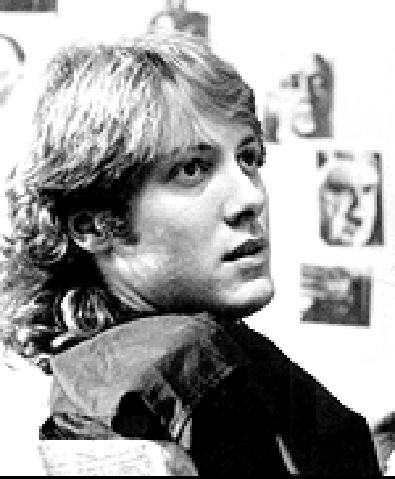
James Spader: Way Past Cool
By Lori Talley
For a time nobody could play the perennial evil yuppie on-screen better than James Spader. Though memorable as the dysfunctional filmmaker Graham in 1989's sex, lies, and videotape, which won him the Best Actor Award at the Cannes Film Festival, and as the sleazy, drifting card sharp in 1993's The Music of Chance, with Mandy Patinkin, Spader is known mainly for his cool, menacing rich-boy types. During the 1980s--the reign of the Brat Pack--Spader's unctuous charm took to the screen, making him a staple in teen comedies and dramas. We first witnesssed his surefire talent with his performance as the effete, chain-smoking snob in Pretty in Pink. This was soon followed by his turn as the impersonal drug dealer in Less Than Zero, a slice of druggie noir centered on the world of wealth, sex, glamour, and helpless determination. Spader caught the eye of film critics and was well received for his Less Than Zero turn--the creepy performance touted as the film's best.
In the following years, Spader made lots more impressions, some more favorable than others. On the plus side were such films as Bad Influence, in which he was a gullible young businessman opposite a manipulative maniac played by Rob Lowe, and White Palace, starring as an inexperienced rich kid who falls for a down-to-earth waitress--Susan Sarandon--which earned the actor wider recognition. Nonetheless, Spader was still basically playing yuppies--albeit more sympathetic ones.
Of late, Spader's characters have not been limited to unprincipled yuppies and WASPs from hell--sometimes they're quite the opposite--but in all of them we find Spader's signature touch: enigmatic calmness.
Some of his fellow Brat Packers weren't able to carry the weight of expectation that bears down heavily on young celebrities trying to grow up on-screen. Spader, however, ultimately proved to be equally adept at more mature leading-man roles. Over the course of his 32 films, which include Supernova, Wolf, Stargate, 2 Days in the Valley, The Watcher, and Wall Street, Spader has worked with many of Hollywood's most respected directors, including Steven Soderbergh and Oliver Stone. His performance as the kinky thrill seeker in Crash, David Cronenberg's controversial feature about the joys of automobile-erotic stimulation, only added a new dimension to the actor's cool persona.
The Boston-born Spader first discovered acting while attending high school. Ironically, this son of two teachers dropped out of prep school in the 11th grade to pursue an acting career in New York, where he studied at the Michael Chekhov Studio and performed with the Actor's Studio.
Hollywood may have expected Spader's star to fade like some of his fellow teen stars, but he continues to seek out unexpected roles in interesting films. (Currently, he is slated for appearances in Speaking of Sex, in which he'll appear opposite Bill Murray, Catherine O'Hara, and Lara Flynn Boyle, and Secretary with Lesley Ann Warren.) Spader's tendency to choose roles with an idiosyncratic esprit has steadily taken his career from the '80s pop culture icon to simply an actor. And a fascinating one at that.
Michelle Yeoh: Tiger Lady
By Scott Proudfit
If you're a woman in a Jackie Chan movie, you might find yourself tied up in the villain's escaping helicopter, shouting helplessly down to your high-kicking hero, "Jackie! Save me!" Unless, of course, you're Michelle Yeoh, in which case you're being thrown through Chan's windshield, mid-fight, from the roof of a speeding van.
The above scene is from Supercop, Yeoh's "comeback" project after her three-year hiatus from the high-speed world of Hong Kong films. And it's indicative of the way Yeoh has single-handedly transformed the image of the female action star from romantic interest to hero, from sidekick to ass-kicker. The U.S. may have the occasional Linda Hamilton or Sigourney Weaver oddity in which women are allowed to take on the baddies, but Yeoh's string of martial-arts fight-fests is unique. It's not her beauty that has made Yeoh the highest-paid female film star in Asia?it's that she can fall through a plate glass window and come up kicking. (And she does all her own stunts.)
Sure, the elegant Yeoh has the standard sexy covergirl spreads in movie mags when her latest is released. But she also has profiles in such journals as the Orthopedic Technology Review. (In that particular publication, the article described Yeoh's impressively quick recovery after tearing the ACL in her left knee during the filming of Crouching Tiger, Hidden Dragon.) Gwyneth Paltrow can swap makeup tips in Mademoiselle; Yeoh's interviews inevitably lead to discussions of stunt falls and fight sequences.
How did this former ballerina and Miss Malaysia beauty-contest winner become the female Bruce Lee? Apparently, through sheer will alone. In only her second movie, Yes, Madam in 1985, Yeoh persuaded her directors to let her fight back against the thugs who were taking her hostage. They considered it a risk. "At that premiere, we were shitting bricks," said Yeoh in a 1997 interview. "Because we weren't quite sure how the audience would take it. But after that first fight sequence, they cheered. We realized we started a trend of how women should be looked at in Asian cinema."
Of course, if you're not the girl that the guy gets after winning the battle, what's your role in an action film? That's a question that Yeoh has forced directors to address in such films as Butterfly and Sword, Heroic Trio, The Tai-Chi Master, Tomorrow Never Dies, and the recent Crouching Tiger. It's created a sort of tragic aura around Yeoh's persona. She often loses her man to the soft, pretty ingenue or to cruel death. The unkind fate of an independent woman echoes Yeoh's personal life as described by the Hong Kong press. Her marriage to producer Dickson Poon ended childlessly when Yeoh insisted on returning to film after three years away from the screen. This resonance also made Yeoh's Crouching Tiger role all the more poignant, and added an extra charge to what was undoubtedly the best fight sequence in the film, in which Yeoh defends her man's honor in no-holds-barred battle with the young and beautiful Zhang Ziyi.
Of course, that film also allowed Yeoh to show off her dramatic chops. Her still reserve, which masked the roiling emotions beneath, in the unspoken love scenes with Chow-Yun Fat was compelling. It points to the possibility of greater depth in future roles for Yeoh. And considering that she is now concentrating her efforts on developing projects for herself with her new production company, Mythical Films, that seems a certainty.
But there's little chance that Yeoh will ever completely abandon the action genre for strictly dramatic material. As she said, "In the movies, I get to walk into a room full of guys and say, 'Hey, just come over here and let me kick your butt!' How could I walk away from that?"
Holly Hunter: Caring for Characters
By Pamela Bock
Holly Hunter, who starred in such richly drawn character-based films as The Piano and The Firm, seems to always have a strong sense of both the comedy and the tragedy in her characters. It was Hunter's heartfelt portrayal of a dedicated television producer in James L. Brooks' film Broadcast News that first caught the public eye, but, for me, the performance that really propelled her into "Actors We Love" category was that of the obsessive mother in The Positively True Adventures of the Alleged Texas Cheerleader-Murdering Mom. Hunter takes a ridiculous character in a completely over-the-top situation, and plays her empathetically and understatedly. Never mocking or judging the character she portrays, she embodies the ambition, drive, and myopic scope of the suburban mom.
Hunter seems to have a knack for playing women who are on the brink of coming completely undone. Her ability to allow herself to be both fragile and strong gives each character depth and meaning, and her versatility defies categorization. You feel she's sizing up every encounter, just waiting for it to disappoint her.
Whether it's the role of Edwina in the Coen Brothers black comedy Raising Arizona, or as recent divorcee Judith in Living Out Loud, or Carnell Scott in Miss Firecracker, Hunter creates intensely realistic characters. As Hunter said in an interview with the Toronto Sun, "What I am there to do is to take care of, protect, and encourage the character I play, and that's my concern."
It's her passion, dedication to the craft, and lack of ego that seem to guide her in the projects she chooses to be involved with. In 1999, she had a brief appearance in the film Jesus' Son. As a fan of the collection of Denis Johnson short stories, she simply wanted to be a part of the adaptation, no matter what the size of the role. When she learned that there was a screenplay in the works, she called the production department and pleaded her case. The result was the role of Mira, a physically disabled AA groupie whose husbands and boyfriends have a history of dying unexplainably.
Recently, Hunter has continued to impress with versatile roles, including a high-powered executive in Mike Figgis' film Timecode, the impatient mother of seven daughters in O Brother Where Art Thou?, the wife of a coal miner who wages her own war on the Eastover Mining Company in Harlan County War, a 39-year-old bank manager who discovers she's pregnant by her married lover in Things You Can Tell Just By Looking at Her, and her portrayal of Billie Jean King in When Billy Beat Bobby. No matter the character or size of the part, Hunter shows an uncanny ability to disappear into her role. Never mannered or excessive, she plays each character with intelligence and strength. Hunter has said, "Acting for me is the last vestige of doing something that I would like to feel really naive about." But it's her intuitiveness, intelligence, and courage that have always left me most impressed.
Leland Crooke: Fire-eater
By Polly Warfield
Leland Crooke is remarkably modest, soft-spoken, and quiet, for an actor. He is polite, gentlemanly, possibly even a bit shy. Offstage, that is. Onstage, it's a different matter. Crooke's sizzling performance a couple of years ago in David Beaird's Gothic saga of a Louisiana family in turmoil, 900 Oneonta, confirmed his stature as a character actor, one of the best. As dying oil millionaire and tyrant patriarch Dandy, a rip-roaring, hell-bent, ornery old cuss leaving his ruined family in a helluva mess while breathing his last, Crooke figuratively set the stage on fire. He inhabited Dandy utterly, through some kind of actor's alchemy finding a hidden core of humanity in the unregenerate monster, managing to wrest a degree of grudging admiration for Dandy's gimlet intelligence and obdurate strength. A world-class performance, in my opinion the year's best, it earned Crooke a Garland from Back Stage West and an L.A. Weekly award. Theatre being an unpredictable crapshoot, it didn't generate the "marquee value" needed to nab star roles on stage, screen, or TV.
After back-to-back stints in two challenging roles, both at the Odyssey, following his long run in Ronald Harwood's Taking Sides as the brilliant, controversial German conductor Wilhelm Furtwangler, Crooke was enjoying a brief hiatus. The hardest part of doing Dandy, he noted, was the three-hour makeup session required to change this young-middle-aged actor into a pickled-in-brine septuagenarian. But the transformation was complete; Crooke was unrecognizable. Playing the German aristocrat presented a different challenge. "I didn't think I could do it," the actor admitted. He could. His performance won another Garland, and lead actor nominations from Los Angeles Drama Critics Circle and Theatre L.A.'s Ovation judges.
Crooke's career is inextricably interwoven with that of his mentor, maverick playwright David Beaird. It's been a somewhat symbiotic relationship. It was Crooke who found thousands of handwritten pages buried in a trunk, typed them up, took them to Beaird and demanded, "You've got to do something about this play of yours." The play was 900 Oneonta. Beaird took it to London. British critics hailed it ("Oh, yeah!" was one response). It would have won the Olivier Best Play award if Arthur Miller hadn't chosen that year to open Broken Glass. Miller's marquee cachet is hard to beat.
Beaird writes quirky roles for this actor's unique talents. Big names with marquee value are considered for them, but in the end, only Crooke can fill the bill, as happened with Dandy and with Jumper, the bayou backwoods Cajun father he played in Beaird's play Scorchers. An Equity Waiver hit at Beaird's Whitefire Theatre, the play then became a movie with stars James Earl Jones, Faye Dunaway, Emily Lloyd, Denholm Elliott, Anthony Geary, and Jennifer Tilly. But only Crooke could play Jumper, and so he did.
Crooke's unassuming excellence sneaks up on you. Goodman Theatre's artistic director Bob Falls wrote in an article for the Chicago Reader, "The first time I saw Leland Crooke was in Oedipus and he was awful. Luckily, later I found out how brilliant he is." Falls praised the actor's unique comic vision, unfailing eye for detail, "naturalness and depth of feeling--from deep within," and credited Crooke with the ultimate actor's triumph--"the ability to make people cry and laugh simultaneously."
Crooke is neither quirky nor Cajun. Nobody plays quirky and Cajun better. "I don't have the marquee value to get the big roles," he acknowledged without rancor or bitterness. But unless something he likes better than acting comes along, which is unlikely, he'll remain an actor to the core.