
The lore behind Ariana Grande’s lifelong pursuit of “Wicked” feels as much like a fairy tale as “Wicked” itself. The adaptation of Gregory Maguire’s revisionist prequel to “The Wizard of Oz”—existing first as a Broadway musical, and now as two films from director Jon M. Chu—has been Grande’s dream project since she first saw the stage version at 10 years old, an anecdote she’s repeated time and again.
In fact, in a 2010 interview in this very magazine—back when Backstage was still “Back Stage” and the Nickelodeon star, 17 at the time, had yet to become a pop icon with 19 Grammy nominations and 10 billion streams per year to her name—she said this: “I know this is so expected of me, but I would love to play Elphaba in ‘Wicked’ on Broadway. I have a lot of dream roles, but that’s like my main one.”
The dream shifted, as they often do—Grande eventually landed the role of the bubblegum “good witch” Glinda instead, while Cynthia Erivo was cast as the gravity-defying, green-skinned Elphaba. But it happened. The fantasy came true, and the final tally is in: 2024’s “Wicked” earned Grande her first Oscar nomination, plus nods at the BAFTAs, Actor Awards, and Golden Globes, while its 2025 sequel, “Wicked: For Good,” added two more at the Actors and Globes.
Now, Grande finds herself in a situation not unlike Dorothy Gale in the 1939 “Wizard of Oz” film, having awoken from a technicolor dream back into a sepia-toned world, changed in ways that are hard to describe. After a lifetime thinking about “Wicked,” and five years putting those thoughts into action, she’s faced with a new question: What kind of actor is she after “Wicked”?
“It feels like a beautiful time to put it in a beautiful book on the shelf next to the other L. Frank Baum books that I collect,” Grande tells us, speaking in a perfectly measured tone to protect her voice during a marathon awards season. “It does feel like the right time to turn the page and to thankfully and proudly, gratefully let go.”
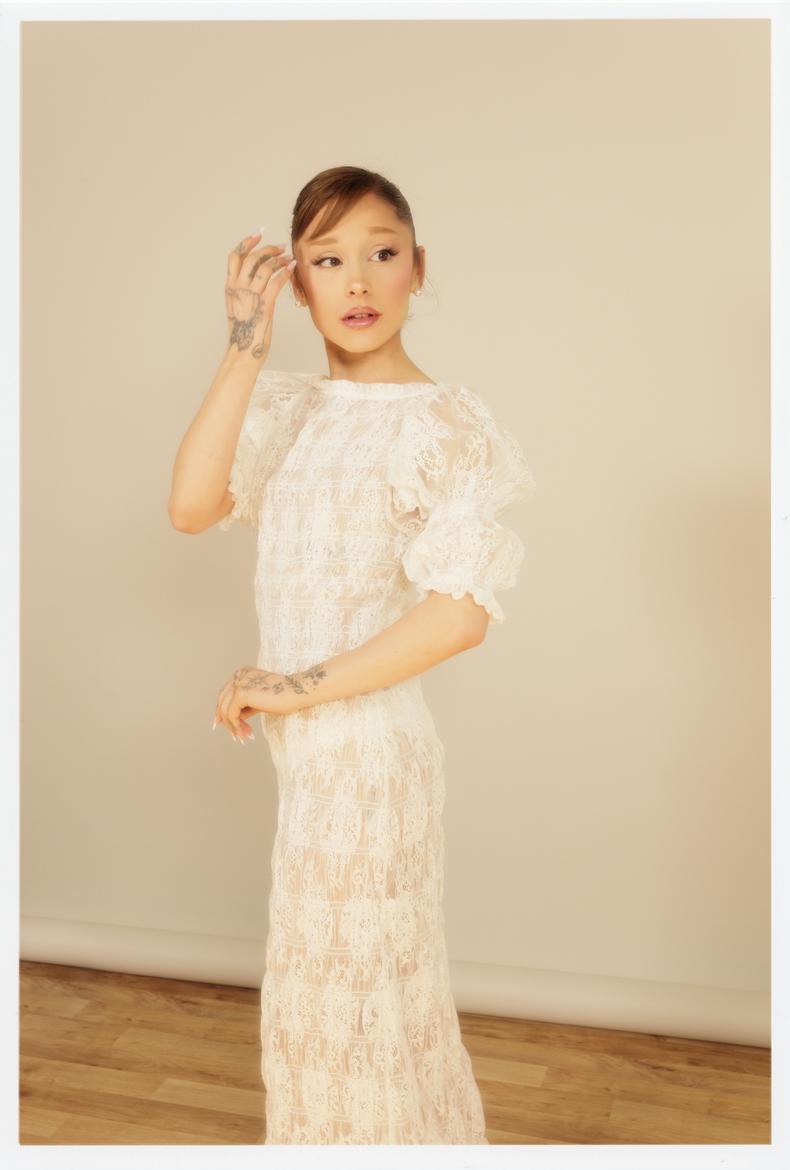
But moving on won’t be easy. Grande is now as inextricably tied to Glinda as the character’s Broadway originator, Kristin Chenoweth, which is a bit of a miracle, given that landing the part meant reevaluating the globally recognizable persona built on high ponytails and winged eyeliner.
“Before ‘Wicked,’ I hadn’t acted in a decade-ish. My pop music career, which I am so endlessly grateful for, had taken on a life of its own, a life that I don’t know I could have predicted or planned for,” Grande says. “The whole journey toward ‘Wicked’ and earning the role was a really uphill battle because I had a lot of convincing to do, and a lot of deconstructing the pop star Ariana that everyone knew of. I had to do a lot of deconstructing to convince a lot of people that I could disappear into her.”
The first step for Grande, an early adopter of social media as a way to connect directly with fans, was to put herself in, well, a bubble. “Getting the role [meant] having to shut out the noise from the world, a lot of whom didn’t think I could do it, or was right for it,” she says. “I had to just stay locked in and present in the work.”
What was “the work,” exactly? “I’m very much a Stella Adler girlie,” Grande says, referring to the acting philosophy that emphasizes an outside-in approach, where a performance feels truthful because the actor has imagined every detail of their character’s circumstances. (As opposed to inside-out techniques like Lee Strasberg’s Method, which encourage the actor to utilize their real memories as a way toward truth.) Talking to Grande, you do sense the reservoir of personal experiences she could pull from to play Glinda, a consummate performer whose glossy outer sheen hides layers of loss and insecurities. “I can love her through her worst moments,” she says, “because I’ve experienced similar ones myself.”
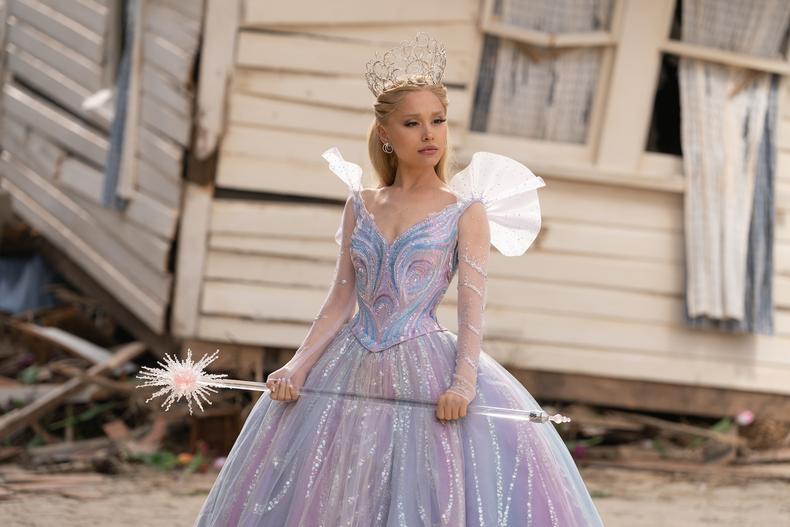
Ariana Grande in “Wicked: For Good” Credit: Giles Keyte/Universal Pictures
But she didn’t want to drown in that reservoir for the duration of the 155-day shoot. “I think as much as we can do with fiction, with the character’s life and inventing them as real people for us, it’s not only really effective and helpful in the moment as an actor, but it’s really protective as a human being,” she says.
“I really do think [Glinda] is a hero in a lot of ways, and I wanted to make sure that was clear and that she was as human as possible. I wanted to know her as well as I know myself,” Grande continues. “For me, everything comes from somewhere. I do a lot of work and a lot of therapy to figure out the connective tissue between certain triggers now that also touch on something from way back then. I wanted to do that for Glinda, too, so that when the time came, I wouldn’t have to reference my own pain. I could have hers available and know why.”
Grande developed a system to track Glinda’s emotional arc through both films, covering her notes and scripts in sticky tabs, each a different color for a different feeling. “What emotion, what undertones are showing up here for her? Does she feel genuine, pure trust and love in this scene, or is she covering up for something? Is she performing in this scene or is her guard down?” Grande says. Eventually, the colors combined to paint a bigger picture—like the rows of tulips that dot the land of Oz.
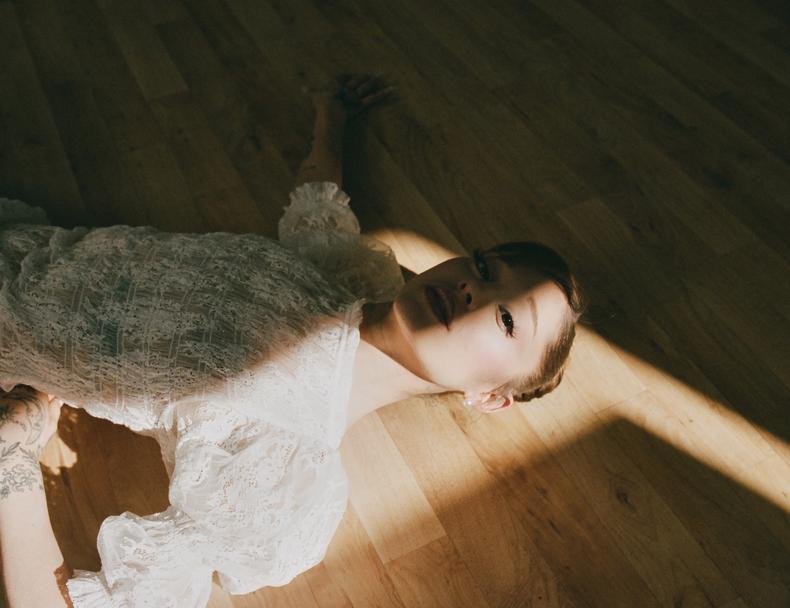
She also meticulously built bits of backstory for Glinda beyond even what Baum had imagined for her. I ask when these notes most came in handy, and Grande immediately responds with Glinda’s lowest moment, the character at her most unlikable. It comes in “Wicked: For Good.” Glinda’s husband-to-be, Prince Fiyero (Jonathan Bailey), has just fled with Elphaba on their wedding night. Reeling from the betrayal, Glinda tells the Wizard of Oz (Jeff Goldblum) and Madame Morrible (Michelle Yeoh) to use Elphaba’s sister, Nessarose (Marissa Bode), as bait.
“In those moments when you experience a shocking, traumatic event that happens quickly, your brain goes a hundred million places at the same time. So I had to figure out what would lead her to say that: ‘Use her sister,’ ” Grande explains. “I had to think about all of the times I had seen [Elphaba and Fiyero] together without me. I had to write a bunch of other times when that had happened, that you don’t even see in the movies, just for me to reference and point to for my own self. So that to get to ‘Use her sister,’ I can be remembering those things for the first time.”
She still has all the notes, the sticky tabs, the “treasure trove of memories and little secrets,” as she puts it. “I would love to go get them, but I don’t know if I’ll be able to find them in a quick enough amount of time to make the best use of the rest of our interview,” she says with a laugh. Which actually feels like a fitting metaphor for where Grande is right now. Glinda is still very much a part of her—she’s tucked away somewhere—but it’s time to talk about what’s next.
And that is something she is ready to do. “Well, first of all, I don’t even think I’ve been able to talk about this yet, so this is very exciting,” she says when the conversation turns to “Focker In-Law,” which hits theaters this November. Grande was cast in director John Hamburg’s lega-sequel to the 2000 rom-com “Meet the Parents” back in May, joining returning cast members Ben Stiller, Teri Polo, Blythe Danner, and, of course, perennial Italian American icon Robert De Niro. “It was an amazing experience being able to work with Mr. De Niro. I absolutely adore him,” Grande says, before making sure to emphasize: “He’s Robert De Niro.”
“It’s exactly what you would expect; he’s just the greatest of all time. As a human being, it was so lovely to get to know him,” she continues. “It’s a little emotional, but I felt like he was a part of my Italian family that I grew up with. I felt like I was supposed to meet him.”
“Focker In-Law” is part of Grande’s return to juggling movies and music, but now she’s doing it on her terms, choosing projects that test her range. Starting in June, she will reconstruct her pop star persona on the Eternal Sunshine Tour, playing 41 shows across 11 arenas. On the other side of that, she’s set to reunite with “Wicked” costar Bailey for a 2027 run on the West End in director Marianne Elliott’s “Sunday in the Park With George” revival, her first time onstage since starring in a pantomime “Snow White” at the Pasadena Playhouse in 2012. Somewhere in the middle, she has a small role on the 13th season of Ryan Murphy and Brad Falchuk’s “American Horror Story.”
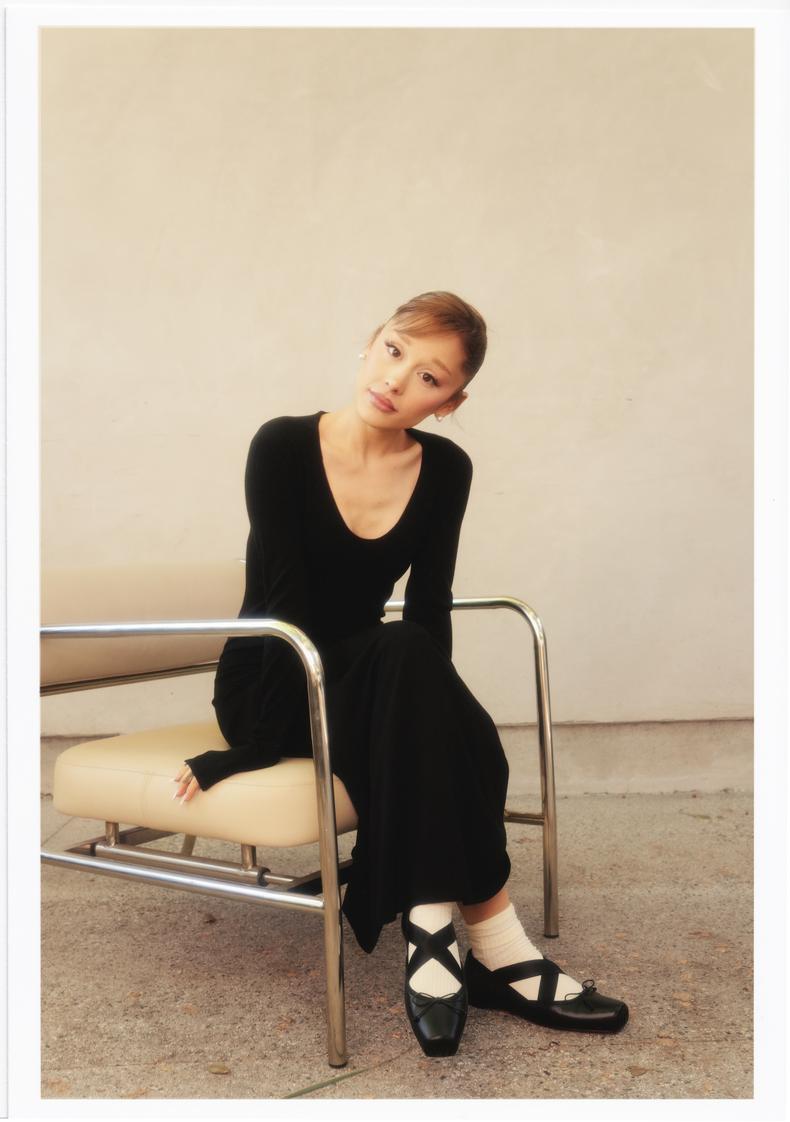
Speaking of that last one—did you know that Grande loves horror? The only topic that lit her up more than a chance to talk about De Niro was the opportunity to gush about “The Ring” and “Psycho,” to tell me how formative M. Night Shyamalan’s “Signs” was to her film fandom. When I tell her she needs to lead a horror movie, she beams. “I would love that. It would be such a blast,” she says. “Fingers crossed.”
It’ll probably happen. If “Wicked” taught her anything, it’s that manifestation works. But if we should learn something from Glinda, it’s that success isn’t about waving a wand. There’s a human inside the bubble. I ask Grande how often, even now, self-doubt creeps into her mind, and she interrupts to say: “You mean the monsters? The nervous monsters?
“All the time,” she continues. “To anyone reading this, it’s a gorgeous gift to care so much that sometimes you get afraid. It is a tremendous gift to have those nerves that carbonate your experience, that make you want to work harder, to challenge yourself to constantly become better, or to do the thing that people don’t believe you can do.”
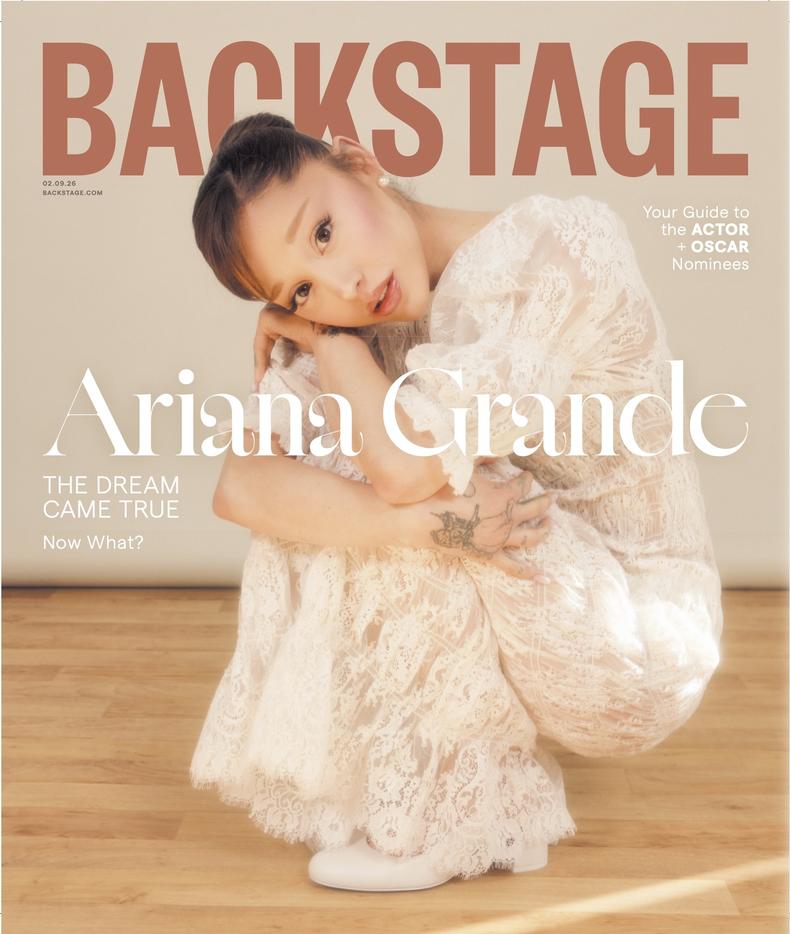 For Grande, her career has been built on balancing intense focus with intense feelings. “There are exercises you can do to ask [those nerves] to leave, and they will come back later, so that you can be present and in the moment and in the work,” she says. “But in life, it’s a very healthy thing to have them there because it means that you don’t take it for granted, and that you care so much.”
If there’s one thing Ariana Grande is on the record about, it’s caring a lot. And it’s gotten her to this point. “When I look back on some of the things in my career, I can’t believe they’ve happened,” she says. “And I know I did the work so that they could, but I still feel as curious and inspired as…the first day I got here. I don’t think I’ve changed, or that I’ve let what has happened in my career that has worked or been successful be too present in my head.”
Grande’s “Wicked” era is over, but she’s taking a key piece of Glinda’s final arc into the future: “Good” is doing the work, and the rest is noise. “I celebrate the good things and I say thank you when they happen,” she says. “But I don’t let them disconnect me from the little girl who had the ‘Wicked’ poster in her bedroom in Boca Raton, Florida, who taught herself how to vocal produce on GarageBand when she was 12.”
This story originally appeared in the Feb. 9 issue of Backstage Magazine. To hear our full conversation with Grande, subscribe and listen to In the Envelope: The Actor's Podcast.