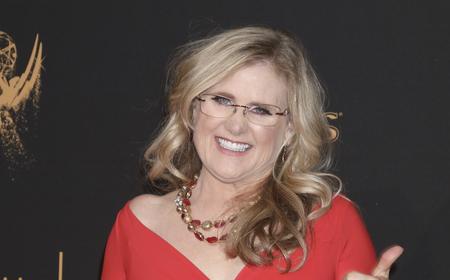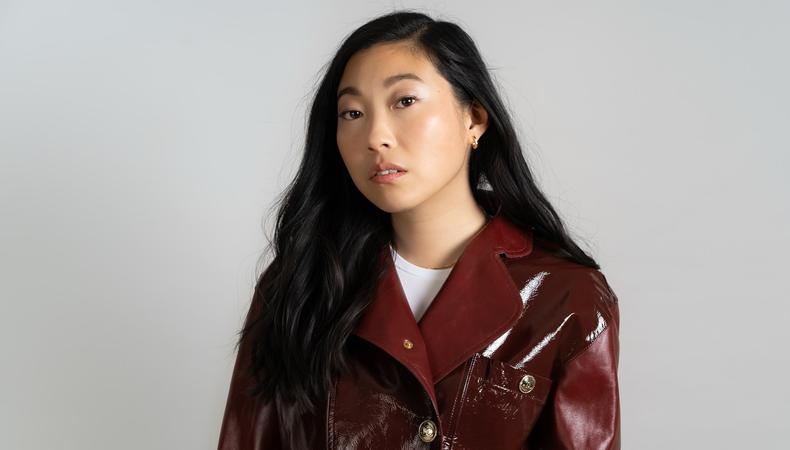
Before she ever appeared on the silver screen in “Ocean’s Eight,” “Crazy Rich Asians,” and “The Farewell” (which netted her a Golden Globe for best actress), Awkwafina—born Nora Lum—was making art with her voice. In 2014, she released “My Vag,” a comedy-rap video that went viral on YouTube; she went on to record two hip-hop albums, “Yellow Ranger” and “In Fina We Trust.” Her distinctive voice made her a natural fit for animation; most recently, she played roles in “Migration,” “Kung Fu Panda 4,” and “IF.” Here, she talks about her path to voice acting and offers tips for performers hoping to break into field.
1. Does voice acting have any parallels with musical performance?
There’s something about the quickness of the takes [that’s] very similar. Everything comes back to a rhythmic thing.
2. Was working in animation ever something you considered as a potential career path?
No, not at all. I know that my voice is different, but I never thought that it would serve the purpose [of playing] a variety of animated birds. [As a VO actor,] your voice exists in this weird other dimension. When “Raya and the Last Dragon” was out, I would hear my voice on commercials, and a bell would go off—I’d be like: That’s me. It’s become a different voice to me at this point.
RELATED: How to Become a Voice Actor
3. Do you have any advice for aspiring VO artists?
I always thought it was interesting, when I was growing up, how the same voice actors voiced all the cartoons that I watched—from “The Simpsons” to “Rugrats” to “The Ren & Stimpy Show.” I always thought that was really fascinating—how different people can, in my eyes, be so different in their range. If you are an aspiring voice actor and also have musical abilities…or you feel like you could play one character a very specific way and another [character]
very, very differently, that range is important.
4. Do you find physical comedy or voice acting harder to do?
If someone wants me to pick up a phone funnily, that doesn’t seem like that much of a daunting challenge…. With voice acting, there is definitely that freedom to be physical and to have comedy pervade through that, but [it’s] fast-paced work. A lot of the jobs, you’re coming in in the middle of stuff, and you [have to decide whether the director] is someone you actually want to play around with, or if you just want to do the script as-is. Comedy, for me, is a place where my awkwardness goes.
 Awkwafina voices Zhen in DreamWorks Animation’s “Kung Fu Panda 4” Credit: Charles W. Murphy / DreamWorks Animation/ Universal Pictures
5. What advice would you give your younger self?
Don’t ride the highs or lows, which is something that my grandma has always told me…. It’s really easy for young actors to be taken away—to be so low if they’re rejected, or [to see] that one opportunity that they think will make it all an easy ride. Everything should be taken
in moderation.
Don’t take any rejection or over-satisfaction too seriously. I remember being destroyed by not getting things that I really wanted [when I was starting out]…. You don’t want to go too hard in either direction.
6. What’s your worst audition horror story?
[Self-taping is] kind of like voice acting because you can control the amount of edits, especially at home. You can control everything. There was a time [when] I was in New York, and I would go to readers’ setups at their houses; it was a paid service. There was one eccentric reader that fully farted on a pretty good take—it was a cartoonish fart. I was doing really well with the monologue; I didn’t want to stop. But then I had to, because if that was the [take] that we sent in, then it would’ve looked like I’d done it.
7. What are your thoughts on self-taping as a practice?
There is something about going into a place [to audition]…. It’s like your relationship with your therapist: There are people that would only go to their therapist’s office, but a lot of people now do [therapy] through Zoom. I think that there’s something to be said about people auditioning in the comfort of their own home—sometimes, that helps a performance. People get very, very nervous. They’re probably not that bad when they’re in their bedroom.
8. Which role shaped you the most as an actor?
“The Farewell” was a big thing for me, just because it gave me the chance to explore this introspective side of me on camera that I really didn’t think people wanted [to see] or that I would never really be asked to do. It was transformative. It wasn’t easy at all.
Another role is probably on my show [“Awkwafina Is Nora From Queens”], because I realized I can easily tap into this [character] that I did for three years, which is a lot for an actor—to live in a person, who, ironically, is a version of myself. But it gave me a lot of experience. When you’re on a movie, I’d say maybe 15–20% of your entire time is spent physically on camera. The rest of it is everything else—the fittings and the waiting. When I was able to do “Nora From Queens,” I really was able to sit in that role.
This story originally appeared in the July 11 issue of Backstage Magazine.