From Detective David Mills (Brad Pitt) desperately asking, “What’s in the box?” to Mollie Kyle (Lily Gladstone) gradually comprehending the depths of her husband’s depravity, the best crime films and their characters invite viewers to take a fascinating look at the darker corners of society—and themselves.
Intriguing characters: Whether they’re heroes, villains, or everyday people that become tangled in deception, fascinating main characters and well-developed side characters take a story from good to great. In “The Godfather,” for instance, the transformation of Michael Corleone (Al Pacino) from idealistic war hero to ruthless mob boss makes his character both complex and captivating.
Moral ambiguity: Outstanding crime movies occupy morally murky regions. Films like “Heat,” which tells the overlapping stories of cop and criminal, compel viewers to reckon with their own beliefs and consider shades of gray.
Stylish direction: Directors in this genre often use dramatic lighting schemes, abrasive soundtracks, and unusual camera angles to convey mood and theme. In “Drive,” neon lighting, a synth-laden soundtrack, and extended shots creates a dreamlike feeling punctuated by darker moments of violence. These creative methods construct the film’s gritty, suspenseful atmosphere and help make it a gripping example of the genre.
Tense pacing: Properly paced tension makes the audience an active participant on the path to a dramatic finale. “No Country for Old Men” does a fantastic job of carefully weaving quiet distress into the mix before abruptly shattering the facade of peace. It draws out its tensest moments in a way that leaves viewers filled with dread and on the edge of their seats.
Subversion of tropes: Many of the best offer storylines that play with genre tropes and viewer expectations. With “Pulp Fiction,” Quentin Tarantino merged comedy with drama and employed an inventive nonlinear narrative structure, making the film unpredictable, original, and wholly entertaining.
“The Godfather” (1972), dir. Francis Ford Coppola
This movie is the granddaddy of all Mafia movies, setting the bar impossibly high for everything that came after. The story pitting family loyalty against the pursuit of power is more than compelling; the acting is top-notch; and the dialogue will make you an offer you can’t refuse and leave you quoting for days.
One of the film’s most powerful moments is the somber meeting between mob boss Don Vito Corleone and the heads of the other major mob families. This scene is pivotal because it underscores the delicate balance of power and respect within the world of organized crime. Marlon Brando’s nuanced performance, coupled with Gordon Willis’s dimly lit cinematography, creates a genre-defining atmosphere of tension and foreboding.
“Goodfellas” (1990), dir. Martin Scorsese
Martin Scorsese’s dynamic filmmaking draws viewers into the violent yet seductive nature of gangster life in this pioneering depiction of organized crime. The edgy voiceover narration, principally by Ray Liotta but also by costar Lorraine Bracco, provides a peek straight into the characters’ heads.
The long, unbroken take following mobster Henry (Liotta) and his date Karen (Bracco) as they enter the Copacabana club is an exemplar of visual storytelling. It not only establishes Henry’s influence and connections within the mob world but also immerses the viewer in the allure of the criminal lifestyle, making it a quintessential moment that encapsulates the genre’s fascination with the dynamics of power.
“Se7en” (1995), dir. David Fincher
Equal parts police procedural, psychological thriller, and existential horror, Se7en sticks with you long after the credits roll. Its depiction of a serial killer enacting the seven deadly sins and the detectives on his trail makes for a wild ride into the darkest corners of the human mind. And that ending? It’s a (highly quotable) gut punch most won’t see coming.
In this scene, detectives David Mills (Brad Pitt) and William R. Somerset (Morgan Freeman) discover the victim of the sin of sloth. The dark, oppressive atmosphere and meticulous attention to detail in the killer’s modus operandi creates a visceral sense of horror and despair.
“City of God” (2002), dirs. Fernando Meirelles and Kátia Lund
“City of God” takes a raw, unfiltered look at life in Brazil’s favelas that’s both shocking and deeply human. The storytelling is all over the place in the best way, and the mostly amateur cast brings a level of authenticity that’s hard to beat.
A great scene showcasing the chaos and unpredictability of the favelas is when the narrator, Rocket (Alexandre Rodrigues), accidentally gets caught in the middle of a gang war. Kinetic camera work and a raw, unpolished editing style bring a sense of immediacy and intensity, exposing the blurred lines between innocence and complicity in a life overshadowed by violence.
“No Country for Old Men” (2007), dirs. Joel and Ethan Coen
This Coen brothers classic mixes crime drama with a western vibe to create something that feels totally fresh. The tension in this film is through the roof, partly thanks to Javier Bardem’s unforgettable turn as psychopathic killer Anton Chigurh. It’s one of those movies that will leave you feeling deeply unsettled.
Chigurh’s coin toss scene with a gas station owner (Gene Jones) is a master class in building tension through dialogue and performance. Bardem’s calm yet menacing demeanor is juxtaposed with the owner’s palpable fear, encapsulating the film’s take on fate, morality, and the randomness of violence.
“Inception” (2010), dir. Christopher Nolan
Leonardo DiCaprio leads the charge through this mind-bending adventure where dreams become reality, or maybe it’s the other way around? Beyond the dizzying cinematography, Hans Zimmer’s score provides the tension-inducing heartbeat of the film’s imagination and intrigue.
Here, professional dream infiltrator Dom Cobb (DiCaprio) tests the abilities of architecture student Ariadne (Elliot Page) to create dreams within dreams. The folding cityscape serves as a representation of the mind’s limitless potential for creation and destruction. This scene showcases the film’s complex narrative structure, visual ingenuity, and depiction of memory and grief.
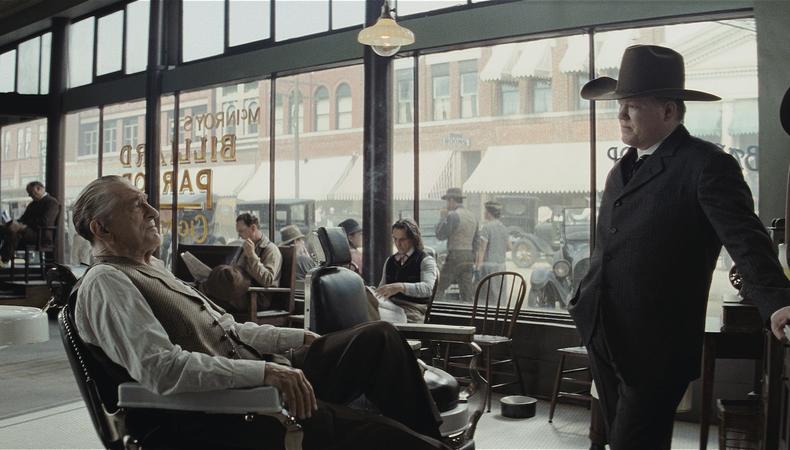
“Killers of the Flower Moon” (2023), dir. Martin Scorsese
This western drama depicts the real-life Osage Reign of Terror, a murderous conspiracy by white settlers to steal wealth from the Osage people in 1920s Oklahoma. The suspense-laden plot includes themes of corruption, treachery, and systemic inequity, all set against a backdrop of suspicion and fear. The film shifts seamlessly between the macro and the micro, demonstrating crime’s impact at both the community and individual level.
Lily Gladstone earned widespread acclaim for her powerfully nuanced portrayal of Mollie Kyle, an Osage woman who experiences devastating betrayal. In this scene, which Gladstone told us, “No one planned,” Mollie releases a primal, heartbreaking scream.
- “The French Connection” (1971), dir. William Friedkin
- “Chinatown” (1974), dir. Roman Polanski
- “Scarface” (1983), dir. Brian De Palma
- “The Silence of the Lambs” (1991), dir. Jonathan Demme
- “Reservoir Dogs” (1992), dir. Quentin Tarantino
- “Pulp Fiction” (1994), dir. Quentin Tarantino
- “Heat” (1995), dir. Michael Mann
- “The Usual Suspects” (1995), dir. Bryan Singer
- “L.A. Confidential” (1997), dir. Curtis Hanson
- “The Departed” (2006), dir. Martin Scorsese
- “Zodiac” (2007), dir. David Fincher
- “The Town” (2010), dir. Ben Affleck
- “Prisoners” (2013), dir. Denis Villeneuve
- “Gone Girl” (2014), dir. David Fincher
- “Sicario” (2015), dir. Denis Villeneuve
- “Uncut Gems” (2019), dir. Josh and Benny Safdie