Breakup scenes are a gut punch for a myriad of reasons, but especially for the fact that ending a relationship is a universal experience. Because breakups are something so many people have gone through, creatives have to put in extra effort to ensure their emotional knockouts are unique. Script and direction will always play pivotal roles, but small choices from the performers involved take things to a whole new level. Here’s a look at five film breakups, from the softly sad to the achingly explosive.
“Casablanca” (1942)
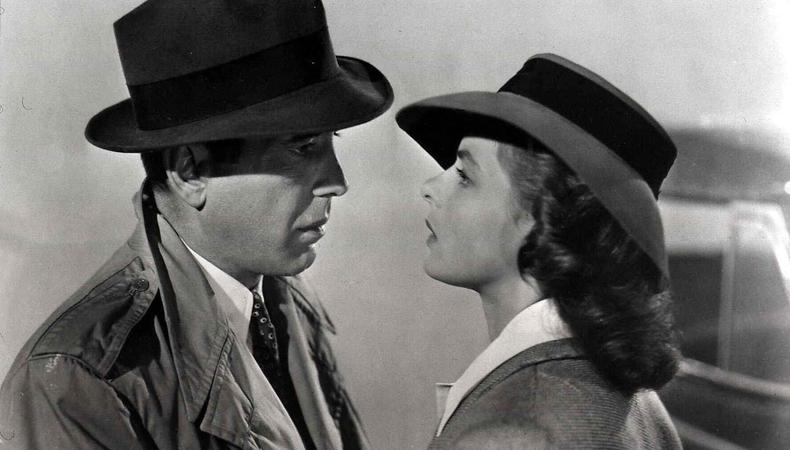
Calling what happens between Ilsa (Ingrid Bergman) and Rick (Humphrey Bogart) a “breakup” might be a bit of an exaggeration given she’s married to a man he feels duty-bound to protect from Nazis. Things were quite complicated in the 1940s.
Much of the pain in this final scene is unspoken, rooted not just in Ilsa and Rick’s personal heartbreak but also the despair permeating the world during WWII, as displayed in Michael Curtiz’s classic. But there’s one specific acting choice by Bergman that slices through the viewer like a knife: As Bogart delivers his breakup monologue, she looks down at his lips. Her eyes look pained and confused, as if she can only understand what he’s saying if she sees the words leaving his mouth. Then, before her eyes finally move back to his, her expression shifts from sadness to longing as Ilsa realizes she’ll never kiss Rick again.
Meanwhile, Bogart adds to the emotional turmoil with the tiniest touch on Bergman’s chin after delivering the iconic “here’s looking at you, kid.” The nudge hits twofold: It’s an intention to comfort and a physical illustration of the idiom “chin up.” Both are subtle, melting into the dialogue with ease without distracting from the power of Rick’s words or Ilsa’s dismay as she realizes that he is right. It’s this very softness that makes the performances impactful, contrasting against the explosiveness of some of the other entries on this list.
“Good Will Hunting” (1997)
In Gus Van Sant’s “Good Will Hunting”—famously written by its two young stars, Matt Damon and Ben Affleck—genius janitor Will Hunting’s (Damon) cleverness is only matched by his insecurities. While Dr. Sean Maguire (Robin Williams) and Professor Gerald Lambeau (Stellan Skarsgård) try to help Will foster his skills as a mathematician, it’s Skylar (Minnie Driver) who does her best to connect with him emotionally. Things go well for the couple right up until Skylar asks him to move with her. Will blows up, asking if she really wants to know that he’s an orphan or that his scars are from cigarette burns.
It’s a deeply emotional argument, but Driver does something very specific that dials the breakup fight up to 11. It’s evident on the actor’s face that Skylar is hurt by her partner’s rage, but she holds it together right up until Will reveals his trauma. “I didn’t know that,” Skylar whispers. It’s that moment that the tears come, showing how upset she is for him. Driver follows up with another smart performance choice, reaching for Damon’s face right as he’s calm enough to be touched.
Damon is a critical scene partner here, but the performance is meant to be that of the stereotypically insecure male. While this may give Damon less room to play, he does illustrate some impressively explosive rage. Still, Will and Skylar’s breakup packs the punch it does because of Driver’s quieter notes.
“Blue Is the Warmest Color” (2013)
Though “Blue Is the Warmest Color” isn’t the strongest example of lesbianism in film, Abdellatif Kechiche’s romantic drama does feature a breakup scene for the ages.
The film follows Adèle (Adèle Exarchopoulos) and Emma (Léa Seydoux). The former comes from a conservative family and is in the early stages of exploring and accepting her sexuality, while the latter is out, proud, and accepted by her loved ones. When they find themselves in a passionate relationship, the two eventually move in together. Unfortunately, it’s not long before it becomes clear that the only thing Adèle and Emma have in common is their passion. Adèle eventually cheats on Emma with a man, culminating in an explosive fight.
While the breakup that unfolds is bombastic, it’s a blink-and-you’ll-miss-it microexpression from Exarchopoulos that drives the emotional impact of the scene home. Emma is done with it all by the time she finally confronts her partner, leaving her rage on full display. Adèle, on the other hand, does her best to get out of the fight before realizing that she’s been caught. As Emma interrogates her, Adèle fights off tears. Then, right as she’s about to come clean, her jaw begins to twitch.
We’re not talking about a lip or chin tremble, here. As Exarchopoulos is listening to Seydoux’s monologue, her jaw muscle begins moving. It’s not a tick from clenching her jaw, either. Instead, it looks as if she’s working through the problem in front of her while struggling to contain all of the pent-up emotions she’s forced herself to hold in her whole life. Emma is the only person Adèle has ever been able to be herself with, and her infidelity has ruined it.
“Mrs. Doubtfire” (1993)
Chris Columbus’ “Mrs. Doubtfire” is a tale as old as time: workaholic wife and “mean mom” butts heads with her artistic husband who always gets to be the “fun dad,” followed immediately by harsh turmoil. But that tale doesn’t always feature heavy hitters like Sally Field and Robin Williams.
Though the film is very much a “real love takes work” kind of story, sometimes you have to fall apart before you can come back together again. When we first meet Daniel (Williams) and Miranda (Field), it’s no surprise that their relationship is headed toward disaster. However, while it may not shock the viewer when Miranda asks for a divorce, it is news to her. That’s how Field decided to play it, at least.
As Miranda is unloading on Daniel about his refusal to do the hard parts of parenting, she eventually says, “It’s over.” Those two words drive the frantic monologue to a crashing halt, with Field looking shocked and letting out a little sigh before repeating “it’s over.”
This scene hits home for every woman at the end of her rope with a partner who simply will not participate. We’ve made progress in the 33 years since “Mrs. Doubtfire” was released, sure, but the quiet, free labor of the mother still broadly sits on the shoulders of women everywhere. Field’s choice to play this scene as an in-the-moment realization rather than something she’s stewed on for some time says more about the relationship than 30 minutes of exposition ever could.
“Jerry Maguire” (1996)
Cameron Crowe’s extremely quotable “Jerry Maguire” may always be known for the “show me the money” and “you had me at hello” scenes, but the film’s connective tissue has always been a little boy named Ray (Jonathan Lipnicki). During Jerry’s (Tom Cruise) career-defining walkout, Dorothy Boyd (Renée Zellweger) chooses to leave with him. A romance sparks between the two when Dorothy sees how great he is with her son, Ray, and the two eventually marry (though said marriage is mostly for health benefits while Jerry’s new company falters).
Despite their marriage of convenience, the two have genuine, deep feelings for each other. It’s that emotion that makes Dorothy’s hyper-pragmatic separation proposal hard from the start, but it’s not until Jerry asks about Ray that the breakup scene becomes truly upsetting. At first, Cruise and Zellweger treat the moment more like a business transaction than a breakup. Jerry clearly isn’t thrilled by the discussion, but he holds his composure until he says, “What about Ray?” It’s here that Cruise’s voice breaks, and Zellweger fights back tears as Dorothy tells Jerry, “Well, you’ll be friends.”
Once the Ray dam breaks, the two actors toss devastating performance touches back and forth: Zellweger’s pained expression as she says Jerry loves Ray but only likes her a lot; Cruise quietly lowering his head after she forces herself to smile; the static silence before she walks away. Each small gesture from the two actors is more heartbreaking than the last.
While these breakups range from quiet to explosive, each split shares one thing in common: one or both of the actors make small, subtle choices that elevate the dialogue. While scenes of this nature will always be heavily script reliant, a small touch, voice break, sigh, or expression can make all the difference.