In the wake of serialized, ensemble-centric programs such as The Sopranos and 24, a new breed of television show has grabbed our attention. These shows entertain and thrill, but require a level of week-to-week commitment and concentration from the audience like never before. Replete with complex multiple plot lines and ever-more-realistic characters, Fox's Prison Break has raised the bar on serialized drama this season--and hopefully, will continue to set the standard for many more.
The show revolves around engineer Michael Scofield (Wentworth Miller), whose brother (played by Dominic Purcell) was put on death row for a murder he didn't commit. Scofield purposely gets arrested and incarcerated at the prison where his brother resides--a prison he just happened to have designed. He then sets about using his knowledge of the building, as well as his fellow prisoners, to spring himself, his brother, and whichever other prisoners are forced to tag along.
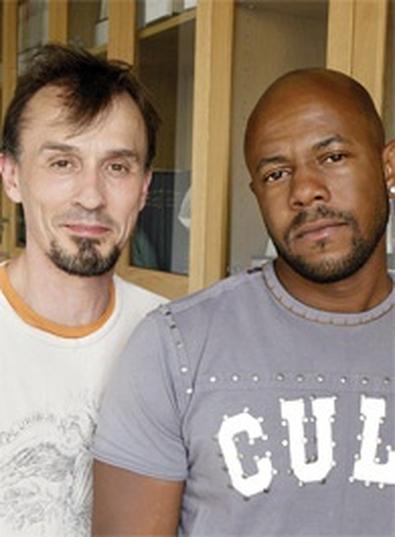
Two of these prisoners are played by veteran character actors Robert Knepper and Rockmond Dunbar. Knepper, perhaps best-known as roving reporter Tommy Dolan on the HBO series Carnivàle, portrays creepy "T-Bag," a lifer who effortlessly instigates prison riots and isn't afraid to play as dirty as he needs. Dunbar, recognizable to fans of the Showtime series Soul Food as family man Kenny Chadway, plays "C-Note," an Iraq war veteran who turned to crime after a dishonorable discharge. As the season rumbles to its conclusion, audiences hang on every moment--and Dunbar and Knepper couldn't be happier.
Back Stage: What is the origin of your characters' colorful nicknames?
Rockmond Dunbar: We all have these feminine nicknames: T-Bag. C-Note. [C-Note] traces back to: Every solid I did for anyone, it would cost them a hundred dollars. Anything I got you—long-legged blonde, stick of bubblegum—it would cost you a hundred dollars.
Robert Knepper: When I was testing for [Prison Break], I had no idea what "T-Bag" [slang for a particularly odious sex act] meant. I had this horrible nightmare that when I was in the executive room, the final audition for the test deal, some wiseacre in the room was going to say, "So how do you think he got the name T-Bag?" I created this thing in my head; I was all ready for it. I was going to say, "Well, I just never dip my tea into a cup of water unless it's piping hot."
Back Stage: How developed were your characters at the beginning?
Dunbar: C-Note wasn't even a character that they wanted to recur. Apparently they liked me and wanted to bring me back. I heard that there were story lines that were created right before they found out the show was being picked up, but they realized that I was on another show [Fox's Head Cases], and they were like, "We'll see what happens with that other show." Right after the other show got canceled, they picked me up.
Knepper: I jumped through the hoops as if I was a series regular, but there was a small disclaimer in my contract that I'd never experienced before. Most of us sign a five-year or a seven-year [contract], but I had a thing on mine saying that Fox has the right to decide after this episode whether or not to keep this character. Basically it was an audition for the character. So I go to Chicago, do this episode, and toward the end of it, I walked up to [director] Michael Watkins, and I said, "So, what are you thinking?" They said, "You're all over this thing."
Back Stage: Do you collaborate with the writers to create the voice of your characters?
Dunbar: Yeah. They're like, "Bring your voice to it, hit it, you're already there." But every once in a while you'll get [a writer] that comes in, and they love the character so much that they want to massage it into something else, and then they leave. And then you have to stay consistent to something that they massaged.
Knepper: In the first episode, there's a scene where I think Michael [Wentworth Miller] has killed my boy, so I'm out to kill him. The next episode, I get a shank made. I'm about to stand up and go for Michael. Peter [Stormare as mob character Abruzzi] comes up behind me and puts his arm around me and sets me back down. As written, T-Bag says, "Uh...uh...I was gonna come to you...." He turned into this shivering puppy. And I thought, "In my first episode, I'd just got there, I instigated an entire riot. Now I gotta answer to this guy?" I said to [series creator] Paul Scheuring, "I've done this whole riot; I just don't think I gotta answer to this guy. So what I would love to do with your permission is say, 'I don't gotta come to you.'" That helped them set off this other whole thing of Abruzzi and T-Bag always coming to the point where I was going to cut his throat. All because in that moment I said, "It doesn't work."
Back Stage: What was it like filming in a real prison?
Knepper: You can't get any better for your character development. All you have to do is put on your clothes and then walk through that gate. The energy there is staggering. If you've ever seen the famous water-tower statue in downtown Chicago, it looks like a part of a castle. It's designed by the same architect. [The prison] has been there since the Civil War. It looks like a castle. For me, you walk through these gates and you feel like you're in some medieval time.
Dunbar: You walk into the yard, and the yard says, "This is your place. This is where you stand; this is where you're gonna be. Don't go over there." Once people get on the yard, they start dictating where you can and can't go.
Knepper: If we were playing any of the guys that are nervous or victims, I'm sure you could very easily walk into that prison as an actor and say, "Oh, my God, I feel the horrors." You could feel the effect of John Wayne Gacy in that place. You can feel and smell the repression of that place, the wrongs that were done there.
Back Stage: What kind of research did you do prior to filming?
Dunbar: My sister's a C.O. [corrections officer], and my mother got married in prison when I was in the third grade. We used to go visit [my stepdad] at Vacaville [prison]. Collecting those little moments throughout my life helped me experience and bring that experience to Prison Break.
Knepper: I had three days to get to work. I had no time; I just jumped in, like we all do. I was always taught in my style of acting to use your imagination. I can draw much more in my imagination than I can actually seeing [a real prison].
Back Stage: How do you carry a show called Prison Break past one season? Either you get out or you don't.
Knepper: People early on said, "Uh-oh, it's called Prison 'Break.' What happens when you break out?" Now I think people are starting to realize something, which the writers always knew: that you want to know what's going to happen to these guys.
Dunbar: The Fugitive lasted, what, 10 years? That was one guy. We have I don't know how many guys breaking out, so the story lines are really endless. Even Paul [Scheuring] himself said, "The show turns into Planes, Trains and Automobiles and The Fugitive times 10." Now that I know what's coming, I absolutely see that. I don't see an end to the show. Just sit back and buckle your seatbelt.