From fresh faces to established talent, many of this year’s most exciting TV performances came from actors who have never received an Emmy nod. Awards aren’t everything, of course—but they sure are nice; they can transform careers and push the craft forward.
In advance of the nomination voting period for the 77th Emmys (June 12–23), we chatted with seven standout performers whose electrifying work warrants serious consideration from the Television Academy.
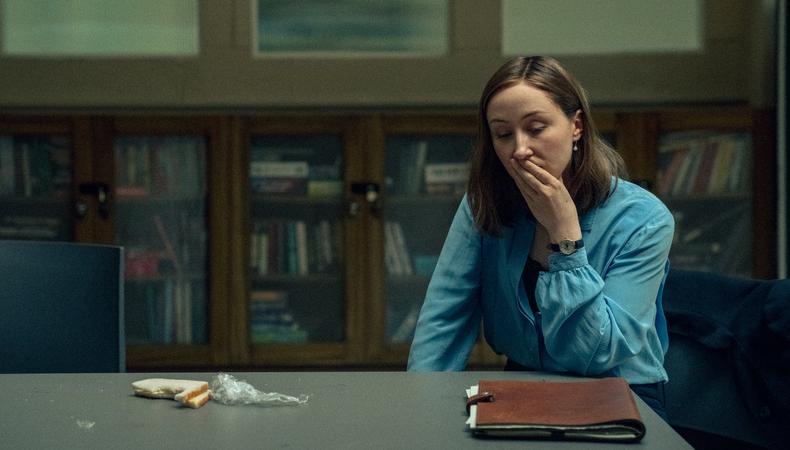
Erin Doherty
“Adolescence”
On Jack Thorne and Stephen Graham’s Netflix limited series, Doherty plays Briony Ariston, a psychologist tasked with assessing 13-year-old murder suspect Jamie Miller (Owen Cooper). Pressure makes diamonds, and Doherty sparkles on the suffocating third episode. The show’s single-take style traps the viewer in a locked room with the two as they match wits, Briony both calm and lightning-quick as she pries into Owen's mind. Eventually, she shows viewers how true monstrosity can make even the steeliest person flinch.
How did you prepare for such an intense, single-take performance?
I grew up doing theater, so it was pretty much like doing a play on film. From the minute they call action, whether we stick to the path we’ve made for ourselves or if we veer off in any way, you learn to see those little shifts and changes as a blessing or an offering of some kind.
What surprised you most about playing Briony?
The level of intensity that was built up throughout the process of the scene, right up until the moment when Owen leaves the room. Keeping a lid on it and keeping my professional hat on was so much harder than I anticipated because of the genius of the writing. It naturally created this electricity, so that the minute that Owen left, I genuinely felt like I could breathe. I don’t think I anticipated the suffocation that would ensue up to that point.
What will you take from this experience to future sets?
The importance of creating a safe space. From Day 1, I think [“Adolescence” director] Philip Barantini knew Owen was coming into the show from such a fresh perspective. So he needed both of us to hold each other and to know that whatever the other one throws at them, it’s always a positive, and it’s always a yes. You can take that for granted as an actor. Immediately turning up on set and creating those connections and bonds as strongly as you can breeds good work.
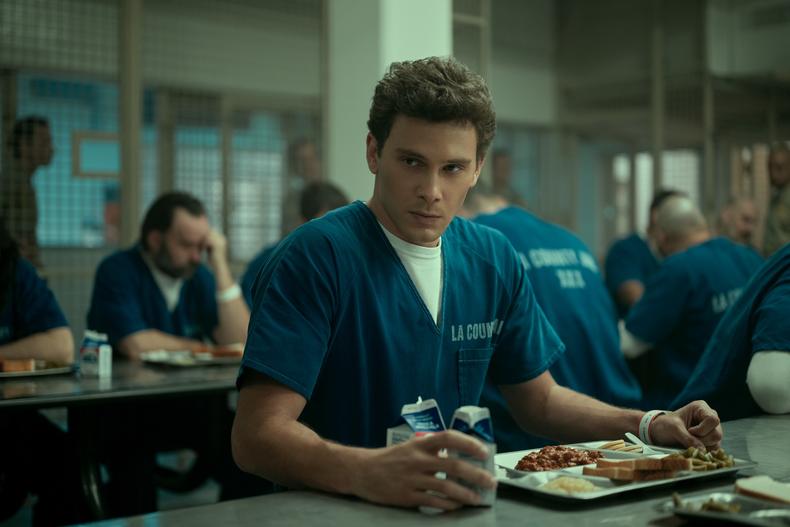
Cooper Koch
“Monsters: The Lyle and Erik Menendez Story”
Koch sheds light on the inner life of real-life convicted murderer Erik Menendez on Ryan Murphy and Ian Brennan’s Netflix anthology series. Throughout the season, the actor takes full advantage of the show’s multiple-perspective structure, revealing new layers of his sensitive, spoiled, damaged character. Consider the stunning fifth episode, “The Hurt Man”: In a single, uncut 36-minute take, the camera slowly zooms in on Koch as Menendez unloads the details of the sexual abuse he suffered at the hands of his father (Javier Bardem).
How did you approach your performance on Episode 5?
I really wanted the way Erik spoke to support the idea that he had been sexually abused and molested. That makes your lips really tense and makes you quiet. Same thing with the body language: Your shoulders are very far forward and you’re very closed off. Eye contact is sometimes difficult, his jaw is really tight, and he really aspirates his T’s.
What surprised you most about playing Menendez?
The trick to playing him was to not sit in the darkness and dwell in the sadness and the shame and the depression. While that is so present, what helps an audience connect with him is how much light he has inside of him and how much love he has. He is such an open, beautiful soul. I started to recognize how much he just wanted to be a normal kid.
What would your younger self be proudest of about your performance?
Well, Cooper at 16 or 17 discovered that he was closeted. I really didn’t want to come out. I told myself at one point that I was going to take it to my grave. I thought that I’d never get to be an actor if I was gay because no one would take me seriously.
Then when I got to acting school, I learned that this [craft] has to come from within me. I can’t phone it in and pretend. I actually have to experience these feelings and moments that these characters are going through. And in order to do that, I have to be able to be myself. My younger self would be really proud of that and would be shocked to see that. Like: Oh, wow. I did it. My dreams kind of came true even though I have been really authentic to who I am.
Credit: Miles Crist/Netflix
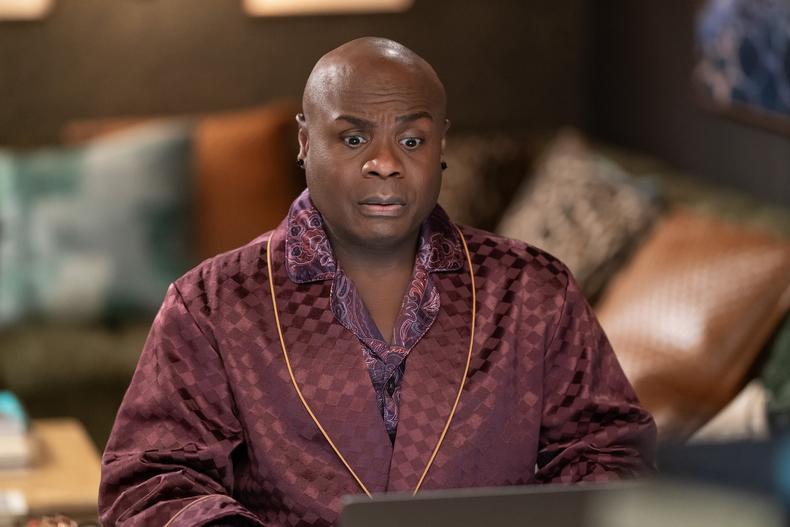
Nathan Lee Graham
“Mid-Century Modern”
Sitcom acting isn’t all laughs. OK, it’s mostly about laughs. But it also requires sharp timing, long-haul character development, and seamless chemistry among the ensemble. On this Hulu comedy from “Will & Grace” creators Max Mutchnick and David Kohan, Graham serves up the whole enchilada, doling out the zingiest zingers as the fashion-forward Arthur Broussard. The role calls on him to roast characters played by the legendary likes of Linda Lavin (who passed partway through filming) and Nathan Lane. Graham does so fearlessly and with impeccable style.
What was it like to settle into such a classic sitcom format?
It was a great learning curve to allow myself to make mistakes in front of a live audience at that pace. I’m so accustomed to everything being perfect by the time an audience sees it; they don’t see the sausage being made, right? I had to get over that really fast so that I could actually enjoy the process.
What surprised you most about playing Arthur?
What I understood about Arthur as I got to know him is that he’s always joyfully irritated. There’s a curmudgeon, but then there’s a person who really cares about everything—and that irritation comes from caring. That was a very curious thing to play. You could look at the page and say, Oh, here’s another snarky remark, or here’s another dig, or here’s another read, if you will. But it’s all coming from a place of: I really love these people. I’m going to read them for their own good.
How did you and the ensemble nurture your onscreen chemistry?
What happened on this set was lightning in a bottle, because we all actually love each other, and we all are fans of each other’s work. We all come from the theater, and there is an instant bond that happens immediately when you come from the theater. There’s not enough time not to be vulnerable. You come in with your heart and your arms open, and the brain is ready to soak up whatever. If someone tosses a ball, someone else is going to catch it. And if it drops, we’re going to pick it up.
Credit: Disney/Christopher Willard
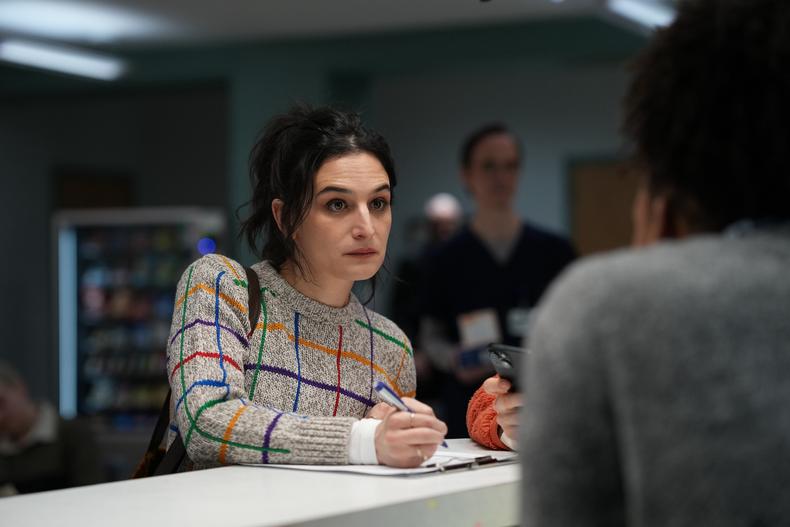
Jenny Slate
“Dying for Sex”
Kim Rosenstock and Elizabeth Meriwether’s FX miniseries is based on Nikki Boyer’s podcast of the same name. Slate infuses her fictionalized version of Boyer with a glorious chaotic streak. She cares for her BFF, Molly Kochan (Michelle Williams), as she explores her sexual desires after a terminal cancer diagnosis. Slate shows off her staggering range in the role, capturing all the messiness, desperation, and, yes, humor that comes with grief.
How did you navigate the show’s tonal shifts between intense drama and laugh-out-loud comedy?
When the writing is strong, it makes it easier to strike unlikely balances. There’s a difference between extremes that have no place next to each other and extremes that are somehow part of a greater whole and have a functional dissonance. Maybe they’re part of a greater harmony, actually. As a performer, it feels true that someone would go from laughing to crying to joking to being incredibly concerned—taking these big, intense swings.
What surprised you most about playing Nikki?
Her understanding that restraint doesn’t mean repression and restraint isn’t a lie; it can be a generous thing.
What actors have inspired your approach to the craft?
One of my favorite performers ever is Ruth Gordon. I’m really obsessed with her performance in “Rosemary’s Baby” as the chatty old lady next door who is also a devoted Satanist. It is actually her personality, and she makes it feel completely true and legitimate that she is also dedicated to the Dark Lord. She doesn’t try to jazz it up to make it more believable for a skeptical audience. Instead, she just believes that the audience deserves the truth, so she services that character. I’m really into natural performances in extreme situations.
Credit: Sarah Shatz/FX
Tracy Ifeachor
“The Pitt”
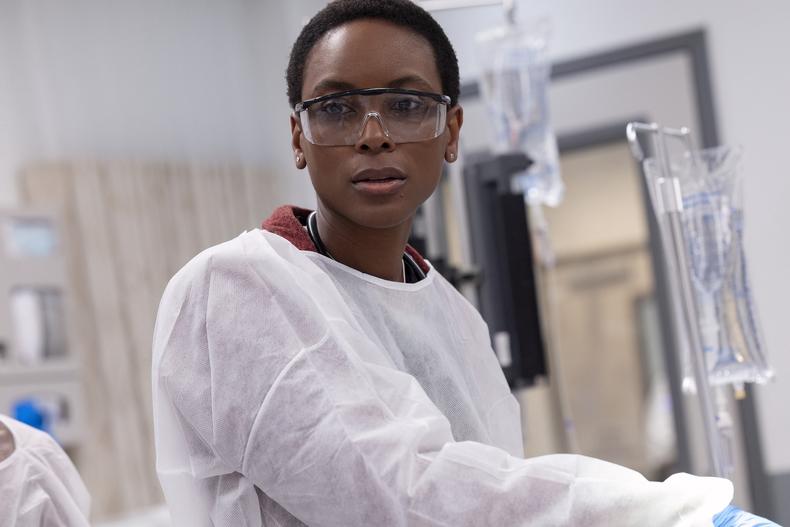
Whenever things get hairy in the ER on HBO’s “The Pitt,” you want Ifeachor’s focused Dr. Heather Collins on the case. The actor stands out on R. Scott Gemmill’s medical drama by keeping her performance at a low simmer. Dr. Collins lends her compassion and brilliance to her work with patients while keeping her own emotions sealed up tight—until everything boils over in a heartbreaking solo scene on the season’s seventh episode, “1:00 P.M.”
What are the challenges of playing a controlled character working in such a chaotic environment?
I try to put myself into an athlete’s mindset: You’ve got to keep going. You’ve got to do your best. You’ve got to deliver. It doesn’t matter if you’re tired; this is what doctors do.
What surprised you most about playing Dr. Collins?
She has this very dry sense of humor that’s so different from everybody else’s; hers is really under the radar. She sees everything, even if she might not comment on it, which just shows how observant she really is.
What will you take from this experience to future sets?
I’ll remember to always find joy in what I’m doing, even if I’m playing a character who is, like Dr. Collins, having ostensibly the worst day of her entire life. As human beings, particularly as women, I think we can put pressure on ourselves to just keep going even if things are terrible. This show reminded me that it’s OK to take a minute.
Credit: Warrick Page/Max
Britt Lower
“Severance”
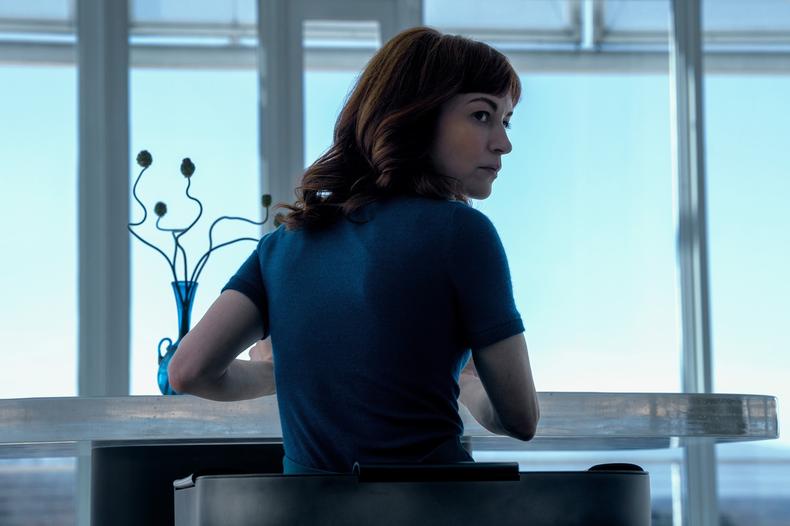
On Dan Erickson’s Apple TV+ drama, Lower plays two consciousnesses inhabiting one body: reluctant office drone Helly R. and ruthless heiress Helena Eagan. The actor’s ability to pull double duty as a fiery “innie” and her icy “outie” is crucial to the allure of “Severance.” The second season lets Lower stretch the series’ persona-switching concept into jaw-dropping new shapes. On the fourth episode, “Woe’s Hollow,” she keeps Helly's coworkers and TV viewers alike guessing who’s at the wheel.
How do you go about playing two characters in the same body?
I definitely started from that place of: Well, what do they share? They’re both trapped by the same family, just in really different ways. Helena has all these years of conditioning, and she’s had to compose herself behind a variety of masks. Even though Helly R. is also trapped, she really doesn’t care what anyone thinks of her, or that someone might be judging her behavior. She has this pure id energy.
What inspired your approach to this dual role?
I watched a lot of live performances of Patti Smith, just because of the way she expresses herself through her music and presence. Her album “Horses” was something I listened to a lot when I was first discovering Helly R. I really admire Tilda Swinton, and her performance in “Orlando” gave me a little insight into Helena and the isolation of being raised in a public-facing family.
How do you think your experience on “Severance” will affect your future work?
I think we make art in order to understand what it means to be human. That idea is at the core of this show in a really big way. It’s something I will always carry with me when I meet a new character.
Credit: Jon Pack
Patrick Schwarzenegger
“The White Lotus”
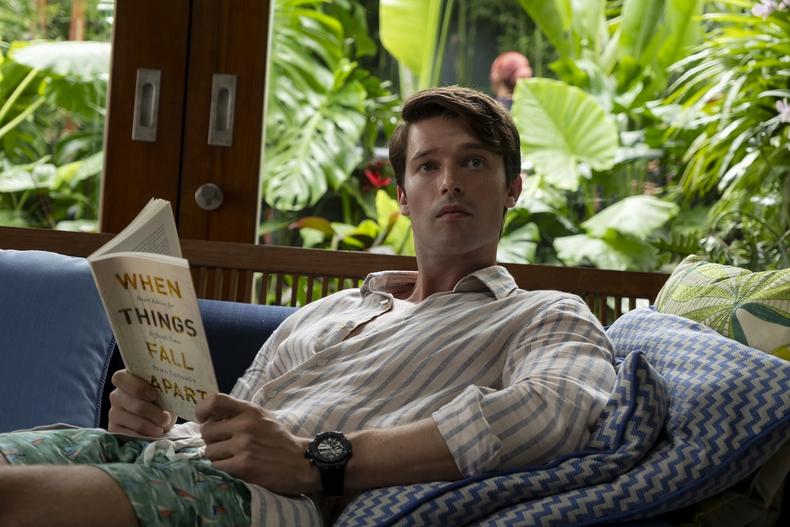
This actor became the subject of water-cooler conversations across America thanks to his turn on the third season of Mike White’s HBO anthology series. His boorish, muscle-flexing performance as Saxon Ratliff, a protein shake–chugging business bro on a family vacation from hell, is nauseatingly precise from the get-go. One brotherly bonding moment gone awry and several ego deaths later, Schwarzenegger’s subtle character work turns a shallow puddle of stale beer into a freshly opened can of self-awareness.
What performances inspired your approach to Saxon?
I tried to look at other “douche” characters that I thought were well-played, but there aren’t that many that you truly remember. Usually, the ones that have launched actors’ careers have more levels, whether that’s Bradley Cooper in “Wedding Crashers” or Christian Bale in “American Psycho.” I wanted the audience to question if Saxon was the killer. He was kind of creepy, and he was super hypersexual.
What surprised you most about playing this character?
Although he’s so unfiltered and ridiculous, it’s funnier if you play it really serious. He really does care about his brother, he really does care about his sister, and he really does love his family. But his emotional ceiling is so low that he just does not know how to communicate some things.
What will you take from this experience to future sets?
Be like Flubber; be able to change and adapt on the spot. When you’re working with someone like Mike, who’s the writer and the director, it’s a blessing. He can yell out over the camera to change the scene right there. The most important thing is to understand who the character is, his point of view on each and every person, and his relationship with everyone.
Credit: Fabio Lovino/HBO
Credit: Stefania Rosini/Netflix/Liane Hentscher/Macall Polay/HBO
More first-time Emmy hopefuls worthy of a spot on voters’ shortlists include:
Adam Brody
“Nobody Wants This”
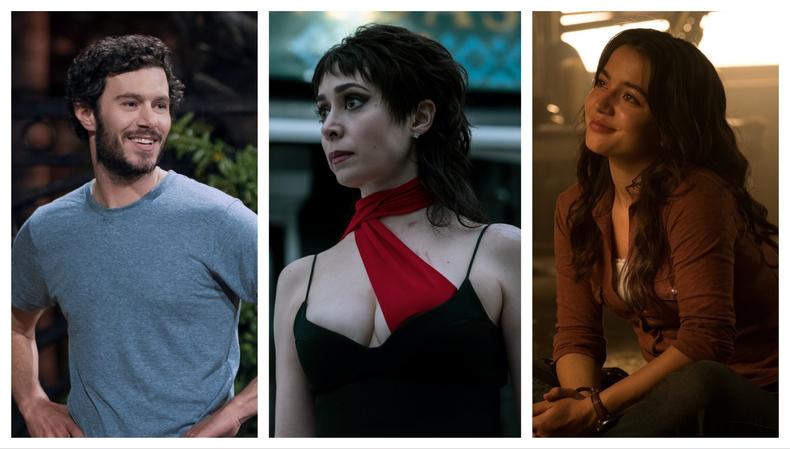
Brody is at his snarky, magnetic best as hunky rabbi Noah Roklov on Erin Foster’s Netflix rom-com. Call it a corrective for the fact that he didn’t get an Emmy nom for his breakout role as Seth Cohen on classic 2000s series “The O.C.”
Owen Cooper
“Adolescence”
This 15-year-old performer took our breath away in his first screen role as Jamie Cooper, a British teen radicalized into murder by the right-wing manosphere. Jamie’s volatile swings from childish fear to explosive rage left viewers asking themselves, “He’s how old, again?”
Marcello Hernández
“Saturday Night Live”
On the 50th season of NBC’s sketch-comedy institution, the name on everybody’s lips was Domingo. Hernandez earned his place in the “SNL” firmament with this viral recurring character—an impossibly suave lothario who’s ready to cuckold men the world over.
Poorna Jagannathan
“Deli Boys”
Whenever Jagannathan’s Lucky Auntie enters a scene, you never know if you’ll get the ruthless drug-ring consigliere with a talent for murder or the maternal figure helping her bumbling nephews mourn their father. One thing’s for sure on Abdullah Saeed’s Hulu comedy: You won’t be able to tear your eyes off her.
Isabela Merced
“The Last of Us”
Merced brings much-needed joie de vivre to the second season of Craig Mazin and Neil Druckmann’s fungus-infested HBO zombie drama. As Dina, she tempers Ellie Williams’ (Bella Ramsey) vengeful rage with flirtatious passion and undying support.
Cristin Milioti
“The Penguin”
Lauren LeFranc’s HBO crime miniseries might be named after Colin Farrell’s bird- hemed gangster, but Milioti’s Sofia Falcone is the show’s real animal: rabid, unpredictable, and ready to devour her enemies whole.
This story originally appeared in the June 12 issue of Backstage Magazine.