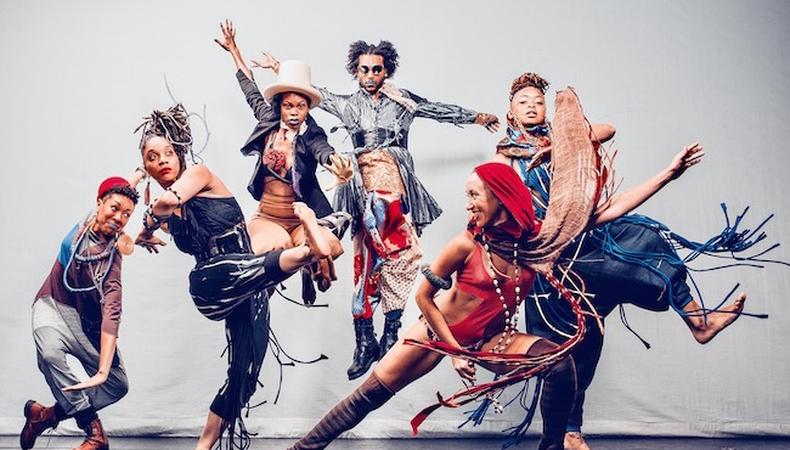
At a time when historically marginalized voices are being amplified in new and thrilling ways, Brooklyn-based dance company Urban Bush Women is ensuring creative movement isn’t left out of the conversation. UBW and its Founding Artistic Director Jawole Willa Jo Zollar have been providing support for choreographers, spaces for dancers, and art for communities across the country for 30 years, and continue to make progress.
Here, Zollar speaks to Backstage about UBW and the Choreographic Center, which provides a platform and resources for new works from underrepresented artists, the creative process for the company’s latest work “Hair and Other Stories,” and the skills she looks for in her dancers.
What style of dance does the company perform?
We are trained in ballet, modern, and contemporary dance practices. Some come from athletic backgrounds—hip-hop, Capoeira. Whatever they bring, they bring their whole training to the ensemble. Because everybody in the company has a university dance background, we thought of other forms of our own. For this new work “Hair and Other Stories,” they had to create a physical language.
Can you speak about your creation process?
Research is a part of how we develop language and we generate from that research. The research can be interviews, observations, going to the library, looking at pictures, looking at videos, reading articles. We did a work called “Walking with Pearl... Southern Diaries” a few years ago and as a part of that work we staged her 1945 work “Pearl Primus.” We wanted to create a language where that 1945 [piece] could sit inside this larger work and feel like they’re in the same conversation. What was the language of the time? What were the issues of sharecropping? What did that feel like? What did the bodies look like? What were the songs?
What skills do you look for in dancers?
The ability to be a soloist inside of an ensemble where each person has a distinctive style, but they come together, they play together. I look for people that can work in an ensemble but have a strong point of view and movement style that is either right there on the surface or is ready to be developed. I look for people who are immensely curious. Curiosity is a big driver for Urban Bush Women.
How has movement allowed Urban Bush Women to progress in community engagement?
In the early phases of Urban Bush Women, there wasn’t a separation. We never thought of ourselves as social workers, we thought, we’re artists. We wanted to connect deeply, to strengthen our practice so that we didn’t just get in a bubble, but really connected to, what are the issues? What are the concerns? What are the ways that the elderly move within that community? What are the ways that the young move in that community? All of that informs our practice. When touring, in the beginning, particularly African-American people, but not exclusively, would say, “I saw myself on stage.” That’s what we want! We want people to see themselves on stage.
What do you believe sets Urban Bush Women and the Choreographic Center apart?
We’re really value-centered. We debrief a lot [with questions] like, how did the values show up? Where did we lose them? Were the questions around it, in terms of our individual practice as teachers or facilitators, examined? How are the individual voices of the performers reflected? How is history valued and reflected in our work? That’s where the leadership develops. Each person is asked to step up in their process and understand the values.
What are UBW’s core values?
We’re catalysts for social change. We want to provoke conversation and to provoke thinking differently than when the person walked into the theater.
We believe that place matters. We like to connect with people. That exists in this new work [“Hair and Other Stories”]; we’ve created hair parties as a way to also have a conversation and connect. We celebrate the African Diasporic form—the way that we move the pelvises and the rib cage, some people would say it was lewd, but we say that the African Diaspora values the entire body moving. The pelvis is a part of a moving dialogue and whether it comes from the cultural forms of street dancing or how we approach contemporary or even ballet practice, the movement of the pelvis, the polyrhythms, the ideas of juxtaposition, and asymmetry are important parts of the aesthetics of the African Diaspora.
How do you foster trust within your ensemble?
Dancers are not trained to question. Dancers are trained to be obedient. Theater artists are trained more to question: “What is my intent here?” “How did this connect to this part?” “I’m having trouble connecting my character to this.” You have dialogue. Dance often shuts that down. We have to really pay attention to [making] room for that questioning. It takes more time in the practice but makes it more of a richer practice.
What are some upcoming events?
The tour [happening through April 28] is the big thing that’s happening right now. The Choreographic Center is the other big focus. I wanted to support female choreographers of color who were experimenting in ways that people were not necessarily validating or seeing within the traditional confines of what we often call “Downtown Dance,” which basically means white-postmodern. Because of who was in charge and running with their voice and vision, they didn’t recognize the way these artists were working with story and social issues. I felt the work wasn’t getting the support or being looked at. I think that’s beginning to change. One woman in the Choreographic Center is looking at sex trafficking in Oakland. She did site-specific immersive work in the sites of the sex trafficking and its performance involved the community. That was a lot of the genesis of the Choreographic Center. How can we support these artists and voices?
What advice would you give to artists?
Spend more time developing a vision and less time branding yourself. Spend more time in the smaller alternative spaces, which I feel are the life-blood of creating the vision. Spend more time there questioning, deepening, and experimenting before you announce yourself. There’s this phenomenal branding but there’s nothing behind it.
Visit the Urban Bush Women website for performance dates near you.