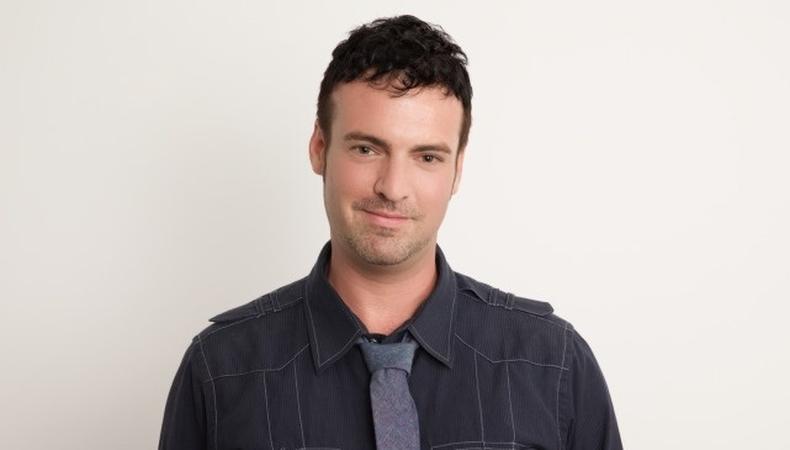
While most of the industry is ramping up for awards season campaigns, casting director Carmen Aiello is starting his own campaign – against auditioning. The Chicago transplant is trying to bring back the human element to casting. Aiello has worked in TV (“CSI: Miami, “Scare Tactics”) and film (“Excision,” “The Employer”) casting, as well as spending time at an agency and as a junior manager, giving him an understanding of the casting process from all sides.
“If you have a name you don’t have to audition, you just have to meet with them, but if you don’t have a name and you don’t have credits you have to audition in order to validate your career. In order to validate your talent.” Aiello says the process of bringing in hundreds of actors to “see if they can act in a cold room” with people staring at them was excruciating. Even though he takes notes throughout his sessions, Aiello says “I had no connection to them as a human being…everybody felt like this blob of like artistic energy that at the end of the day I couldn’t decipher any of the people we met.”
Aiello says in the past, the process made sense: “We had black and white headshots, we had resumes, so in order to validate this talent, in my belief, you had to see actors audition, because you had to see if there was a way to pull their black and white headshot and resume into like the three dimensional character.”
But it doesn’t make sense to Aiello anymore. “What hit me was when Breakdown’s Gary Marsh, who I greatly respect, started doing the ‘slate.’ As if casting directors are so ignorant about talent that they cannot tell if you are talented enough through a demo reel that they have to click and now see if you can say your name. Can you say your name? Great. Then I’ll watch your demo reel.” He wanted to have creative conversations with the actors, not hear them read sides or audition in the traditional sense.
In an industry where everything changes from cameras to platform delivery systems, Aiello is confident that the casting process is ready for this revamp and he doesn’t plan to go back to the traditional route, no matter who’s asking. “I’m not Simon Cowell and I’m not trying to cast ‘American Idol’ and I’m not trying to be on TV and please like 100 million people by my own personality. My job is to service the need of the actor and protect my production.” Aiello doesn’t hold “auditions,” he holds “creative meetings.” He’s done the work of watching the actor’s reel ahead of time so when he brings actors in, they are already validated when they walk in the room. “You are an actor, you’re there because I’ve seen your materials and read your resume, or there’s something about you that I really like and I want to meet.”
He worked closely with Adi Shankar (“Lone Survivor,” “The Grey”) on “Gods and Secrets.” Shankar knew Aiello professionally, trusted him, and hated auditions himself so he was eager to embrace Aiello’s desire to try something different. Aiello’s also introduced his method to Tony Valenzuela at Ron Howard and Brian Grazer’s company New Form Digital. Instead of bringing in 30 people, he brings in a handful, four or five, and only gives them sides if they’re up for the role.
Aiello doesn’t like video auditions any better than in person auditions, but he’s open to actors sending tape. Aiello just wants the tape to be in the form of a creative meeting, with the actor reviewing the material in advance and then going on tape talking about himself and what he liked about the script and how he connected to the character.
While he’s opposed to auditions, he wants to bring back the general meetings that used to be an industry standard, but have faded from popularity. He had his casting associate Jessica Bennett set up a general audition for actors bringing in people of all diversities including foreign language speakers, actors with accents, and all types of people to just meet him. “Now I have a book of people that I can go to…and bring them in for a meeting straight with the director because I’ve already met them... General meetings are very traditional, but they’re very forward thinking now because they’ve become obsolete.”
“I’m doing this because I think it is the next step of what needs to be done and I’ve seen and I understand the journey of actors and I empathize with them. I want to see a process that works in order to tell a story and tell a story a right way and works with artists. I want them to feel like they are not being taken for granted. And they’re not just a number.”
Inspired by this post? Check out our Los Angeles audition listings!