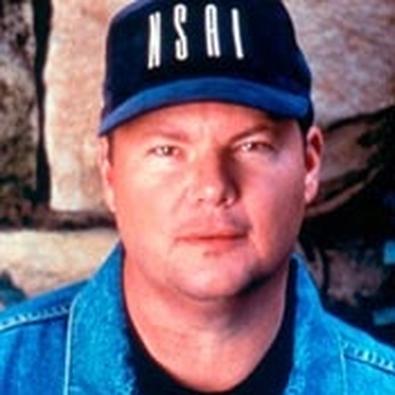
Christopher "Mr. Won Five 1981 Grammys Including Best New Artist" Cross does what he does, and that's all there is to it. He's got a clipped vocal delivery and employs it with a baritone-tenor voice that no fuss will ever be made about. He writes his songs mostly by himself but sometimes with others, including Burt Bacharach, Peter Allen, and Carol Bayer Sager on the 1981 Oscar-winning "Arthur's Theme."
Actually, he's the kind of tunesmith whose manner suggests he figures he wrote the item and therefore shouldn't be required to do anything more than set it out unexamined and unadorned before the patrons. Indeed, when singing and accompanying himself on guitar, he definitely doesn't give the impression he might approach a song as if someone else wrote it and therefore he might think about giving it an unexpected spin.
At the Café Carlyle, where he's just begun a four-week stay, he does give the impression he's sung some of his songs so many times he forgets that auditors may not have heard them recently. Or ever, in the case of songs from albums and CDs that did less well than the Grammy-winning Sailing. Like as not, he'll swallow his words as if gulping cod-liver oil. For instance, in the poetic phrase "when you get caught between the moon and New York City" (from "Arthur's Theme"), "get caught" comes out as "git-gawt."
Maybe what he's displaying on still chic Upper East Side Manhattan is down-home Texas laid-back. For that reason, fans showing up from his '80s glory days may go for every minute of a set that includes a baker's dozen songs. Of course, he does "Sailing," "Think of Laura," and "Ride Like the Wind" -- on arrangements as close to the recorded versions as possible. In that endeavor, he's aided by tasteful Andy Ezin at the piano and versatile David Mann as flute, sax, clarinet, and keyboard player.
Sitting on a stool with lips touching the mike, Cross works through the pages of his songbook while displaying a low-key sense of humor and a performing ease. This allows him to get by longer than might be estimated with singing that never varies from number to number and songs that too soon begin to sound like the same song many times over. Only when he reaches "Hunger" (co-written with Rob Meurer), about a man with a romantic obsession, does his mostly affectless technique suddenly match the subject matter of the lyric.
Cross' third selection is a number called "Driftin' Away" (co-written with Meurer), in which the words "your mind keeps drifting away" are repeated several times. Unfortunately, the observation eventually became an all-too-accurate description of what this listener was experiencing.
Presented by and at Café Carlyle,
35 E. 76th St., NYC.
April 15-May 10. Tue.-Thu., 8:45 p.m. Fri. and Sat., 8:45 and 10:45 p.m.
(212) 744-1600.