
The typical protagonist in a Christopher Nolan movie is a man consumed by his obsessions. He’s brilliant, but his brilliance is also what spells his doom. What he can do to remake the world inevitably creates blowback, and in some ways, he is the chief architect of both his downfall and his redemption. Some may find this too hermetic; a character trapped in his own mind by his own devices rather than an everyman swept up in a journey. But the quest for control provides a propulsive momentum to Nolan’s stories that taps into our fears of culpability and hopes for renewal.
Nolan begins
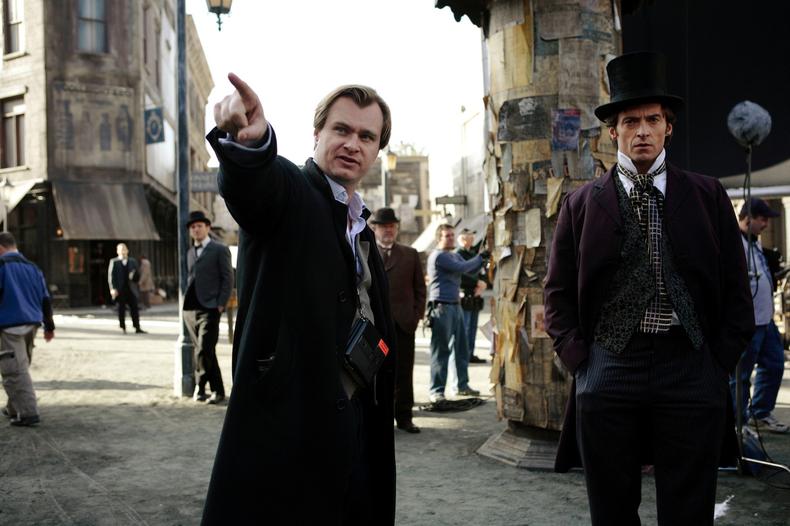
Christopher Nolan and Christian Bale on the set of “The Prestige” Courtesy Touchstone Pictures/Warner Bros/MovieStillsDB
The filmmaker’s earliest works, the neo-noirs “Following” (1998) and “Memento” (2000), are essentially about men playing detectives who don’t realize they’re chasing themselves. This is particularly acute in “Memento,” in which Leonard Shelby (Guy Pearce), an insurance investigator trying to solve the murder of his wife but without the benefit of short-term memory, is both arsonist and fireman. He’s looking for John G., only to be caught in a loop of a crime he can never solve because he never remembers the resolution. Pearce plays Leonard as a classic noir detective: world-weary and cynical, but convinced his intelligence will save him. He has a system that turns him into a human notepad, but he can’t solve the case because it would deny him purpose. His actions have meaning only within the cage he’s constructed.
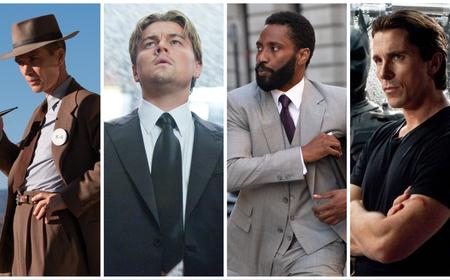 How to Audition for a Christopher Nolan Production
 That’s a similar affliction to the dueling magicians of “The Prestige” (2006), Lord Caldlow (Hugh Jackman) and Alfred Borden (Christian Bale). The two men will stop at nothing in trying to outdo each other, but both paths lead to destruction. Alfred, pulling a trick with his twin brother Frederick, loses almost everyone he loves, Frederick included. Caldlow goes even further: He clones himself, not knowing if he’ll truly experience the audience’s applause or death by drowning beneath the stage.
Once again, brilliance leads to the annihilation of the self, and Jackman and Bale play these characters as particularly ugly and irredeemable, perhaps the darkest that Nolan protagonists have ever gone.
Dark knights and deep dreams
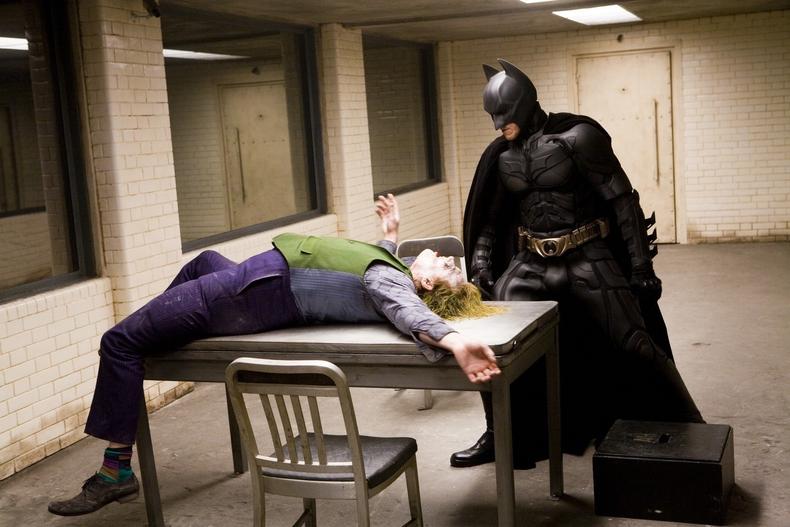
“The Dark Knight” Courtesy Warner Bros/Legendary Pictures/MovieStillsDB
In the realm of the hero, brilliance is inextricably tied to sacrifice and escalation. Nowhere is that clearer than in Nolan’s trilogy of Batman films, which reimagine the world of the Caped Crusader as a series of crime thrillers. “The Dark Knight” (2008) accentuates the tragedy of his protagonist by introducing the Joker (Heath Ledger), a villain who is just as cunning but has nothing to lose. Beneath Bale’s gravelly Batman voice, he and Nolan have the wherewithal to have the character admit defeat and acknowledge that sacrificing his heroic persona is the only way to move forward. “Sometimes, the truth isn’t good enough,” Batman intones. “Sometimes, people deserve something more.”
The blurring of truth and fabrication recurs with Leonardo DiCaprio’s Cobb trying to outrun his guilt in “Inception” (2010). Beyond its elaborate dream architecture, the core of the film is a man who thought he was clever enough to bring himself and his wife, Mal (Marion Cotillard), out of a dream but ended up shattering her reality.
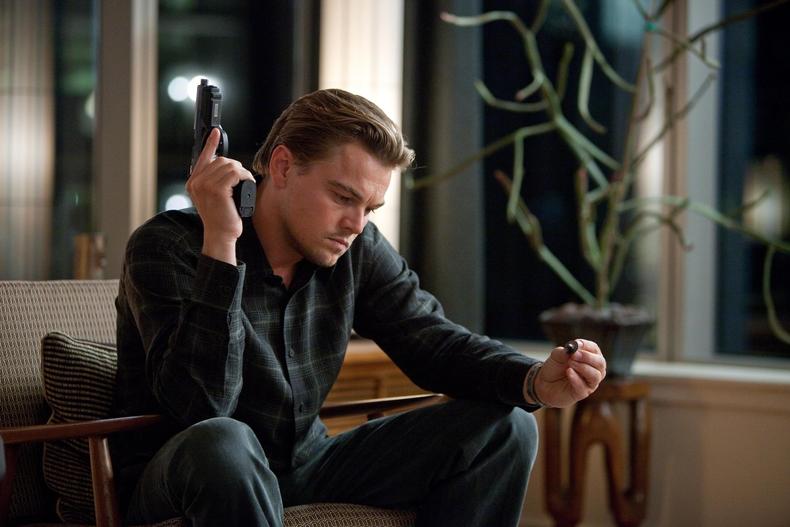
Leonardo DiCaprio in “Inception” Courtesy Syncopy/Warner Bros/MovieStillsDB
Guilt hangs heavy over so many Nolan protagonists. The audience hopes these men can find some kind of catharsis from the destruction their hubris caused—that somehow Icarus can land safely after flying too close to the sun.
However, unlike Batman at the end of “The Dark Knight,” Cobb concedes that his lie—his dream—isn’t good enough to hold a re-creation of his wife. If he wants to return to their children, whether they be a dream or a reality, he has to live with the truth of his guilt.
Brilliant men who break the world
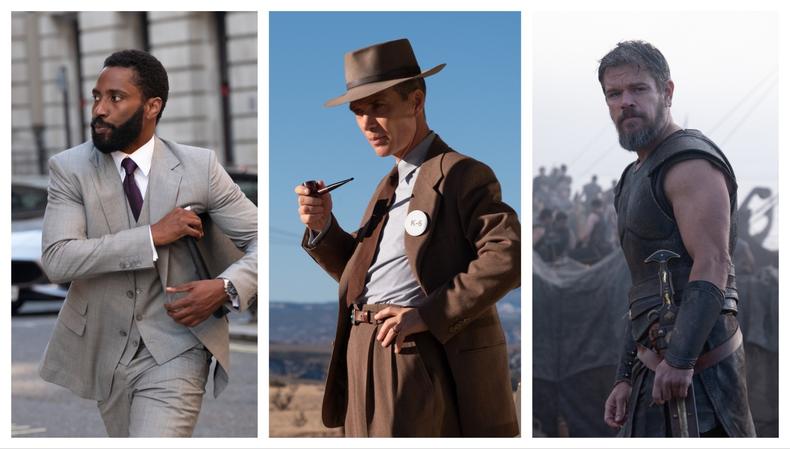
“Tenet,” “Oppenheimer,” “The Odyssey” Credit: Melinda Sue Gordon
It’s telling that Nolan’s most confident, least bothered leading man is the Protagonist (John David Washington) of “Tenet” (2020). We’re invited to go along for the ride, and while other characters are captured by their guilt, grief, and sacrifice, the Protagonist glides through his mission like he’s James Bond (Sean Connery Bond, not Deep Trauma Daniel Craig Bond), moving forward and then backward in time so that an evil billionaire won’t destroy the world. Washington’s performance, cheeky and collected, is a useful counterweight to typical Nolan leads who are beholden to both their intellect and their shame.
Two of the clearest examples of Nolan’s preoccupations: the collision of the pointedly modern J. Robert Oppenheimer (Cillian Murphy) in “Oppenheimer” (2023) and the classic hero of myth Odysseus (Matt Damon) in “The Odyssey.” Both men are haunted by what their brilliance set in motion. In the former, the scientist’s drive to save the world by creating the atom bomb leads to the unraveling of the global order. In the latter, Odysseus’ use of the Trojan horse to sack Troy destroys Zeus’ Law of mutual cooperation between host and guest.
Both characters are renowned for their accomplishments in war, but they’re also smart enough to know the fatal errors they’ve made. Murphy and Damon understand the need to convey not only intelligence and regret, but also that their deep guilt and trauma are intertwined. Nolan is not opposed to an uplifting ending—like Cobb setting aside his worry at the end of “Inception” or John “Robin” Blake taking up the mantle of Batman at the end of “The Dark Knight Rises” (2012)—but his most recent protagonists are far more ambivalent.
But such ambivalence makes for compelling characters in the right hands. Although Nolan was arguably part of launching the superhero boom thanks to the success of “Batman Begins” (2005), his work now has audiences wondering what happens when being brilliant isn’t enough. In the Nolan protagonist, we see men whose intelligence can run past their morality, and what happens in the fallout. We all understand best intentions, but what these performances ask of us, and why these characters remain so intriguing, is because they explore the question, “What comes next?” In the hands of Nolan and his actors, the answer is always unexpected and worth discussing.