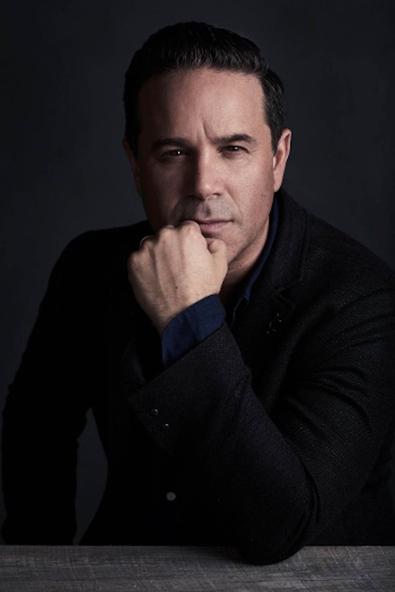
Raney Shockne is now a sought-after composer for USA’s “Queen of the South” and more, but he was once a struggling L.A. talent with music in his blood. Here, he chats with Backstage about reconciling his musicianship with partnership and how an actor’s performance inspires his work as a composer.
Composing is most vital for weak performances.
“[Composing] is a balance between trying to dictate the actor’s emotion if it’s not coming through or simply accentuating what’s already strong. The composer is leaned on most when the performance is weak. I have had instances where [series creatives] tried to make me make the performance better by dictating what did not come across from an actor.”
READ: 4 Free Things an Actor Can Do to Improve
Actors are musical inspiration.
“The trick about the acting and where I come in is [the actors’] love for their craft is only going to help everyone. [If] they honor their part, then everybody else’s job is much more fluid and so much easier. When I’m seeing a strong performance, it’s so inspiring to create the art. Actors have a tremendous responsibility because, after all, it’s really about those performances, and everybody else is the dressing around them.”
Compositions help deepen characters.
“If we can reprise the scene related to the character, it gives the audience a stronger association with that character and we can build subtleties. For example, if the character is not in the scene but we’re talking about them, I can allude to them with that melodic line, and the audience will subconsciously remember them because they’ve been associated with that so many times.”
Time is a blessing and a curse for composers.
“Time is the biggest constraint. We’re dealing with a nearly impossible thing: getting a scripted drama with 35 minutes of original score out there in four days. It’s really intense. The con is that it is a ton in a short amount of time. The pro is that it forces you to commit to your creativity in a way that you would never do as an artist. As a songwriter [detached from on-camera projects], I was always meandering through artistic paths and taking months to create things and getting very precious about stuff. Here, it has to be a guttural response that’s purely creative and intuitive, and I have to be able to commit.”
Composers have to be selfless artists.
“[As a solo musician, I had to go] from being a wholly artistic, complete and utter narcissist to having to find humility enough to be in a collaboration and realize it’s a much bigger picture. I can’t go into a project to become the element that shines above all. I have to be a player—just as an actor, just as a writer, just as a director—to try to be a part of the bigger wheel and to try to accentuate the full project.”
Inspired? Check out Backstage’s TV audition listings!