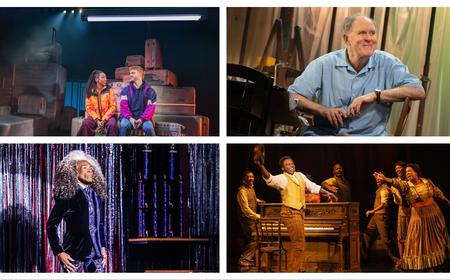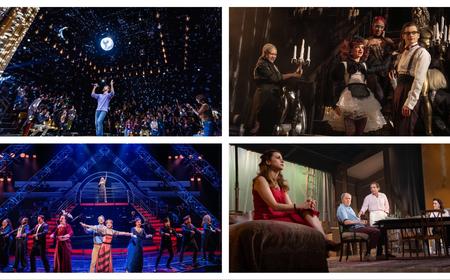
A CSA member since 2008, Megan Larche Dominick is the in-house casting director for the Muny (the Municipal Theatre Association of St. Louis), an outdoor musical theater bringing classic productions to audiences in Forrest Park. Here, the CD shares the best way to impress her, the secret to a successful training session, and the most common audition mistake she sees!
Upcoming credits: The Muny’s 2016 season including “The Wizard of Oz,” “42nd Street,” “The Music Man,” “Young Frankenstein,” “Mamma Mia!,” “Fiddler on the Roof,” and “Aida”
What do you do when you’re not working?
Play with my almost-3-year-old daughter who is the center of my world.
How do you choose your projects?
I’m the in-house casting director for a regional theater. The shows I cast here are chosen by our artistic director.
Before actual auditions, how does the casting process begin?
I make principal lists brainstorming with my artistic director. Once we’re on the same page, I have calls with my directors to get a short list of principals for straight offers. The rest of the company is fleshed out with auditions, some in person and some on tape. We don’t only hire from NYC because we pride ourselves on being the first big job for a lot of young performers. Danny Bernstein, Beth Leavel—they all got their start out here. It’s important that the professionals of tomorrow work alongside the professionals of today. We want a balance of Broadway and college stars.
What is the most common audition room mistake you see?
Lack of preparation. Don’t walk into a room unless you not only know your initial song cut, but have some options picked out and ready to go if I want to hear more. And don’t offer me a song option of you aren’t really solid on it! That’s setting yourself up for a failure.
What do you want every actor walking into your room to know?
I’m grateful you are sharing your time with me and I want you to be successful!
What makes for a successful audition tape?
Good lighting and sound. I use tape for 75 percent of my casting, and while I don’t need it to look like a Scorsese shoot, I need to see and hear you clearly. I’m always surprised at the amount of tapes I get that seem to somehow overlook the basics.
What projects do you wish you’d worked on?
I'm lucky because each season I get to cast seven different musicals and have already had the chance to tackle some dreams shows (“Into the Woods,” “My Fair Lady,” “Hello, Dolly!”). But I do miss working on plays—especially new pieces.
In addition to open calls, where do you find new talent?
I see shows in town, the national tours that come through, as well as trips to NYC multiple times a year. I also teach master classes in St. Louis and NYC. That’s been a very helpful way of meeting new people. And lots of recommendations from creatives who are Muny alum. We have a very specific process and once you’ve done a show out here you know exactly what kind of performer can handle 11 days of rehearsal and one day of tech!
What is the best way for actors to impress you enough that you’ll bring them in for another project?
Do what you do best and do it well. Be open to adjustments and really go for it.
How important is training versus experience to you?
Training helps to not only refine technique, but it allows young performers the chance to keep developing as a person. This business can be very challenging and spending time at school or in a program gives you time to know yourself better, which ultimately leads to more confidence and flexibility in the room.
What makes a casting session successful?
Finding “the one”—that person I know my creatives will be excited by. Even better is finding two or three unique but exciting options for a role. With summer stock, I always have to have backup ideas.
What advice would you give to someone who is looking to go into casting as a career?
Make sure you have strong office skills! Being fluent in Word, Excel, Adobe, Formstack, video cameras, wireless mics, iMovie, Mac and PC knowledge, as well as a sick love of binder clips are all requirements. The glamorous part of casting—being in the room with talent—is only a third of the work we do. We then have to organize it, track it, share it, and make sense of it all. Solid office skills are the backbone of the casting.
Inspired by this post? Check out our theater audition listings!