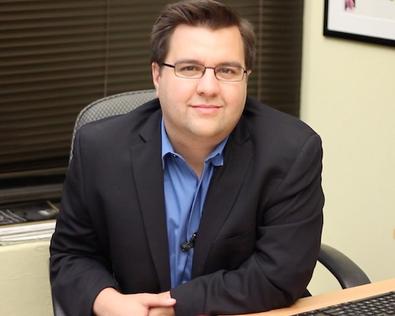
Michael Cassara, a CSA member since 2007, talks about the theatrical visionaries who inspired him, his work on the New York Musical Theater Festival, and the importance of looking at the long game for actors.
Upcoming credits: resident casting office for the National Alliance for Musical Theater (NAMT); the New York Musical Theater Festival (NYMF); the National Asian Artists Project (NAAP). Numerous regional theater seasons including the Hangar Theater (Ithaca, N.Y.), Gulfshore Playhouse (Naples, Fla.), and more.
What do you do when you’re not working?
I’ve been doing genealogical research for over 20 years and spend a lot of time doing family history research and preservation. Italian and Sicilian research is my specialty and—when I’m not in auditions—I’m most often trying to decipher 18th century handwriting. I recently completed Boston University’s certificate program in genealogical research, and in February I’ll be speaking for the third time at RootsTech, the world’s largest genealogy conference, in Salt Lake City, Utah.
How do you choose your projects?
Whenever a new project is proposed, we consider its particular needs, along with the timeframe and any challenges it might present, to determine whether or not we’re the right office for it. This is my 12th year in business on my own, so I’m fortunate to have some frequent collaborators—directors, writers, producers, and institutional theaters. Many things factor into making those decisions, but if it’s interesting work with interesting people, we’re usually game.
Before actual auditions, how does the casting process begin?
Every project is different, but I usually like to start with conversations with the director, writer(s), and other members of the creative team. If I can take stock of the needs of each team member, as well as their hopes and goals, it lets me start to think about which performers might fit the bill. Beyond that, much of the early process is logistical: compiling efficient sides, determining how we’ll approach auditions, coordinating everyone’s schedules, etc.
What is the most common audition room mistake you see?
Lack of preparation.
What do you want every actor walking into your room to know?
Don’t try to be what you think we want you to be. Be the best version of yourself you can be. It’s rare that I’ll call someone in for an audition appointment without having seen their work (or at least some clips, etc.). If I’m calling someone in for a project it’s because I want to see their take on it.
What makes for a successful audition tape?
Video and audio quality do matter. I know there are those who say it’s all about the content, and the work, but the fact remains that the majority of self-tapes we’re receiving these days are of an exceptionally high-production quality. Of course the work must be well prepared and well executed, but as the person who sees thousands of these, I really feel as if the days of not focusing on packaging elements are now behind us, and subpar production quality can make it much harder for us to consider one’s work. (This is not to say that you need to spend a great deal of money hiring a cinematographer. Learn how to use what you have to create quality output. Invest in basic lighting and trust in trial and error.)
What projects do you wish you’d worked on?
Many. I work in the theater today because of a number of visionaries: Sondheim, Prince, Bock & Harnick, Jones & Schmidt, and others. While I’ve had some great opportunities to work with many of my heroes, I’d drop everything to get to work with some of the folks I just mentioned.
In addition to open calls, where do you find new talent?
Everywhere. I’m constantly seeing theater, showcases, films, etc. I also teach at a number of universities, allowing me a great chance to meet performers before they even get to the city.
What is the best way for actors to impress you enough that you’ll bring them in for another project?
Smart preparation is vital, but I’m most interested in the long game. Actors are incredible and I can think of hundreds of folks with whom I would trust my life: Their consistent good work is inspiring and dependable. No one earns that kind of reputation based upon one audition or one job; it’s a lifelong commitment.
How important is training versus experience to you?
Both are vital. I’m so disheartened when I meet performers who think that training stops after college. It doesn’t. It’s a lifelong pursuit, and the best actors I know are constantly studying and growing. Conversely, it’s very easy to get sucked in to an academic wormhole. Don’t. I would never advocate going to graduate school directly from undergrad. An actor must have the opportunity to explore the world and figure out what it is they want to gain from further training before they pursue it.
What makes a casting session successful?
Collaboration and respect. We must respect the creative team’s vision and help to see it to fruition. It’s very satisfying when we’re able to add to the creative team’s vision of the show by introducing them to performers they didn’t know previously, or perhaps those who are not as expected choices for the roles at hand.
What advice would you give to someone who is looking to go into casting as a career?
Try it first. Do an internship or volunteer and see if the work appeals to you. Casting is not for everyone; there’s a real bipolarity to what we do and one must have thick skin and tenacity. I was not a particularly dedicated or successful student in high school and college, but no one had a deeper knowledge of original cast recordings or the people who appeared on them. I was well into college (studying musical theater performance) before I realized that all of that “useless knowledge” might actually be useful for something. I was lucky enough to find a job that I love.
Inspired by this post? Check out our audition listings!