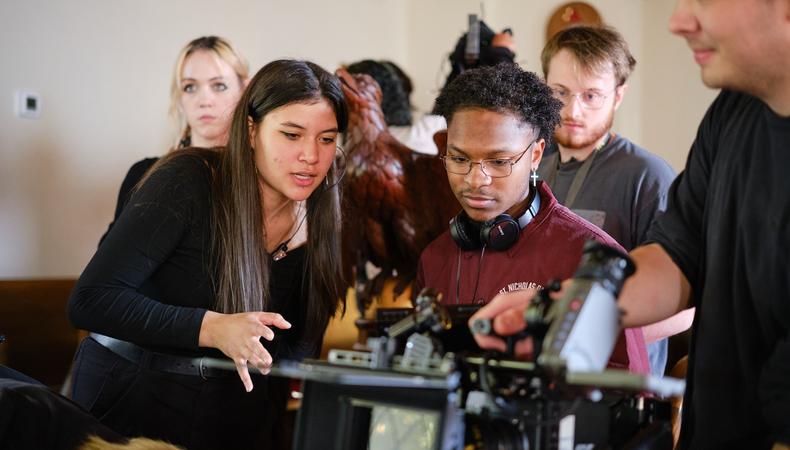
The University of North Carolina School of the Arts’ School of Filmmaking has earned a reputation as one of the best in the country. Close to 400 students are enrolled in the program, whose alums include actor-writer-director Danny McBride (“The Righteous Gemstones”), Emmy-nominated writer-director Craig Zobel (“Mare of Easttown”), and Emmy-nominated cinematographer Zoë White (“The Handmaid’s Tale”).
Deborah LaVine became dean of the school in 2021; previously, she headed the film directing graduate department at CalArts. As UNCSA’s filmmaking program celebrates its 30th anniversary, LaVine shares her insights on the ongoing challenges facing the industry.
UNCSA’s School of Filmmaking was founded more than a decade before the launch of the first video-streaming site and three years before the release of the first digital feature. Given current shifts in the industry, what’s your approach to educating the next generation of filmmakers?
An academic arts education is something that has to be perpetually evaluated. A lot of students come in with practical skill sets. In their first or second year, they’re saying, “I want to make my first feature,” when they haven’t yet made shorts that are functioning. So we’re trying to get them to put on the brakes by saying, “You’re very visually literate based on what you’ve seen, but a lot of what you’ve seen is curated by algorithms.” Or, “You might know how to edit with any of the software [available], but do you understand that editing is writing with footage?” We’re trying to give them eye-opening references.
Our industry is constantly changing. In five or 10 years, is streaming even going to be what we’re looking at? I don’t know. What needs to keep evolving is the form and structure of films, whether they’re for a cinema screen, iPhone, or TikTok. Our curriculum includes immersive technologies. The [video] installation world is not impacted by the WGA and SAG-AFTRA strikes; we have students making work for Beyoncé’s tour. We can’t teach it all, but we have to create an environment where students feel nimble enough to tell stories in whatever the form is going to be that launches or sustains careers.
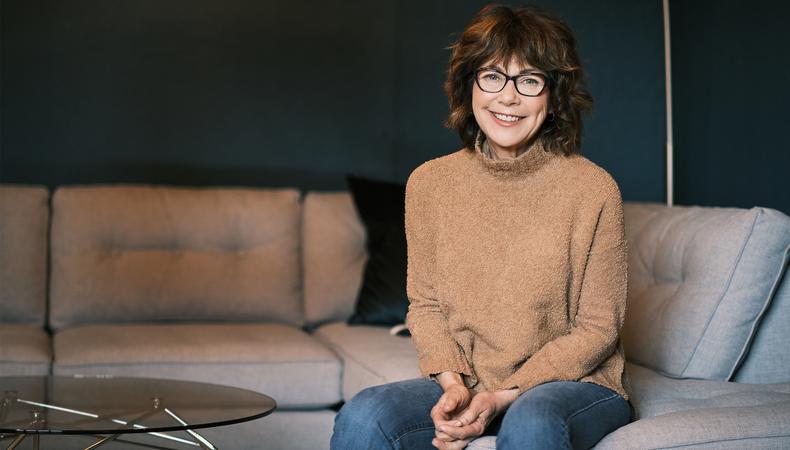
Deborah LaVine Credit: Wayne Reich
How do you convince high-caliber talent to study in North Carolina instead of New York or Los Angeles?
When he created the CalArts campus, Walt Disney apparently chose Santa Clarita because it was out in the boonies, and it wasn’t an extension of Los Angeles as it is now. I grew up with the philosophy that less distraction is a benefit to a young artist. It gives students time for contemplation and ideation and daydreaming.
We are putting a lot of energy toward helping North Carolina reboot what had been a burgeoning film and television industry when “Dawson’s Creek” and “One Tree Hill” were shooting here. Then, it deflated a bit. The region offers dynamic stories; the sounds, tastes, expression, and rituals might inform a standout voice.
Where did you go to college, and how did you get your start in directing?
I went to Cal State [in] Long Beach, where I studied journalism and theater. My real education was that I was an actress—a terrible actress—but I did get work. I was on “General Hospital” and in films. In the mid-’80s, I started directing in small spaces and Equity-waiver theaters in Los Angeles; and I had the fortune of being noticed by film producers at MGM and Universal who said my work felt like films onstage. At their recommendation, I started meeting film directors and shadowing them.
And honestly, the sexism and misogyny scared me to death. In offices, I would be told that if I wanted to get to the next level, I would have to sleep with someone—and that’s not me. I’m sure there were women who brushed it off and said, “No way; forget about it. Let’s keep talking about the project.” It wasn’t an environment I could thrive in. But the theater embraced me, and I had a lucrative career as a director. Then I fell in love with teaching as well. When I was moved into the film school at CalArts, I started directing more films.
Despite social progress over the years, female and female-identifying students now have fewer constitutional rights than they did during the era you’re recalling. Do you feel that today’s industry is more welcoming to female directors?
No. You can win an Academy Award and be given a Marvel film, and even though you just became the toast of the town, then you go to this world where it’s an established hierarchy of male executives, and you don’t have any authority or real power. I had a chilling moment not long ago where a female student said, “Deborah, my instructor and my friends tell me I’m too nice to be a film director”—the assumption being that film directors must have a certain kind of steeliness. I disagree. You need to be authentic. If your personality is to be a listener and a nurturer, it doesn’t matter, as long as you know what you have to do as a director. If you do it and do it well, eventually, everyone’s going to go, She knows what she’s doing.
This interview has been edited and condensed for clarity.
This story originally appeared in the Oct. 19 issue of Backstage Magazine.