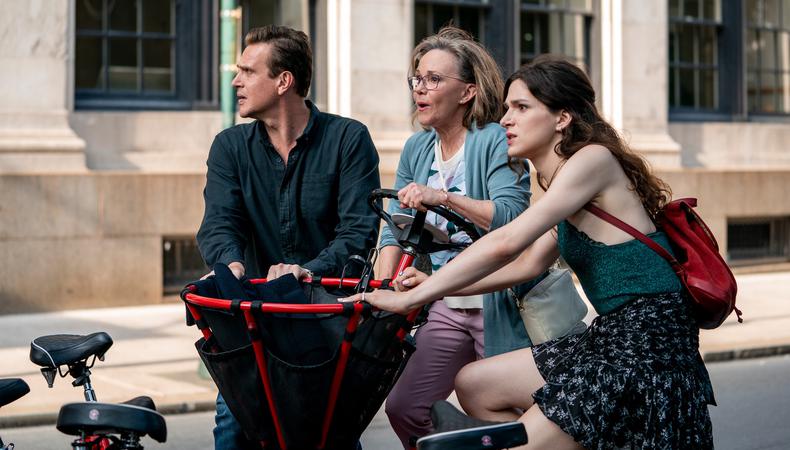
Director Wendey Stanzler entered the world of “Dispatches From Elsewhere” with the same ardent curiosity that draws the series’ characters into its alternate reality. The AMC drama, which premiered March 1 and is created by and stars Jason Segel, is based on an alternate reality game and social movement that swept San Franciscans into a frenzy of scavenger hunts and street dances led by the mysterious Jejune Institute in the early aughts.
“Dispatches From Elsewhere” takes place in Philadelphia and follows a group of ordinary people as they discover a similar alternate reality game. “What was most fascinating was, as an adult human, realizing that we live in this world where we are so hungry for meaning, connectedness, and community,” says Stanzler.
While its guise may literally be fun and games, “Dispatches From Elsewhere” is tinged with darkness—the Jejune Institute might just be a cult, or perhaps even an undercover government operation. Whatever it is, it’s a far cry from the comedies like “How I Met Your Mother” that catapulted Segel into the spotlight. “It was pleasantly surprising to find someone who is known in a commercial world to be searching for something with a deeper meaning that was complicated and challenging in the very best way,” Stanzler describes of Segel. “I think people will look at [him] in a new way. He is full of surprises and an incredibly creative visionary.”
READ: How to Become a TV Director
Segel helmed the pilot episode, so Stanzler, who directed Episode 2, looked to him for clues when navigating the tone. The genre-bending anthology transcends dimensions, and elements of magical realism are introduced through pop-up cartoons, direct address, and split-screen film techniques. “It was really fun and challenging and stimulating,” Stanzler adds.
Each of the four episodes focuses on a different character’s discovery of the Jejune Institute, a setup that creates a choose-your-own-adventure experience for viewers. “The characters that he created to illuminate this world are these iconic, relatable characters who are all separate but each comprise a portion of one human,” explains Stanzler.
“I think things are getting better for women and people of color, but it is slow… There’s room for everyone, and the door should be flung open. ”
The cast, led by Segel, is a winning team that includes Sally Field, André Benjamin, Richard E. Grant, and Eve Lindley, who all added to the positive creative energy on set. Benjamin, perhaps better known as André 3000, played the flute between takes. “I thought this was the most amazing element on set I’ve ever experienced,” says Stanzler with a laugh. “You wouldn’t be aware of it until it got into your heart and soul, and then it would just calm you down. It was this thing that was kind of an appendage that was wonderful and warming and had a calming effect on set.”
Soothed by the flute, Stanzler tackled the episode titled “Simone,” which follows a trans woman, portrayed by Lindley, as she finds her way into this veiled reality—and into the orbit of Segel’s character as a love interest. “I felt like I really hit the jackpot,” effuses Stanzler about the episode. “It’s something that when I think about it, it makes me smile and get emotional. Her story was something that really touched me deeply, and I felt like it was a real privilege to be able tell the story of someone struggling with who they were, struggling in the world, and struggling around gender.”
She advises writers and directors to chase projects they’re passionate about, that will “drive somebody to the next level.” Stanzler herself looks for projects that are politically driven, promote social change, and celebrate otherness. “That is completely in my DNA and what I’d like to do,” she says. To that end, her résumé includes Michael Moore documentaries, the TV series “Atypical,” and Dolly Parton’s “Heartstrings,” which touches on LGBTQ stories. She’s currently in Prague shooting the political fantasy series “Carnival Row,” adding: “My background is in political documentary, and, ultimately, the idea of doing some kind of narrative work with a political bent is where I’m trying to guide things for myself.”
For Stanzler, the buck doesn’t stop at representation onscreen; she believes there should be more diverse directors behind the camera, too, telling stories that challenge social norms.
“I think things are getting better for women and people of color, but it is slow,” she says, noting she entered the industry 17 years ago. “We need to be aware of it and talking about it on set.” For her part, Stanzler welcomes emerging directors to shadow her on set, and casts a wide net when searching for assistants. “There’s room for everyone, and the door should be flung open.”
Ready to get to work? Check out Backstage’s TV audition listings!