Kim Rosenstock made her name in television by writing for and producing shows that make you laugh. She first moved to Los Angeles to work on the quirky comedy “New Girl,” created by her friend Elizabeth Meriwether, and subsequently gained credits on the likes of “Single Parents” and “Only Murders in the Building.”
But co-creating and co-showrunning “Dying for Sex” with Meriwether was a different experience altogether. Yes, the project is a comedy, but it’s also an exploration of the unvarnished reality of living with and dying from Stage 4 breast cancer.
“A lot of my writing and storytelling early on and for a lot of my career was not necessarily hard comedy,” Rosenstock says. “I had always been interested in really painful topics and how to approach them with humor.”
The Emmy-nominated FX limited series is based on the 2020 podcast of the same name, which chronicled the sexual exploits of Molly Kochan, a 45-year-old New Yorker who decided to delve into her own understanding of pleasure upon finding out her cancer had metastasized. Kochan hosted the podcast alongside her best friend, Nikki Boyer, who’s now an executive producer on the TV show.
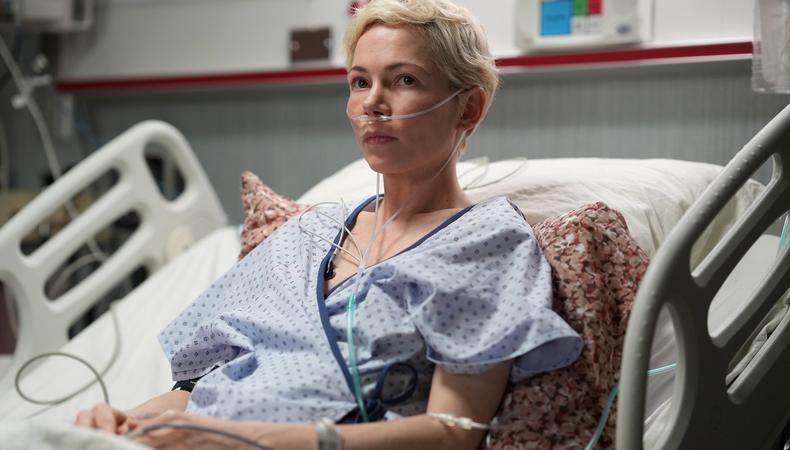
On the series, Molly, who’s portrayed by Emmy winner Michelle Williams, leaves her caring but unaffectionate husband, Steve (Jay Duplass), with the goal of discovering her own desires before she dies. Jenny Slate plays Nikki, a disorganized actor and Molly’s No. 1 person who becomes her primary caretaker in her last months.
The limited series isn’t an exact representation of Kochan’s story. But the creators aimed to make what they did a tribute to Kochan, who possessed what Rosenstock calls “a beautiful, radical acceptance of other people and what they liked and what they desired.” The pair incorporated that quality into how they depicted sex as well as sickness.
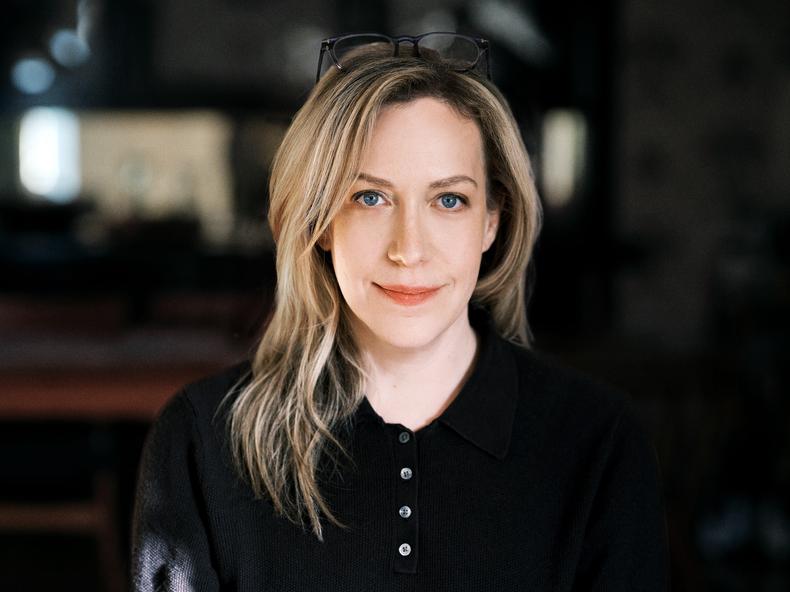
Kim Rosenstock Credit: Chris Hager
“All these other amazing cancer survivors, cancer caretakers, doctors, and hospice workers that we talked to, their stories started to filter into the show,” Rosenstock says. “And then our writers’ room had these amazing writers who had various experiences with illness, cancer, and chronic-illness caretaking. It does feel alive with all these other stories. That was what the real Molly wanted.”
Adapting the story was, at times, frightening for Rosenstock. After all, it’s there in the title: “Dying for Sex” isn’t just about orgasms—it’s also about mortality. It’s not a spoiler to say that you watch Molly die over the course of eight episodes, just as much as you watch her live.
“I personally was very scared, as most people are, of death,” Rosenstock says. “I think we can all agree that’s something that most people don’t like talking about and don’t like thinking about.”
She also knew that to honor Kochan’s story, she had to show the character’s death onscreen in the last episode with as much vulnerability as the real Kochan projected in her final podcast, recorded when she was in hospice. The result is one of the most moving half hours in recent television memory—both brutal and celebratory as Molly comes to realize she’s in her last moments. The scenes that had terrified Rosenstock were the ones that resonated most.
Casting Williams was a boon for the project. Her star power, Rosenstock says, helped recruit other actors and get the series made. But Rosenstock quickly understood that Kochan’s journey meant as much to Williams as it did to her. “It felt like that sort of set the tone that we were all in service to this bigger story this woman had been trying to tell,” she says.
Slate and Williams didn’t know each other before production, but Rosenstock says they instantly had a spark that ended up shaping the relationship you see onscreen, which is similar to the real Boyer and Kochan’s, but not a strict recreation of it.
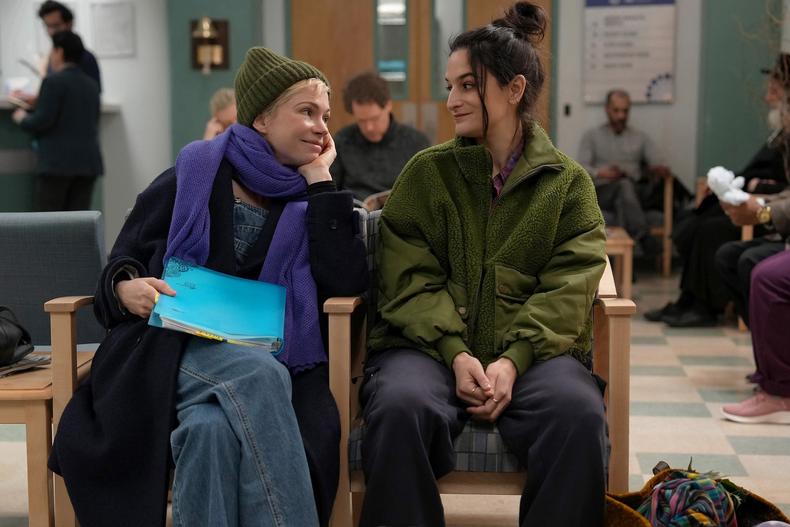
“I feel like we knew who these characters could be, but once we had these actors, we then saw so clearly who they were going to be in the show,” Rosenstock says.
Slate’s natural comedic sensibilities allowed Nikki to be a character who is funny, which the showrunners always intended, but not someone who is there for comic relief. “There’s no relief in this story,” says Rosenstock. “[But] there’s a lot of comfort and there’s a lot of connection, and Jenny brings comfort and connection to everything.”
Actually, all the other performers brought on to “Dying for Sex”—whether they were cast as doctors or Molly’s kinky sex partners—grasped the magnitude of what Rosenstock and Meriwether were trying to accomplish. The sad fact of the matter, Rosenstock says, is that nearly everyone they reached out to had experience with cancer in some way.
“Every single person we talked to immediately had a story to tell about their relationship to this project,” she says. “I think that is unusual, in my experience anyway.” Typically, people are excited and want to ask all kinds of questions, she explains, but for this, “immediately, people were opening up their hearts.”
That is not to say that the making of the miniseries was all emotion; at times, it could even get silly. There were logistics to be attended to and decisions to be made, many of which emphasized the other aspect of “Dying for Sex.” Despite Molly’s tragic death, the show remains very funny.
“It was still stressful like any production experience,” Rosenstock says. She had important questions to answer, like: “How much fake pee do we need for this scene? Is this the right size bottle of lube? How much lube is too much lube? [When] have we crossed the line where it’s no longer funny, it’s just insane?”
Her hope in all these choices—from lubricants to the depiction of dying—was to provide viewers with a form of catharsis. After all, that kind of release has always been Rosenstock’s goal: to get people to laugh at the darkness.
This story originally appeared in the August 18 issue of Backstage Magazine.