
A lifelong actor in the truest sense of the word, Elijah Wood is best known for leading one of the biggest fantasy franchises of all time as Frodo in the “Lord of the Rings” films. More recently, he’s been putting his industry know-how behind indie passion projects via his production company, SpectreVision. That includes his latest, serial killer drama “No Man of God,” in which he also stars. While he tells Backstage it was never his intent to play real-life FBI analyst Bill Hagmaier opposite Luke Kirby’s Ted Bundy in the Amber Sealey feature, it proved to be an acting opportunity he couldn’t pass up. Here, Wood walks us through his processes for building a character, memorizing lines, and bettering himself over the years.
“No Man of God” seems to be a special project for you, according to other interviews I’ve read with you.
Yeah, it does feel special. We fell in love with this script five years ago. As is often the case with independent films, it takes some time to get [them] made. We had a really intense response to the material and the script. It was a story in Ted Bundy’s life that we weren’t familiar with—this relationship between him and Bill Hagmaier—and the script is largely based on transcripts of real conversations and the recollection of Bill.
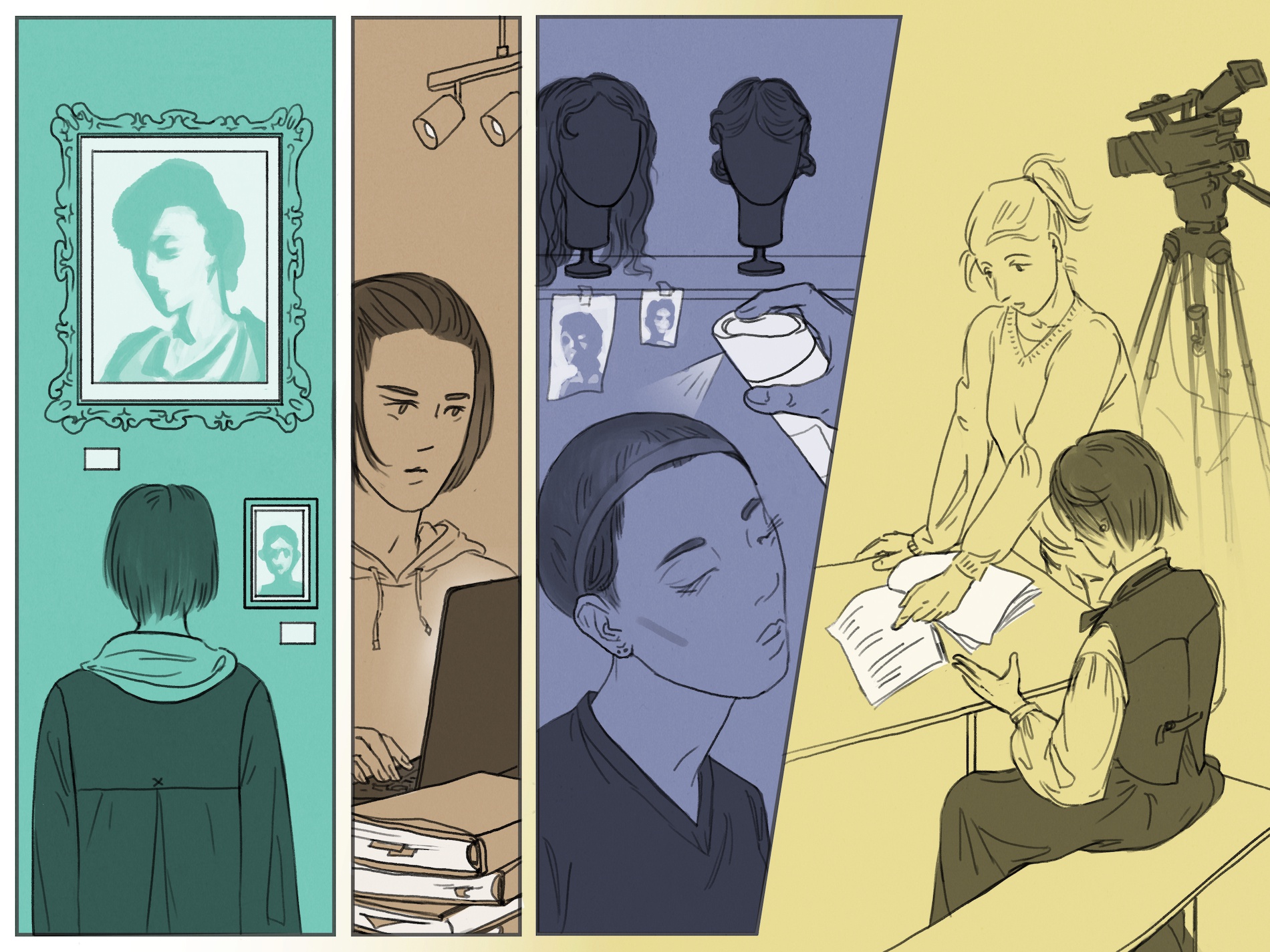 From Lenny Bruce to William Shakespeare, Casting Real-Life Figures Is Not Easy Work
 I’m being honest when I say [that with] everything that I read for our company, I never, ever think about whether or not there’s a role for me to play. I’m only ever reading to produce. And the few times that I have worked on any of our films as an actor, it’s always [needed] to be brought to my attention that I should consider playing the role. And so that happened with [“No Man of God”] about four years into trying to get the movie made, and it was looking like it was all coming together. I thought about it, and I’d be an idiot not to [take the role]. The script is so incredible, and the opportunity from an acting perspective was really exciting.
What did you take away from this project as an actor? Were there any challenges along the way?
I think the unique challenge for me in this film was working within the constraints of Bill. By nature but also as an FBI agent, Bill keeps a lot of his emotions in check and keeps his cards relatively close to his chest—I think for a lot of reasons: to protect himself and also as a means of not giving too much of himself away to the people that he’s interviewing. And so that presented a unique challenge, because there’s only so much I had to work with in regards to his internal life…and being able to show that his time with Ted [was] having an effect on him.
“There’s always something to strive for. There’s always something to learn. There’s always a way to grow. I think that’s incredibly true and an incredibly valuable piece of advice.”
What was your process for building that internal life?
It was just having an understanding of who Bill was, his connection to his family, and his connection to God, which is significant. And then just within the context of every scene, specifically the scenes with Ted, looking for ways to show some vulnerability without it being explicit or saying anything. There was a fair amount of script analysis on this movie—more than I’ve done before—simply because these conversations happened. And so much of the film is in that room with these two people that it was really important that we figure out the structure of those scenes. So that was a lot of the work, as well—just sort of working those things out so that we had a kind of architecture, if you will, of those sequences in advance, so then we could play within the context of that on the day. That meant a lot.
Yeah. It really is about having that opportunity to play, even in darker material. You want to have that freedom to do what feels right in the moment.
Yeah, absolutely. And Amber was great. She’s a real actors’ director. She loves actors; she was an actor herself. You know, the great thing about those interview scenes is that we re-shot most of them each in a single day because they’re so long, which gave us a little bit of wiggle room to be able to play around. And we would obviously approach it from a very traditional standpoint, but she would also throw wild curveball suggestions at us that seemed wildly discordant. And in some cases, it’s like: That doesn’t feel right. But the sense of just going with something to see how it would feel and trying things out, despite the fact that maybe it didn’t feel right, would just yield really interesting results. And the fact that she was so keen on just trying to experiment and play around was just the joy.
You mentioned the sheer length of those interview scenes. How do you go about memorizing your lines? Do you have any tricks?
[Laughs] Yeah, it’s a lot. It’s a process of days of work, reading through the scenes over and over and over again. What was helpful is, you know, I spoke of breaking those scenes down; that starts the process, because you’re already getting so familiar with the structure of them. You’re familiarizing yourself so much with choices that are being made and the structure of the scenes already.
And then it’s kind of each individual scene—trying to remember them, reading them multiple times over, not looking at the page, trying to remember what’s on the page, that kind of thing. And then Luke and I would get on Zoom and read through the scenes together every weekend. And then we would also sometimes end the day’s work rehearsing the next day’s scenes quickly. So it’s this constant process, honestly. The scenes are probably the longest scenes I’ve ever encountered in a film that I’ve experienced.
Although, man, I have definitely encountered people in my life who memorize whole scripts, which is just, I mean, hats off to them. I’ve never done that, and maybe I should, because it would probably save me a lot of anxiety! But for us, it was a constant process of just revisiting scenes and then rehearsing them right up until we were we were doing them so they were nice and fresh.
What advice would you give your younger self?
Well, a piece of advice that I got when I was younger that helped me then was: You can always do better. The subtext of that is that there’s always something to strive for. There’s always something to learn. There’s always a way to grow. I think that’s incredibly true and an incredibly valuable piece of advice. You should never stop striving to do better work. It’s the fire in our engine. It’s what keeps us growing. There really is no top of the mountain in terms of the artistic process.
And then also a big thing to me as I got older, too, was just the integrity of everything. That can be interpreted in so many different ways, but what has always driven me is just having a kind of heart response to material and not letting there be any outside forces that determine why I’m doing something. [You should lead] with your own instincts and your own taste and let those things guide you.
Looking for remote work? Backstage has got you covered! Click here for auditions you can do from home!