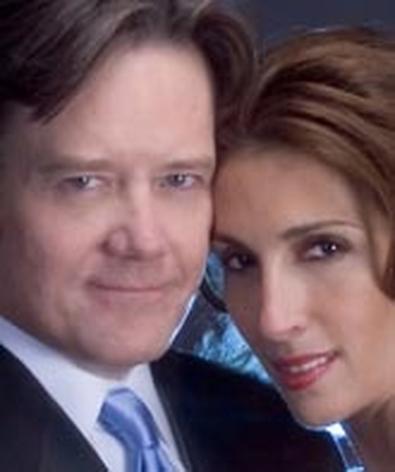
Thanks to Eric Comstock and Barbara Fasano — who evidently make good friends and are good friends to the friends they make — I started thinking about why songs become standards and how. The occasion was the pair's warm-as-mulled-wine Remembering John Wallowitch, Lew Spence, and Murray Grand tribute at the Metropolitan Room.
Wallowitch, Spence, and Grand — all of whom dedicated their careers to writing songs and then playing them for friends and the public as often as possible — died within the last couple of years, and the nicest thing devoted friends Fasano and Comstock thought they could do to honor their chums was to perpetuate their catalogues by singing two-dozen-plus songs culled from those pages.
Now here's the thing: Aside from a small number of inclusions — "Nice 'n' Easy" (Alan Bergman-Spence), "That Face" (Bergman-Spence), "Guess Who I Saw Today" (Elisse Boyd-Grand) — none of these songs would be categorized as evergreens. Wallowitch's "This Moment" is a staple of Manhattan boite acts, and his "Warsaw" and Grand's "April in Fairbanks" are comedy numbers cabaret entertainers also turn to. But aside from those, nothing to which Fasano and Comstock applied the feather duster was more than dimly familiar — though a number of them should be. For instance, Spence's "Quiet Is the Way" is quietly beautiful, but not so quiet it shouldn't have made its presence known more loudly.
What explains the neglect? That their makers hadn't written enough previously popular songs to gain Berlin-Kern-Hammerstein-Rodgers-Gershwin momentum? That no singer had transformed them into sheet-music, radio, or record hits? That no other accident of luck or fate happened to them? There's no answer, is there, to why Spence's cute "That Green Dress" isn't better known, or Grand's "Everything You Want" or Wallowitch's "Come a Little Closer"? Other than they just didn't take root the way, say, something like the inferior "Feelings" (Morris Albert) or any number of ditties like it have swept the world.
Not all the songs the Comstock-Fasano team plucked deserve posterity's nod, of course. Grand's "You Will Be Loved, "which Comstock claimed was as good as a Cole Porter ballad, isn't. Its opening lines "You will be loved/Loved you will be" are Porteresque but fall short of the master's mark. Grand's "Morning and Noon" is curious in its intention to send up Porter's "Night and Day" while simultaneously trying to be as sincere as its predecessor. The above-mentioned "Warsaw" and "April in Fairbanks" owe too much to Sheldon Harnick's "Boston Beguine."
Putting their gracious theme and its songs across, Fasano and Comstock were their usual appealing selves. Maybe it's just me, but it seemed he was having fewer pitch problems than he has had in the past and was also working the ivories more comprehensively. She sang with her usual emotional insight, even to the point of making Wallowitch's "I See the World Through Your Eyes" sound better than it really is. She took "Guess Who I Saw Today" at such a slow and anguished pace, however, that she ran the risk of giving the ending away to anyone who didn't know it. Is there anyone left who doesn't know it?
Well, everyone should, and it's perfectly swell of Comstock and Fasano to want to make sure everyone will. With friends like them, no catalogues have to worry about irreversible oblivion.
Presented by and at the Metropolitan Room, 34 W. 22nd St., NYC. Nov. 9 and 16.