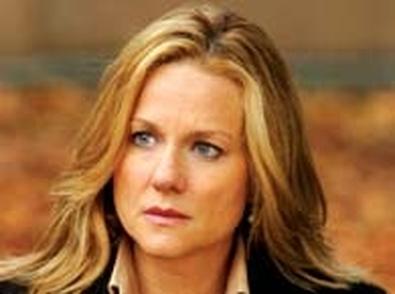
"The Exorcism of Emily Rose" is one curious film, marrying a suspenseful courtroom drama with elements of the supernatural. But it also has some serious themes, from the nature of evil and its manifestation -- both personal and theological -- to private demons and the long shadows they cast.
And it is precisely the unexpected coupling of genres that drew the Oscar- and Tony Award-nominated Laura Linney to this movie, released nationwide on Sept. 9. "I was interested in seeing if those genres could coexist. Would they enhance each other or cancel each other out?" notes the 41-year-old New York City native during an interview in a Midtown hotel. "I was also fascinated with the whole idea of personal demons up against religious demons."
Inspired by a composite of true stories, "The Exorcism of Emily Rose" recounts the trial of a priest, Father Richard Moore (Tom Wilkinson), accused of negligence in the death of a young woman (Jennifer Carpenter) who was -- depending on your point of view -- either demonically possessed or sick as a dog. During her increasingly frequent attacks, she twists into a pretzel, has visions, and speaks in tongues.
Instead of transporting Emily Rose to a hospital, the priest conducts an exorcism and she dies. The prosecutor (Campbell Scott) contends that the young woman was suffering from severe psychosis or a neurological disorder and needed medical assistance.
Father Moore's attorney, Erin Bruner (Linney), a cool rationalist if ever there was one, defends the priest, raising issues of reasonable doubt. During the course of the trial, she is forced to confront her own deeply held agnosticism; if nothing else, her exposure to the highly moral and well-intentioned priest makes her gentler and less of a self-serving careerist. Linney evokes a highly intelligent attorney grappling uncomfortably with moral complexities and religious ambiguity for the first time.
The movie is set in an unspecified rural community; similarly, the time frame is kept deliberately vague. "What happens in this town could happen anywhere and at any time," remarks Linney. "That's why it's not clear when or where it's taking place. That makes the events more unnerving; it adds to the unease."
An Actor's Responsibility
So how does she herself feel about demonic possession and Erin's hardheaded views on the topic?
"I relate to Erin's skepticism, but at the same time I have respect for people's beliefs," says Linney, who read up on exorcists and exorcisms, past and present, prior to making the movie. Still, she is not sure how she stands on any of it.
Linney is familiar with "personal demons," she says, but a satanic spirit taking up residence and requiring an exorcism is another story. Likewise, she recognizes that there is evil in the world; its origins, however, raise thorny issues: Is evil a personal moral failing, an existential force, or Lucifer on the loose?
"I go back and forth," Linney comments. "I contradict myself on this subject. But I do understand Erin's personal demons. By the end of the film, her conscience, which was already rumbling, has become too loud thanks to being around Father Moore."
Asked how she accounts for some of the creaking-door moments that Erin experiences, Linney smiles: "Well, you can say it's either Erin having an anxiety attack or in fact it's a demonic attack of some kind. Is she possessed at those moments? As an actor I know what I think, but I'm not going to give that away."
Linney is reserved in person, but revealing herself in performance is clearly a very different matter. She is every bit the actor's actor, with a roster of multileveled performances on screen (large and small) and on stage. Consider her work this year alone: There were her Tony- and Oscar-nominated performances in "Sight Unseen" and "Kinsey," respectively, followed by "Emily Rose" and the upcoming film "The Squid and the Whale," slated for an October release.
Early film credits include "Lorenzo's Oil" and "Dave." Linney had a co-starring role in "Primal Fear" opposite Richard Gere and a featured role as Clint Eastwood's daughter in "Absolute Power." She was again directed by Eastwood in "Mystic River." She also had well-respected turns in "The Truman Show," "The House of Mirth," and "You Can Count On Me," the last earning the actress her first Oscar nomination.
Frequently cast as a strong woman, Linney has played tough-minded, ambitious lawyers before, most notably in "Primal Fear." But she does not feel she has suffered from typecasting. In fact, she believes it's "the actor's responsibility to make each character different. That's the challenge, even if every character I played was an articulate, dominating attorney. After all, each lawyer is a different lawyer, a different woman."
Mastering a Lawyerly Persona
Linney, the daughter of playwright Romulus Linney, always wanted an acting career and majored in theatre at Brown University before earning her graduate degree from Juilliard.
And she has been fortunate, steadily employed as an actor from the outset. Among her Broadway credits are "Six Degrees of Separation," "The Seagull," "Hedda Gabler," "Honour," "Uncle Vanya," and "The Crucible," for which she garnered her first Tony nomination. Linney's small-screen credits include the miniseries "Tales of the City," based on the writings of Armistead Maupin, and recurring appearances on "Frasier."
She insists there are no roles she is dying to play. At the moment, her thoughts are focused on "Emily Rose" and the complex tasks she faced in tackling the ambivalent Erin.
"In preparation for the movie, I pulled out my 'Primal Fear' file to rethink lawyers and the personas they choose," she recalls. "Before we did 'Primal Fear,' I went into the courtroom to study lawyers. In many ways they're like actors -- bad actors -- constantly manipulating thought through their behavior, voices, and expressions. It's interesting to see when they're effective and when they're not.
"Making that courtroom dialogue sound human is very challenging," she continues. "Those lines can easily sound like wood chips falling from your mouth. The language is difficult and you have to know what you're talking about, in addition to dealing with the tension between the characters."
There are layers of subtlety and nuance in courtroom drama, she suggests. "When the lawyer makes a point, is he revealing something about himself or just doing his job?"
Other than striking the right lawyerly note, Linney had other concerns in doing this film. Indeed, the acting challenges were almost secondary. "It was imperative to me that the movie show both sides of the issues -- the rational and the religious," she says. "I'd have had no interest in making this movie if in the end the question wasn't left open to interpretation."
Director and co-writer Scott Derrickson returns the compliment: "Laura is able to portray significant emotions with strength and intelligence. She brings credibility to every role she undertakes. And that credibility is especially important for a movie like this. It's not simply a scary movie."
It is ultimately a religious movie, he acknowledges, adding, "Unfortunately, religion has become terribly politicized. I didn't want to write a political movie. Religion has greater transformative powers than politics, and religion is highly personal."
Still, he admits it's a hard sell: "I made another movie about religion, 'Land of Plenty,' that I couldn't get distributed. There was the feeling that liberals would find it too religious and therefore conservative, while conservatives would be put off by what they viewed as liberal politics."
Linney weighs in on the topic: "I believe there is a fascination with religion today. It's pervasive in the culture -- and in politics. Religion is also very profitable."
As for the profitability of "The Exorcism of Emily Rose," that remains to be seen.