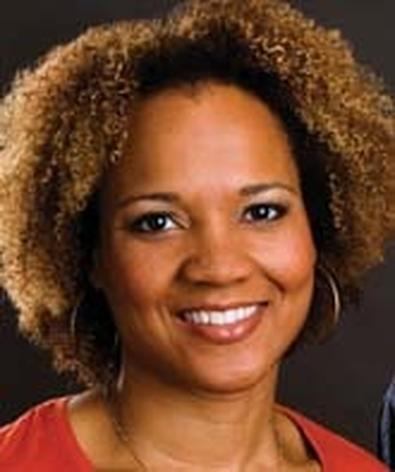
When actor Kito Robinson first started submitting herself for roles, she had no particular strategy in mind; she just followed the rules. Or what she perceived as the rules, anyway. "I guess I have this rules-based background, where if you fit into a box, you check that box and you follow that line of thinking," says the Los Angeles-based Robinson, who identifies as black-multiethnic. "When I'd see roles for African Americans, those are the ones I would submit myself to. But I felt confined by that box, by that designation 'black.'"
At some point she realized that limiting herself to roles designated for African-American females meant that she was submitting infrequently. She decided to broaden her horizons by submitting for more "open ethnicity" parts. She also started submitting for gigs for which she felt like she fit the type producers were looking for, even if the breakdown called for an ethnicity other than her own.
"The last four or five student films that I've done were all either open ethnicity or white or Hispanic, and I got cast," she says. "And the last short film that I did was with an indie filmmaker, Thymaya Payne, and the character was a Hispanic police officer. In the interview process, he said that I would work because he was looking for someone who was, like, ethnic, but on the breakdowns he put just 'Hispanic.'"
In the categorization-happy landscape of Hollywood, getting seen for a wide range of roles can be challenging for actors of color. Still, it's not impossible; it just requires strategizing, legwork, and a willingness to think outside the box.
Making Possibilities
In trying to get seen, some actors, like Robinson, submit for roles that call for a different ethnicity. This, however, must be handled with care, as one runs the risk of turning off casting directors. "If I've released a breakdown, and I say I want this woman in her 30s and she's Caucasian, yadda yadda, and [agents] submit someone who is African-American or someone who is Latina, usually that's a bit of an annoyance, because that's not what you're looking for," says casting director Kevin Scott (The West Wing, Half & Half). "If you want all ethnicities and races, you will specify that. At the same time, I don't want to tell people not to submit, because you never know. Many things are possible."
Robinson seems to have found an approach that works for her, but she acknowledges that it's a tough balance. "I don't want to piss casting directors off," she says. "But then I'll meet casting directors who will bring me in for a Hispanic role. Or I'll go to a workshop and they're giving a Q&A, and they will say that they're open to those things."
Part of Robinson's overall strategy is being choosy in what she ultimately submits for. She describes her type as "quirky and intelligent, bohemian, trendy," and she keeps an eye out for parts that fit that mold. "I try not to submit blindly," she says. "There's always something from the description that's pulling me in."
In the case of Payne's movie, Coup de Grace, Robinson noticed that the character description called for someone tough and street-savvy. "I grew up in Watts [in Los Angeles], and I've had success getting out of that background; I went to university and to law school, and I consider myself a pretty tough cookie and pretty streetwise," she says. "Characters like that, I'm on top of it. They give you a space for comments on Actors Access, so sometimes I'll mention why I think I'm appropriate for the role, even though I don't specifically meet the ethnic background that they're looking for. I might say, 'I grew up in the tough streets of Watts,' or whatever it is. Or if it's for a receptionist or a lawyer, I'll mention, 'I was a practicing trial lawyer for four years.'"
On this note, agent Angela M. Hutchinson of RPM Talent Agency recommends honing or playing up any unique talents you might have, "whether that be languages or different accents or skill sets as far as athletic abilities, like being able to ice-skate or Rollerblade. That way, you have that skill that they're looking for and it's not so much about the color."
Another thing that will aid in your quest to get seen is to make sure you're working with the right representation. "Look for a representative that sees you playing everything," says agent Neil Bagg of Don Buchwald & Associates. "I think you've got to be represented by an agent that doesn't go with a paint-by-numbers representation. We have clients of all races and creeds, and if I only submit my Native American clients for Native American roles, they're not going to be working [much]. Claim who you are as an ethnic actor and be very proud of that, but at the same time surround yourself with people who are themselves colorblind and will see you for any possible role."
Knowing Your Essence
Actor Siho Ellsmore, who is of mixed-race descent — she's part Japanese and originally hails from Australia — struggled with this for a bit. Her previous reps specialized in Asian actors, "so that was the majority of what I got seen for, was just 'looking for Asian people,'" says the New York-based actor. She recently changed agencies and is pleased that her current reps are more forward-thinking. "The first audition they got me was for a British television producer, so that was great," she says. "They've actually submitted me for things that are a little more ethnically ambiguous or for British characters. I'm from Australia, so I can do British accents."
To facilitate that kind of unconventional thinking, Los Angeles-based actor Stephon Fuller does all he can to ensure that his agents know as much about him as possible. "Oftentimes I go in and we don't talk anything about acting; we talk about me being home for a month over the summer, racing motorcycles with my brothers, which, as an African American, it's not something you would peg me as: a motocross rider," he says. "And through them knowing that stuff about me, they can cast a wider net and see me doing different things. It enables them to paint a bigger picture, a more vivid picture of me."
Fuller, who has appeared on such shows as Weeds, Bones, and Friends, says most of the roles he has booked have not been ethnicity-specific. Part of that, he says, is understanding his "essence." Just as Robinson looks for parts that align with her type, regardless of ethnicity, Fuller tries to find roles that fit who he is as an actor. He says, "When I go out on auditions, there are plenty of African-American guys that go in, Asian guys, Indian guys, Latin guys — all kinds of different guys. But we're the same essence: that intelligent, nerdy guy."
Legwork and Network
Another component of Fuller's strategy is doing a good amount of legwork; he doesn't rely solely on his agent to get him auditions. He tries to get to know as many casting directors as possible, so they'll think of him when certain roles come up. "I'm out working the other end, through mailings, post cards, drop-offs — all of that," he says. "I definitely do a lot of general drop-offs, which means that I'm in the street on a pretty regular basis, dropping off my photo. There are a lot of roles that aren't on the breakdowns. The casting people have almost an infinite pool to pull from. If they're building a session that they're going to [take] straight to producers tomorrow morning, you want to be one of those first five to seven names that come out of their mouth without them working a lot."
In addition to getting to know casting directors, networking with various directors and writers can be helpful. As they get to know you, they may start envisioning you in roles you wouldn't typically get called in for. After working with director Jose Zayas, Ellsmore recalls that he called her in for the part of "a lesbian redneck who lives in a trailer park" in his production of the play The Wasps. "He thought I would be, I guess, perfect for this role," she says with a laugh. "He called me in, and I auditioned, and I guess I was. I guess he saw in me a redneck from the South."
To boost her chances of successfully networking, New York-based Latina actor Tatiana Suarez Pico does all the research she can on what projects are out there and who's making what. "I'm always finding out the names of the producers, the names of the people who are Latinos, who might be casting for the next thing," she says. Suarez Pico also recommends looking for projects you can submit yourself to, projects that might not be on your agent's radar: independent and student films, for example. Last year she won the lead in the indie project Accidents at Home and How They Happen after responding to a casting call forwarded to her by a friend. The role appealed to her because it didn't revolve solely around being Latina. "I can't even begin to tell you how great it felt to have a role that wasn't tied to my ethnicity," she says. "In the casting call, [writer-director Jennifer Reeder] said she was looking for either somebody Middle Eastern or Latina but she was open. I submitted myself. I taped three scenes from the script, I emailed the director, and I got cast."
Be a Could-Be
All of the actors interviewed submit often to "open ethnicity" roles as part of their general strategy. But what exactly does that mean? "Even some roles that don't specify ethnicity, I think a lot of casting directors just assume the character is Caucasian," says Suarez Pico.
Scott, however, thinks this is changing; as the years have gone on, he has seen more and more roles open up. "It's almost as if the producers, the directors, and the industry as a whole have gotten into the multiethnic type of casting," he says. "It's become more prevalent, and it's much more accepted. In this industry, we are just now getting to that point where it's like, 'You know what, she could be black. She could be Asian. She could be Native American.' Younger producers and writers and directors — this is the world they come from. This is why we're seeing the changes."
Hopefully, that means more chances for all actors to be seen for a wider, more diverse range of roles. Just remember: It's not just the industry's perception of who you are that's going to open doors. How you perceive yourself is just as important. "I think the thing that helped me the most is when I stopped seeing myself in a box," says Robinson. "I grew up in a black community, but I don't fit the mold of a stereotype. And because I don't fit a stereotype, I don't expect other people to see it. And maybe that's part of the reason why I have as much success as I do, because I don't see myself as a narrow actor that's only available for black roles."
Reach the author at sarahkuhn@backstage.com.