In the winter of 1998, on the occasion of his seventh Oscar nomination, Dustin Hoffman sat with a reporter from The New York Times and speculated on how his career might have turned out had he not been cast in The Graduate, the movie that made him a star: "I would have wound up, very happily, like Robert Prosky, who went to the Arena Stage in Washington and other places and has had a great life doing regional theatres and picking his movies and wouldn't change it for the world."
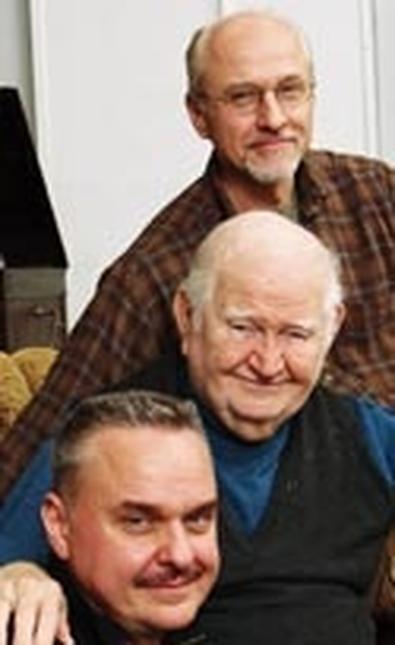
Ten years later, Robert Prosky sits in a rehearsal room at the Walnut Street Theatre in Philadelphia and listens to Hoffman's quote read aloud. He has heard it before. He offers a thin smile, leans back in his chair, and says with a mixture of affection and exasperation, "Oh, I like Dustin." He pauses, which elicits laughter from the other actors in the room, two of them his sons, John and Andy. The Prosky men are appearing at the Walnut this winter in Arthur Miller's The Price, the story of two estranged brothers who return to their boyhood home to sell off the last of their deceased parents' belongings. The senior Prosky plays Solomon, the junk dealer who comes to appraise the contents of the tenement apartment.
Robert measures his words when asked if he agrees with Hoffman's analysis. "It's a little egoistic to say I agree with it," he offers after a moment. "I really do think that whatever actor I am is a result of having the kind of work that he describes. It's not something most actors get. And I can only wish it for my sons."
A veteran of some 70 movies and television shows, almost all of which came after two decades at Arena, Robert has made a career out of playing what he calls "the second character man" and "the older guy": avuncular Stan Jablonski on the TV show Hill Street Blues, the corrupt and greedy judge in The Natural, the frightened and broken Shelly Levene in the original Broadway production of David Mamet's Glengarry Glen Ross. So it would seem that Solomon is an apt role for Robert. And it is — but not necessarily because of his age, 77.
A child of the Depression, he has a healthy respect for a dollar. A former bookkeeper, he knows the meaning of opportunity cost — in essence, the value of whatever lies at the end of the road not taken. He can distinguish between price and worth, an ability he acquired in part through tragedy. Still, Robert's discerning eye has failed a few times along the way, including once later in his career. "Every actor," he says, "has made bad choices in one time or another."
A Grocer's Son
Born to Helen and Joseph Porzuczek in 1930, Robert grew up in the Philadelphia neighborhood of Manayunk, whose residents manned the factories that ringed the city. Joseph worked at the Apex Hosiery Co. and ran the complicated machinery that produced women's full-fashion silks. "He was one of the few people who could operate it," his son says, making Joseph indispensable during a decade when one in four people routinely went begging for work.
Trained as a butcher, Joseph also owned a grocery, and the family lived above the store, which promised something grander. "He wanted — to use one of the phrases of Willy Loman — he wanted to be somebody," says Robert, who later adds, "All he wanted was to get his son an education."
Robert went to Temple University, where he performed in plays and majored in economics. "I remember learning things that made me realize the store was not going to work," he says. "It was not run efficiently. He didn't understand the business of competition." Nevertheless, Joseph kept it afloat by borrowing from relatives and friends. After graduation, Robert joined the service and was stationed at Chanute Air Force Base in Illinois. One day in 1952, he was directed to see the chaplain. "They told me my father died, and I thought it was a mistake," he recalls. "My father was 44." The clinical cause of death was a heart attack, Robert says, "but, really, it was shame. He hated being in debt to his family and neighbors."
A Family Affair
In addition to their home in Washington, D.C., Robert and Ida Prosky have owned a summer house in Cape May, N.J., since 1970. Andy, the youngest of three boys, worked at Cape May Stage for several summers. Company artistic director Michael Carleton had been wanting to do something with Robert but could never find the right project. Then the senior Prosky called about The Price — with the stipulation that he do it with his sons, each of whom has been a working actor for two decades or more: John in Los Angeles in television and film, Andy mostly on stage in New York and regionally.
"They're very good," Robert says. "I didn't realize they were that good." Coming from a father, the statement might not carry much weight, but if this version of The Price were built on nepotism, vanity, and sentiment, it would not have lived beyond its 2006 Cape May production. After its seven-week run at the 1,400-seat Walnut concludes March 2, it goes up a week later at Theatre J in Washington and runs until mid-April.
The Proskys face unusual challenges performing Miller, known for his fragile and tragic families. "We get along really well," John says. "I don't want to spew Prosky propaganda at you, but we're a close family." But there are universal elements to any fraternal relationship that he and Andy can draw on, John says: competition, history, "the feeling of yearning for each other, love, and appreciation." The real acting challenge is "to create this estrangement of 16 years," Andy says. "I don't know what it's like to go 16 years without speaking to John. That's something I have to create out of thin air."
For their father, playing the role of outsider amid familial tension is not difficult. "He isn't the father, but in a way he is," Robert says. "It's not an accident that my character is named Solomon. And what really concerns him is something that he sees again and again. It's the Cain and Abel thing."
Carleton says the text is so strong that the actors can take leaps that lesser scripts don't allow, and John agrees: "When you use Miller as your guide, it's almost actor-proof — even our acting."
"Yeah, even we can't mess it up," Andy says.
Getting Started
After his father's death in 1952, Robert was given a hardship discharge so he could take care of his mother and run the family store, which had been renamed Prosky & Son after Joseph met an itinerant leather salesman named Prosky and liked the name so much he took it for his own. Robert accepted the responsibility of returning to the store, settled into the job, and eventually became engaged. "I didn't want to be a grocer, but I never thought that I would have the opportunity — I didn't think that I had the guts — to become an actor. All of a sudden, in one summer, all of it fell together."
In 1955, Michael Ellis was the impresario of Bucks County Playhouse in New Hope, Pa., and staged half-hour plays on television for aspiring actors — in essence, a talent show. Though Robert was acting in amateur theatre around town, he had to be goaded by relatives to participate. He won, and his prize was a role opposite Walter Matthau at the playhouse in Mrs. Gibbons' Boys. It was directed by Ezra Stone, who had been well-known on the radio as Henry Aldrich in The Aldrich Family. Then a director and teacher at the American Theatre Wing in New York, Stone encouraged Robert to get a scholarship at ATW, which he did.
Leaning on phony references from a number of suppliers to the family store, Robert also wheedled his way into a position as a night bookkeeper at Chase Manhattan Bank. "I used a number of falsehoods to get the job," he says. "Investigation was not as much of an art then as it is now." Robert kept the books at night, studied during the day, and scrounged for work. He lived in a one-room railroad flat among the tenements just north of Columbus Circle — where Lincoln Center is today — subsisting on stale pumpernickel and peanut butter and working a second job at a delicatessen. But he had no acting jobs. "I couldn't save my soul," he says. "I couldn't get anything."
In the spring of 1956, he was offered two summer stock jobs — one in Ohio that would pay him $60 a week and another at Quarterdeck Theatre in Atlantic City that paid $55. He took the lower-paying job because it came with his Equity card up front. The Ohio job would have required him to pay $50 of his weekly wages back to the theatre "on the promise of getting my card at the end of the season," he says.
Robert went to Atlantic City to work in several plays, among them Tea and Sympathy, Bus Stop, and Anniversary Waltz, and he planned to marry at the end of the summer. Two weeks before the wedding, his fiancée came to tell him it was off. "She didn't want to be an actor's wife," Robert says. "I was upset but, frankly, I was so involved in what I was doing, I didn't want to get rid of that in order to marry her."
After the season, he returned to New York and got a new job as a bookkeeper at the Federal Reserve Bank, but acting work in the city was scarce. In December he was offered a role in Milwaukee in the dead of winter doing Will Success Spoil Rock Hunter? with Ann Corio, a striptease artist and veteran of Minsky's Burlesque Theatre in New York.
"What happened was, I was thinking I was going to have to give it all up because I couldn't get any work," he recalls. "I grabbed it because it was work. Now, it's not the world's greatest work. Everyone wants to do Ibsen and Shaw and Shakespeare, and that's good, but you got to survive. So you have to learn how to do that. And one of the ways to do that is to take whatever work you can. I've done commercials, voiceovers; I even did makeup demonstrations once. I taught. All I do is act now, but particularly when my kids were growing up...." His voice trails off for a moment. "Part of that is the things that I did to pay for the diapers."
The Cost of Doing Business
The D.C. production will be a homecoming for the sons, who grew up on Capitol Hill and experienced something uncommon for the children of a regional theatre actor: the stability of a middle-class life. "I came home to dinner after rehearsal and went off to a play," Robert says. "That's what they saw. And that's probably what they thought was going to happen. But that's rare. It really is."
One of the earliest outposts of the regional-theatre movement in postwar America, Arena Stage was founded in 1950 by Zelda and Thomas Fichandler and Edward Mangum. The members of its resident company have included, among others, Jane Alexander, Ned Beatty, James Earl Jones, Roy Scheider, and Henry Winkler. When Robert started in 1958, as the sheriff in The Front Page, he was paid $85 a week, roughly the equivalent of $600 in today's dollars. During his final season, 1980-81, he earned $900 a week, now about $2,200 — or a third more than the current weekly minimum on Broadway. Salaries were underwritten by the Ford Foundation, part of an initiative that grew from President John F. Kennedy's idea that the United States should compete with the Soviet Union artistically as well as militarily — a notion that draws both admiration and a rueful laugh from John.
"I worked for the Geffen, and this is a theatre that has bucketloads of money. I mean, it's called the Geffen," John says, stressing the last name of David Geffen, the Hollywood billionaire mogul. "It's $700 a week, and you pay for your own parking." He tried to negotiate his contract and ran into an immovable theatre official. "I was like, 'Last time I worked in the theatre it was 1995 and I made $900.' She goes, 'It's $700. Even Uta Hagen took $700 a week.'"
Says Andy, "Uta Hagen could afford $700 a week." The $700 salary at the Geffen was mandated by an Equity codicil called favored nations, originally created to give established actors the flexibility of working for minimum without setting a precedent that lowered their future earnings. However, regional theatres have increasingly been invoking it, ostensibly to ensure equitable salaries for all while keeping production costs down. Robert isn't necessarily convinced: "Favored nations is an acronym for screw the actor."
Though regional companies that afford their permanent members a living wage seem to be a thing of the past, the younger Proskys have few regrets about their careers. John has done especially well with a consistent supply of recurring and day-player roles on series such as Medium, Veronica Mars, and Grey's Anatomy. "I have the things that my father had when he was my age," he notes. "I have a house; I have a backyard; I have a dog. I can support a family; I have a son. I have a middle-class existence.... The bad news for me is I don't get to be a stage actor as much as I would like to."
Andy, who has led the journeyman's life more than his father and brother have, is the most sanguine about the current state of things. "I've been to Dallas; I worked at Actors Theatre of Louisville; I've worked at Cincinnati Playhouse. All these places operate differently," he says. "There's a whole group of new people every time you go.... You've got a tool bag now that isn't influenced by the same people in the same city all the time. So, boo hoo, there's no more company of actors. But, whoopee, we get to go to a lot of different places and learn different ways of doing things."
In Search of Stability
At Arena, Robert was cast in small roles at first, but slowly he worked his way up, eventually playing the title role in King Lear and, perhaps his crowning achievement, Willy Loman in Death of a Salesman during the 1974-75 season. For that performance he earned a poignant and bittersweet compliment from his mother: "She was upset.... She recognized, certainly, that I was using my father, and she thought for me to go through the emotional depths that I had to, it was going to kill me."
Robert would stay at Arena for six more years, but recognizing that he was going to have to put three kids through college, he decided he needed to move into film. An agent he freelanced with got him a reading for a James Caan vehicle called Thief, directed by Michael Mann. He got the part, for $3,000, which was fine by Robert, but Mann gave him something more valuable. "He gave me billing," Robert says. "Not above the title, but there I was — James Caan, Tuesday Weld, and me. And it was up on the billboard on Sunset Boulevard, that huge thing. But the irony was they misspelled my name. P-R-O-S-K, I think it was." No matter. He got numerous calls from agents, who took him and Ida out to so many dinners that she asked, "Do we ever have to choose?"
So began a successful film career in character parts, with Robert Redford in The Natural (1984); Holly Hunter, William Hurt, and Albert Brooks in Broadcast News (1987); Susan Sarandon and Sean Penn in Dead Man Walking (1995); and Dustin Hoffman in Mad City (1997). During this time, he also landed two plum roles on Broadway: the aforementioned Levene in Glengarry Glen Ross in 1984, a performance Frank Rich of The New York Times called "brilliant" and immediately likened to Willy Loman, and a Soviet diplomat in Lee Blessing's two-hander A Walk in the Woods in 1988. Each earned him a Tony nomination.
In 1997 he was offered a recurring role as Kirstie Alley's father on Veronica's Closet and some stage work. "My sons, I told them — they never really believed me — the tough thing about this [profession] is when you're offered two things," Robert says. He took the sitcom, even though he didn't really need the money at that point. He laments not taking the other offer, even though he can't remember what it was.
"I don't like [the sitcom] format. The format drives me nuts," he says. "You get to the first reading, and all the writers are around the table, and you read it, and everybody laughs like hell. You know it's not that funny — you're an actor.... Then you get to the taping night. And there's some idiot comic there who is driving the audience into a frenzy.... You shoot the first scene, and somebody screws up, and you gotta do it again. And the comic tells the audience, 'If you laughed the first time, you have to laugh just as much the second time.' And if you're a stage actor, that kills you inside."
But, on balance, the former bookkeeper isn't one for regrets. "I'm lucky as hell," he says. "But I'm also pretty good."