With brains, beauty, wit, and grace, Hope Davis exudes the kind of qualities associated with some of Hollywood's screwball leading ladies of yore-no-nonsense but never less than feminine dames like Carole Lombard, Margaret Sullavan, or Jean Arthur. Does Hollywood have a place for that type anymore? From her short big-budget film resum -most notably love interests in Arlington Road and Mumford-it would seem not.
Davis is an actress who's difficult to type, and Hollywood often has a hard time taking to actors who don't fit particular molds. As classic as her beauty is, she's a smart, quirky character actor at heart. Which is why her best, most appreciated roles have been onstage and in smaller, independent films, particularly Brad Anderson's romantic comedy Next Stop Wonderland and Greg Mottola's offbeat comedy The Daytrippers.
After working opposite Stanley Tucci on The Daytrippers, the New York-based Davis was recruited by her fellow actor in his last two directorial efforts-The Imposters, an homage to screwball comedy, and now the drama Joe Gould's Secret, in which she plays a supporting role as Therese Mitchell, the real-life photographer and wife of Joseph Mitchell (Tucci), a respected writer for The New Yorker. Like most of her on-screen work, Davis brings her characteristic strength, dignity, and sensitivity to the role.
The stage has opened its arms even more to Davis, who has worked on everything from Chekhov to Tennessee Williams to David Mamet. Her credits range from a Goodman Theatre production of The Iceman Cometh, to Mamet's Speed-the-Plow (directed by Joel Schumacher, who cast her in her first film, Flatliners), to Nicky Silver's Pterodactyls and The Food Chain, to a Lincoln Center production of Ivanov with Kevin Kline, to most recently a production of Williams' Camino Real with Ethan Hawke at last summer's Williamstown Theatre Festival.
Back Stage West met with Davis recently to talk about her persistence in her chosen career, and the balance she's achieved between pragmatism and artistic integrity.
Back Stage West: I just want to say how much I enjoy your work, particularly your performances in The Daytrippers and Next Stop Wonderland. I really connected with these characters. Is it important for you to connect to the women you portray?
Hope Davis: Absolutely. I think you can't play someone that you can't connect with or that you don't understand or that you strongly dislike. I think you have to be able to know where the person's coming from, or you can't do a good job with it.
BSW: Do you have the luxury of being choosy these days about what jobs you take?
Davis: I think you could talk to any actor-other than the people who are in the top three-and we're all kind of scrounging in whatever's there. I mean, I've tried to never do something that I thought would be really embarrassing or that I would find humiliating to women. I've tried to pick material that I thought had something to say, but it's not like, Oh, there's 10 of those to choose from and which one will you do? It's lucky if something comes across your path that has anything redeeming at all in it. And certainly, when I was younger, I never skipped an audition. I went in on anything. You have to.
BSW: I hear quite a lot of complaints from actresses frustrated by the lack of good material and strong female characters, but you seem to have been fortunate. You've managed to find and land those strong roles. Have you held out to make sure you keep playing such well-developed parts?
Davis: I've held out a little bit and I've not done some things that I maybe should have done-bigger-budgeted things or more commercial things. Honestly, for many years I held out because I was married. I was helping to contribute to pay the rent, but I had someone helping me, so I was able to be a little more choosy. I remember when I was first getting going-I think I was 25-I was offered this just horrifyingly bad television show, and I didn't have to do it. So I was very lucky in that way. I'm not married anymore.
BSW: So do you feel like you've gained some control over your career?
Davis: I do feel like I've gained a bit, but I think actors always feel that [lack of control] to some extent, and you have to make peace with that, in a way. This is a career that if you've signed on to do this, you won't have control, unless you become someone like Stanley Tucci-a writer/director/actor making your own films, and he still has people that he has to appease in some way. That's the nature of the beast: that you don't have control. You have control over what you can say no to-that's something you can always say.
I heard this great story when I was just starting. It was something that Andy Garcia said when he was offered some part in something that he thought was just really horrible and that he said no to. And his agent said, "You can't say no. It's not time for you to have integrity yet," and Andy said, "When will I, if I don't now?" I agree with that-that you have to watch out for yourself. At the same time, you have to be practical. You've got to pay the bills, too.
BSW: Most actors I talk to don't love auditions, understandably, but there are a number of actors out there who have found ways to make them work to their favor. Are you good at auditioning?
Davis: I can be very good at them. I can be very bad at them. I've gotten much better at them. It's taken me 10 years to get comfortable doing them. Now I kind of enjoy them, because I finally realized a couple years ago, Well, I'm getting to do my thing. I love acting. I love playing characters, and this is what I'm doing here. I'm not going to worry about who they are or what is it they want. I'm just going to go and enjoy the material and do the best thing that I can do. I was very nervous for years. I had strong nerves to combat, and now I find that it's a little bit more relaxing, but it's not like I relish auditions.
BSW: What's your best or worst audition story?
Davis: My worst audition story-well, there are many that did not go well, but I do remember auditioning for a production of Uncle Vanya in Chicago at the Goodman. I desperately wanted to play Sonya. I had been preparing for weeks for the audition and writing in my journal and just really psyching myself into it. I did my audition and I really did one of my better jobs and as I was leaving theatre and walking up the steps, the director and everyone could see me and they turned and talked to me. And I thanked them and then I turned in front of everyone and walked smack into a wall as hard as I possibly could! I was so stunned. It's not easy to get out of a room gracefully after that.
But we've all had tons of auditions where the hair on the back of your neck stands up and you just wish you could disappear. It's common.
BSW: So many actors who reach some level of success in film or television walk away from their theatre roots. I get the sense, though, that you have no intentions of leaving the theatre behind.
Davis: I've stayed with it. I'm going to do a play at Lincoln Center this summer, but it's difficult to do, and this is something that I plan on talking about with the Lincoln Center when I get there-I can't even believe how low the pay is at Lincoln Center, which in my mind is the richest theatre anywhere in the country. They don't pay a living wage. I just find that shocking. It makes it almost impossible for actors, who have families or who have an actual mortgage to pay, to commit to working. I mean, you can get paid on Broadway. There's a little bit of money there, but all the rest of the theatres don't pay. And many theatres can't, but it makes it very hard for an actor to say, "Oh yeah. I'll take six months out and do this play."
BSW: So how did you get by when you were just starting out in Chicago?
Davis: I waited tables. I temped. I was miserable at both of them. I went to Chicago to start working and I think this is why people go to cities other than New York-you can actually afford an apartment for $600 or $800 a month. New York, even then, was out of my league. I was in Chicago for four years. I could actually support myself there fairly easily.
BSW: What does theatre give back to you as an actor that you don't necessarily get from working in film?
Davis: Mainly, it's the type of stories that you can tell in the theatre-stories that film wouldn't be interested in. I find theatre exhilarating, partly because it's so hard to do. I find it much more demanding than film work. It takes much more stamina. It takes much more concentration. When you're doing eight shows a week, you can never really let down your guard and just go back to your life. You're always thinking about [the play]-I am, anyway, because I have a tough time with lines and I'm always worried that I'm going to forget things. So when I'm doing a play and if I have a big part, I'm pretty much thinking about it all the time.
So it's very draining, but in that way it's also very exhilarating. I think that's partly why people love to act-that you lose yourself. You're completely focused and you're not thinking about the world and the stock market and the rent. You're just focused. And when I do a play I feel that way for weeks on end. I love everything about doing plays-other than the pay.
BSW: What do you think some of these young actors are missing who don't get experience on the stage before becoming a professional actor? Is it discipline?
Davis: It depends. You have to be disciplined with film, as well. Certainly a lot of people get away with doing whatever they want and treating themselves however they want. I think it's more about what type of actor you want to be.
I think it's smarter to be a stage actor, as well. Most people, especially women, will have a much longer career on the stage than they will in film. Film is notorious for not being interested in [women] from the time they're 40 until the time when they can play the mother of a teenager. The stage affords you the opportunity work all of your life. So I think it's smart to mix it if you can.
I also think that for someone who really wants to be an actor and wants to be knowledgeable, you have to understand plays. You have to know the writers. You have to know what Arthur Miller and Tennessee Williams were writing about. You have to be educated. You have to know who Blanche DuBois was-not just that Vivien Leigh played her in a movie.
BSW: When did you realize that acting was what you wanted to do with your life?
Davis: I think I had an idea in high school that it was something I was good at. I grew up in Tenafly, New Jersey. I did an Arthur Miller play in high school and it was the most fun I'd ever had; it was the freest I'd ever felt. I thought, This is something I know how to do. But it wasn't until my junior year in college when I went to London for a year and studied theatre and I saw 50 plays in the space of eight months that I really thought that that's what I wanted to do.
BSW: So what did you do after graduating college?
Davis: I panicked. It was so frightening. Suddenly, I was waiting tables, which was a very harsh wake-up call. I had majored in cognitive science at Vassar and I was an honor student and suddenly I was serving omelettes. It was a real lesson in humility. It was a hard couple of years.
It's very scary before you start and you don't know if you're ever going to get your foot in the door and work. I think you have to be realistic. You have to really ask the questions: Am I good at this? Do I have something special to give? Is this something that I'm really, really passionate about? You can't pursue it otherwise.
BSW: What do you love most about acting?
Davis: Part of what I love is the community that forms every time. I grew up in a town in New Jersey where, for some reason, there was not a strong sense of community. We didn't know the people on our block. And every time I enter the world of a play or a film, the people become your family and I have relationships now from almost every project I've done. You meet one person who becomes a long-lasting friend.
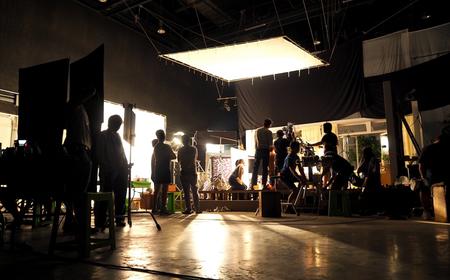
I love the way people will come together to make a story, and it's even more interesting on a film set-the way people who are good at very specific thing, a hundred people, will descend and make this story. I'm so moved by how hard people work on film, how hard the crew works, and what long hours everybody has.
BSW: Something I've noticed about your credits is that even if some of the films didn't turn out well, you nevertheless worked with strong directors-whether they were first-timers or veterans of the field. I gather that the director is important to you when deciding to sign on to a project.
Davis: The director is everything. If you have a great director or a director you can connect to, you're going to have a good experience. That's the only thing that matters. I've learned now, when I go on an audition and I don't feel connected to the director, I know that it's not going to work or that I'm not going to want to do it, because this is the person that you spend a few months with. If you don't get along or if you don't respect one another, it's going to be hellish. So that's the most important thing to me.
BSW: How would you describe your working relationship with Stanley?
Davis: He's wonderful because he's an actor. He knows what actors need. He understands that what actors really want is direction-that they want good direction. They want to be pushed. They want to be opened up. He's really smart that way. I think actors can make fantastic directors if they're smart.
I did a movie this past fall called Final with [actor/director] Campbell Scott, who's a friend of Stanley's. They directed Big Night together. Campbell, as well, is wonderful to work with as a director.
BSW: What is the greatest challenge of being actor?
Davis: There are so many, in all the different sectors of actually being an actor, but to me the greatest challenge is bringing something of worth and of interest and bringing depth and clarity to whatever it is that you're working on-whether it's a little part in a TV show or in a play somewhere-to make it mean something. That's the hardest thing.
BSW: What advice can you offer someone just getting started in this business?
Davis: It would be to develop all of the other areas of your life and make your life satisfying and strong outside of this business. You need a strong base. You need to be OK no matter what's going on. Don't obsess about the business. Keep your head clear if you can. BSW