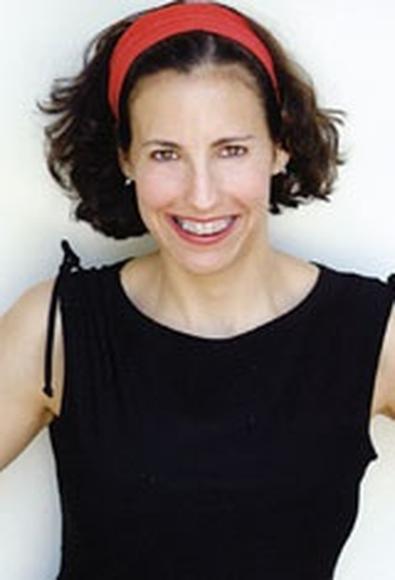
When Los Angeles-based actor Annie Oelschlager learned she had to get braces in preparation for jaw surgery and that she was going to have to wear them for two years, she was, understandably, concerned. "Knowing that was going to take me out of the auditioning [pool], to a certain degree, was very frustrating, and I thought, 'There's so many things that I can't go out for suddenly,' and it was a long chunk of time," she shares.
However, rather than dwell on the negative, the then 29-year-old actor chose a more constructive path. "I said, 'This is the year that I have to make my own movie,'" so Oelschlager began writing a short film in which to display her acting talent and based the story on her own trepidation over turning 30. She began developing the script through a screenwriting group made up of fellow students at Playhouse West, an acting school and theatre company in North Hollywood. Through that writing group she also met her producing partner and director on the film, Corey Blake, who, along with two other Playhouse students, acted in the 15-minute short as well.
Titled "Gretchen Brettschneider Skirts Thirty," the high-energy musical comedy has, so far, played at seven film festivals since being completed last summer. Thanks to generous funding from two investors who are family friends of Oelschlager, she could afford to shoot the movie on 35mm film, a factor that she believes elevated her project. The project wound up costing $30,000 -- with film-related costs comprising about half the budget. She says, "In the first few months while I was writing it, I initially thought, 'Oh, yeah, I'll shoot it on digital,' but as my vision got stronger and as I talked to more people -- because one thing I did while I was writing it was I called everyone I knew who had ever made a movie and showed them the treatment and asked what they thought -- and every time I told someone I was shooting a movie the first question anyone asked was, 'What are you shooting on?' People respond differently when you say 35. With a certain kind of story and a certain kind of DP, it doesn't make a difference -- I see hi-def movies all the time that I think are shot on 35 -- but people respond to film, and it makes people take you more seriously. It made a difference when we were interviewing people for the [crew] positions."
Potential collaborators were also impressed with the overall presentation that Oelschlager and Blake offered. "We found a good crew partly because we went into every meeting with a press packet and we put everything on our letterhead. We weren't big shots, but when you present yourself professionally people respond, and it makes people believe that the movie is actually going to get made. Everybody just wants to work on something that is going to get done."
In addition to finding crew members through people she and Blake knew, they posted a notice on Mandy.com, a website she recommends independent filmmakers use for finding crew. Another tip Oelschlager offers: "There's a lot of crew people out there who have all this experience working under other people but who just want their chance to be the No. 1 person and show what they can do." Such was the case with the film's costume designer, Jenny Eagan. "Jenny is the assistant to costume designer Mary Zophres, who does the Coen brothers' movies and Spielberg's movies. Jenny has relationships at all these costume houses where they did favors for her, and she got all of our costumes for free." Other examples are "Gretchen" 's production designer, Nicole Cramer, who had been working primarily as an assistant or as an art director on larger features but who rose to the challenge as the lead designer on "Gretchen." The same goes for the film's director of photography, Ken Glassing. "After our movie he went to work as an operator on 'Starship Troopers 2,' but then he didn't get to be making the creative decisions. Ken was great."
Glassing was particularly helpful in recommending appropriate camera and lighting equipment, and thanks to his prior relationship with Wooden Nickel Lighting and Camera in North Hollywood (www.woodennickellighting.com), Glassing was able to secure an affordable rental deal on an Arriflex 35mm BL3 camera and lighting package.
Oelschlager and her team made every effort to find the best deals around town. To save even more money on film stock, they purchased their film through the Hollywood-based company Shortenz (www.shortenz.com), which resells leftovers of 400-foot and 1,000-foot film magazines to the public. "Gretchen" 's producers (there ended up being eight credited on the film) also struck deals with the lab Deluxe for film processing.
"Gretchen" 's producers also saved money when it came time to edit their film. "The editing was done by a woman named Lizzy Dyson, who's English and was here [in L.A.] for a month. She was great. She's this television editor and works on a lot of great TV comedies in England. She had come to L.A. to house-sit for a month. She edited our film at the house she was staying at on a G4 using Final Cut Pro, with which I've been amazed at the things that you can do. And we didn't have to worry about renting editing equipment," says the writer-producer-star. "Then we did our online [transfer] at a place called Kinetic."
To Oelschlager's surprise, many people and companies were willing to do her and her partners favors and lower their customary prices. Likewise, most of the film's crew worked for next to nothing, and her actors worked for deferred pay under SAG's Experimental contract. "When you say you're making a movie, everybody wants to help," she says. "It makes people feel useful. They actually like it."
While Oelschlager was hoping that the film would secure her an agent, she has been frustrated with the results. "That was the biggest motivator for wanting to write something that I could play and that was very specific to my personal energy," she admits. "I was sure that the short would get me an agent. I thought [an agent would say], 'Of course, I would want to represent someone who's that much of a go-getter, who's making it happen for herself,' and that hasn't happened. That's a huge area of frustration for me, but I also feel like I'm doing so much without it that I'm okay with it. I feel like the acting thing will come when it's ready to come, and I'm very happy producing."
Oelschlager recently completed producing a feature documentary with director Peter Jazwinski called "Making Gretchen," which is about the making of her short film and which offers much in the way of pointers for aspiring filmmakers. She and her partners are now trying to sell the doc and the short to cable and recently had pitch meetings with Trio, Sundance, and IFC. She is also developing a TV show, inspired by her short, which she hopes to pitch to show runners. "It's part sitcom, part variety show. It's a little bit like 'Pee-wee's Playhouse' or the old 'Monkees' shows." She's also finishing up two feature-length screenplays, one of which has another great part for her. "Wouldn't that be great if I produced a feature and put myself in it? I would be the producer who got myself into SAG, which is absolutely the thing most likely to happen."
Jamie Painter Young writes for Back Stage West.