Photo Source: Courtesy Harry Ransom Center
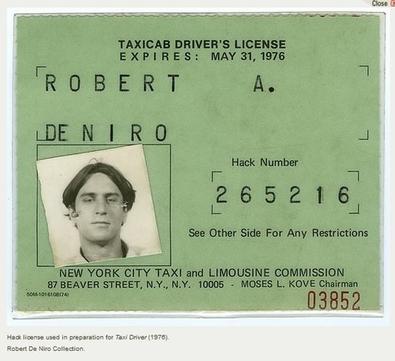
The University of Texas' Harry Ransom Center contains everything from Robert De Niro's annotated scripts to Spalding Gray's papers, in addition to 36 million literary manuscripts, 1 million rare books, 5 million photographs, and more than 100,000 works of art. A treasure trove of research that will boost your knowledge and feed your soul. Steve Wilson, the Center's Curator of Film, shares some of the standouts that may also help your career.
What is in the film collection that might be useful for actors?
Well, they can probably learn something just from seeing how these actors work. For instance, we have Stella Adler's papers. She believed that she could teach actors things like strategies and script study, but ultimately each actor has to find his or her own way. So, with that in mind—we have Robert De Niro's scripts, and De Niro's scripts are a sight to behold. You can see how he intensely studies them and does background interviews for every role, as opposed to Gloria Swanson, who pretty much delivered the lines as written. Either way, it can be really useful for young actors as they decide what works best for them. And we have John Garfield's copy of "An Actor Prepares." He was one of the original Method actors in the '50s, along with Marlon Brando and Montgomery Clift and James Dean and Shelley Winters. The book's binding is now gone, but the pages are covered in his notes.
Robert De Niro is so tied to New York, how is it his collection is at the Harry Ransom Center in Texas?
He had been collecting his works for a long time, since the early '80s. He recognized that he was in some important films and felt that the documents should be preserved, including not only papers and scripts but costumes and film. And it's very very common for collectors to want to keep their collection together. So when he started looking for a home, it was difficult since not every institution collects papers and costumes and film—we're one of the few that could take all those different materials.
What in the De Niro Collection is on film?
We have 35mm prints of most of his films, and then for "A Bronx Tale," which he directed, we have a lot of outtakes. There's also some videotape—"Raging Bull" has Betamax tapes of old fights that he studied, and with others there are DVDs of outtakes. Also trailers and publicity materials and research things. A huge variety.
We had to be very careful with cataloging because there are a lot of personal materials within the research materials. For instance there are people's military records or hospital records. In "Flawless," DeNiro played a stroke victim, so there are medical reports about strokes and how they affect the patients. For "The Deer Hunter" there's a lot about what had been called "Returning Veterans Syndrome"—what we now know as PTSD. There's also a lot of research materials about gangsters, so we had to redact names and social security numbers.You mentioned Gloria Swanson, I think you have her papers as well?
Yes we do, including her copy of the script for "Sunset Boulevard." It has that last speech on its own page—I think they rewrote it several times. It has her changes in her handwriting. It had originally said, "Alright, Mr. Demille, I'm ready for the closeup," before she changed it to "I'm ready for my closeup..." You can see with "Sunset Boulevard" that acting has changed over time. The silent days of Gloria Swanson came from stage and vaudeville and pantomime and gestures so you could reach the back row of the theater without amplification. Once talkies came the style changed, and Swanson only made three more films before she retired from it. She continued in theater though.
Yes we do, including her copy of the script for "Sunset Boulevard." It has that last speech on its own page—I think they rewrote it several times. It has her changes in her handwriting. It had originally said, "Alright, Mr. Demille, I'm ready for the closeup," before she changed it to "I'm ready for my closeup..." You can see with "Sunset Boulevard" that acting has changed over time. The silent days of Gloria Swanson came from stage and vaudeville and pantomime and gestures so you could reach the back row of the theater without amplification. Once talkies came the style changed, and Swanson only made three more films before she retired from it. She continued in theater though.
Her collection is so vast because she was mega-famous in the silent days and very gregarious, and wrote a lot of correspendence with famous people. Sometime in the early '50s, after "Sunset Boulevard," she decided it was time for her to do her memoirs, so we have recordings and transcripts from that, and she would tell stories about working with Cecil B. DeMille. There's also a great one she told about a scene in "Male and Female" where she's dressed like a Babylonian princess in a lion's den with a real lion. There were sharpshooters on set in case the lion got out of hand, and she could feel its breath on her neck. There are a lot of anecdotes about working in the silent era.
What's in the David O. Selznick Collection?
It's about 5,000 document boxes. Someone is using it all the time. Someone is using it right now! We just did a huge exhibition on "Gone with the Wind," half of which was about the casting of Scarlett O'Hara. Just about everybody in the country wanted to play that role. Selznick decided very early on he wanted a new personality and put the word out that anybody in the country could apply. And we found tons of letters from women asking for a chance to play the part. Some would say, "I look like Scarlett," the way Margaret Mitchell had written her. But more often they wanted to play the role because they understood Scarlett—they'd lost a child, or had their house taken by the bank, or knew what it was like to push a plow in a tobacco field. It's a great view of the Depression.
Norma Shearer was up for the role. Paulette Goddard was very aggressive and was the front runner. Lana Turner auditioned at 16. There were open casting calls throughout the South. And then they hired Vivien Leigh, a foreigner. That's something they had to deal with!
Anything else of note you'd like to mention?
We also have a small but terrific collection of Woody Allen material, including one or two early drafts of "Annie Hall." And a small collection from Steve Martin—drafts of "Roxanne" and "L.A. Story," I love "L.A. Story."
The Harry Ransom Center's hours and visitors' info can be found here. Happy hunting!
Inspired by this post? Check out our Texas audition listings!