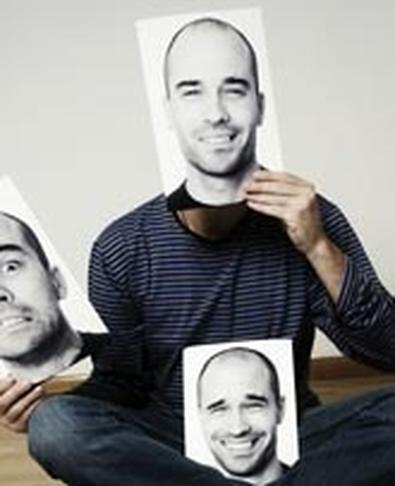
There's no need to be ashamed of bad headshots. We've all been the victims of poor pics. More rare is the actor who takes great pictures on his or her first try. Whether you're starting out or you know that it's time to replace those less-than-perfect pictures, take the time to educate yourself so you can avoid the common missteps actors make with their most critical marketing tool. We've spoken with six actors who admit that their first bouts in the headshot arena were less than prizewinning. These actors have been kind enough to share their photos and their tales of woe, in hopes that their fellow actors will not waste the time and money bad headshots consume.
The Cash Question
The main cause of headshot angst is the expense involved in getting them done. If you go to a high-end photographer, get a hair-and-makeup artist, and factor in the cost of reproduction, you can easily spend more than $1,000. For so many actors, this price tag is out of their financial realm. Still, if you choose a cheaper photographer and wind up with a faulty product, you may end up spending more, when you consider the cost of a re-shoot and the time you waste peddling pictures that don't showcase you at your best.
Philadelphia actor-model Lonnie Delane met a photographer who "was trying to help models build their portfolios, and he charged a nominal fee." When an agency rejected her based on her pictures, she admits, she realized she'd gotten what she'd paid for. "Yes, they were cheap, but they were all I could afford, and apparently they weren't going to get me anywhere," she says.
Renie Rivas, based in Burbank, Calif., had a similar issue. "I changed my hair color, and I just didn't look like my old headshots. Instead of spending a whole lot of money on professional headshots, I just reasoned that I could give a hundred bucks to a friend of mine to take some pictures that reflect more of the person I look like now. I just thought that not-so-great headshots that look like you are better than great ones that don't look like you." Her reasoning backfired. "His photography style was not headshot-friendly," Rivas says, sighing. "My ideas needed to be lovingly embraced by someone who specializes in headshot photography."
Los Angeles-based photographer Bradford Rogne weighs in on why Rivas' choice didn't work: "She's cute, in a Tina Fey sort of way, but overall the shot looks amateur. Character shots should be executed very well if you want to be taken seriously. And the grass isn't working for her either."
Says New York actor Jonathan Chang, "I was just starting out in the business, and I spent all my money on going out and living in New York City. Someone suggested that I look on Craigslist for a photographer." The results were not horrible, but Chang was ultimately implored to get new shots by his agent. Rogne tells us why: "The smile looks genuine; the hair is great; the color of the shirt is also great, commercially. He just needs a better-quality shot. It's blah and boring."
Going cheap on your photographer is seldom a wise move. Consider how much money you spend on clothing and entertainment, and be willing to sacrifice some of these expenditures for the good of your career. If you have an iPod and say you can't afford good pictures, there is a problem with your priorities. Your headshot is one of your most important tools — and something for which you should be willing to splurge.
The Learning Curve
Yes, great headshots are due in part to a photographer's skill, but they have much more to do with your comfort level. If you are not yet at home in front of the lens, shelling out big bucks can amount to a big waste.
My first time out, I went to a top-notch New York headshot guy. At 20, I had very little idea of what the industry was looking for and even less of what I had to offer. He was very impatient with my inexperience, and my only decent shot emerged after he scoffed that I was "not a model." It made me tear up but provided much-needed life in my eyes. Hollywood actor Zena Leigh can relate to the errors I and so many other budding thespians have made. "Well, there were several bad headshot sessions, let's be honest," she says. "There's a learning curve to picking a photographer and to taking a good headshot. It costs a lot of money to learn how to be a great photo subject, unless you have a friend who's studying to be a headshot photographer and they'll practice on you free as much as you both need." Barring this possibility, it can take a long time before you are comfortable getting in front of a camera. Leigh says, "I've had bad headshots about four times in the '90s and probably three more times in the 2000s."
Los Angeles actor Jason Frazier also stumbled coming out of the gate. "Ultimately my downfall in that whole experience was that I was the one who was unprepared, as much as I want to put the blame on the photographer," he admits. "And back then I didn't realize how unprepared I was. I came in with no questions for the photographer, no real idea of what I wanted or expected, and, perhaps worst of all, I came in not looking like my true self."
The (Se)X Factor
A major mistake young actors make is in thinking they need to look as hot as possible in their pictures. Not all actors are suited for leading roles, and those who try to push their square pegs into those round holes do themselves a disservice. Frazier says, "I had a preconceived notion of what I thought people wanted to see, so that's what I thought I was giving them." Leigh turned her sessions around when she let go of that idea: "I stopped thinking I know better than my agents or managers about what pictures are the most marketable. Apparently it's not the ones where I look sexiest."
My aforementioned shot was ultimately inappropriate for this reason as well. I liked it because I looked far more buxom and glamorous than I am, but as a goofy, gangly girl, this was not the correct way to represent myself. I also, for some reason, thought it necessary to get fake nails, and I insisted on wearing the ball-bearing choker and hoop earrings that I thought were my signature.
Excess or Eyes?
Industry professionals will tell you that you should avoid accessories in your headshots. You may, as I did, wear a particular necklace every day, but the characters you are seeking to play do not. When a casting director sees a picture of an actor (or the actor arrives in person to audition), the CD wants to see a blank canvas on which the role to be filled can be painted. Your personal jewelry may distract from that vision.
Besides, it's called a headshot, so your face — and your eyes, in particular — should be the main attraction. Adding bells and whistles will only steal focus. This is why Rogne notes that the grass was a distraction in Rivas' photo. You must be aware of inappropriate additions — to yourself as well as to your environment. A good photographer will ensure that your headshot is composed with a background that does not distract from you but still maintains texture to avoid flatness.
You must also be aware of your makeup. An experienced professional will know what looks right on camera; you may not. Delane did her own makeup in her first headshot session. "I had no understanding of on-camera makeup, and my 'natural' makeup washed right out under the lights," she says. Be careful, however, that your artist does not go overboard. You need to look normal and be able to re-create the look of the picture for auditions.
Although it was once popular to include props in your shots — like a stethoscope to imply that you are a doctor or a basketball to indicate your athleticism — this should be avoided at all costs. Props make you look amateurish; the people looking at the pictures know that you are an actor and are not what you are attempting to portray. Simply dressing to suggest "doctor" or "athlete," for example, will suffice to communicate your flexibility.
False Starts With Body Parts
Hands are seldom welcome in a headshot. "Agents and casting directors will all agree that this is a taboo," says Rogne. "If your hands feel antsy, place your thumbs in your pockets or just keep your hands out of frame." Having your hands on your face or under your chin too often looks posed and unnatural. Try to let go and be yourself in front of the lens, and don't put yourself in any positions you don't find yourself in during your daily life. Doing so will make you appear uncomfortable.
In a woman's case, even a bountiful bosom can distract from the power that should be emanating from your eyes. Dress discreetly unless you consider your body to be your main selling point. Rogne echoes this. Referring to Delane's picture, he says, "All I can see here is chest and underarms. She's going for the Janet Jackson 1993 thing, and it's not working for her." He continues by imploring all actors, "Leave the hands out of the shot — and wear a bra, please!"
Clothes: The Deal
You may be surprised that your undergarments can have such an effect on your final product, but bras can be so troublesome that they have made it to the top of Rogne's list of common mistakes female actors make. "It's the biggest 'oops' moment during a shoot — when your top looks great but your bra is the wrong color or is hanging out over your shirt," he says. "You will spend extra money in the end at the photo lab having this retouched, so plan accordingly."
What you wear during your shoot can have a great impact on the outcome. Delane admits, "I neglected to bring a good headshot wardrobe as opposed to model-type stuff." Says Frazier of his initial Los Angeles shoot gone awry, "I had wardrobe choices that were completely contradictory to my true self and the types of characters I play best." Rogne agrees. "The white sleeveless shirt looks cheesy. Maybe great if he was a Backstreet Boy, but not for an actor," the photographer says, adding, "Black-and-white is over." Indeed, the business has made a turn from "the dark side" into the realm of color, so anyone who tries to convince you to take black-and-white shots isn't doing you any favors.
What types of clothes work well in headshot sessions? "Each look, or wardrobe change, should be planned wisely," says Rogne. "Think of character types that you will likely be submitted for, roles you see yourself playing, and build concepts and wardrobe around them. When you submit your headshot to an agent or casting director, it should convey exactly the kind of type you're trying to sell. Choose colors and layers that are appropriate for the look you're wanting to achieve, and try everything on prior to the shoot."
Remember that your favorite clothes may not be the ones that photograph best. "Wardrobe that is loose, overembellished, or that has ruching [gathering] can look bad in photos," Rogne says. "Select body-conscious clothing that moves well. Fitted layers can also be great to make an outfit more exciting."
Eyes on the Prize
The most important thing you can do to avoid getting bad headshots is to know exactly what you want. You cannot fully depend on the photographer — usually a complete stranger — to coax the best out of you. "Some actors just show up to their headshot session with a handful of wardrobe and expect to get a great shot," Rogne says. He elucidates how an actor can properly prepare for a headshot session: "Know exactly what you need to achieve during your photo session, and communicate that to the photographer. If neither you nor the photographer has a specific idea of what is needed from the session, you'll get mixed, if not disappointing, results."
After her homespun shots, Rivas made sure she was ready the next time she went in front of the camera. "I talked to an acting manager and my agent about exactly what I should do so I would have the perfect game plan and get my money's worth," she notes. The results were clear, she says: "My outfits, backgrounds, and even poses were all planned out, and you can certainly tell that I knew what I wanted going in there."
Question Authority
Don't be worried about imposing your point of view on the shoot. It is your money and your final product, and the photographer should be open to your suggestions. "Any photographer would love that, and it just makes everything comfortable," says Rivas. Indeed, sometimes you should trust your instincts and be wary of the advice of others. Brandon deSpain of New York shares his tale of "Whoa! What was he thinking?": "I went to an open call for a new agency that was looking for new actors. The 'agent' insisted that I use his photographer to get some pictures done. After the photo shoot, he pushed this picture for a headshot because he thought that it was so different that people wouldn't know what to think of it. Since I didn't really know much about the business and completely trusted the guy, I went with his advice, even though I thought that it was kind of a bizarre shot."
Agents may want you to get new pictures, and they may have suggestions on whom to work with, but they should never insist you use a particular photographer. DeSpain didn't make the same mistake twice. "This time I took my time to find the right photographer," he says. "I scheduled about 10 to 12 meetings with different photographers and sat down with them for a couple of minutes to get a sense of how they are and how I feel about working with them, being around them, and talking to them."
The Right Stuff
And how did it turn out? "I found one that was just fantastic for what I was looking for and what I expected from a photographer," says deSpain. "The results are obvious. I'm really proud to go to an audition and hand over my headshot to the auditioners now. It's very professional, good quality, and looks exactly like me. I've had a lot of positive feedback. I get a lot of auditions, and I work all the time."
Being proud of your shot is a good indicator of whether it's going to work for you. Says Rivas of her current photo, "I can't wait to submit to theatrical agents, now that I can be proud of the face they're going to see in the envelope before watching my footage. That face is my face, and it couldn't look better." This confidence will carry over into everything you do, and confidence is the name of the game.
How does Frazier explain the difference between having his old, bad headshots and his new, great ones? "Night and day. Amazing. Wonderful. Heaven. I don't know — how many good words are there for it?" We should all be so thrilled with the pictures that represent us.