In the Envelope: The Actor’s Podcast features in-depth conversations with today’s most noteworthy actors and creators. Join host and senior editor Vinnie Mancuso for this guide to living the creative life from those who are doing it every day.
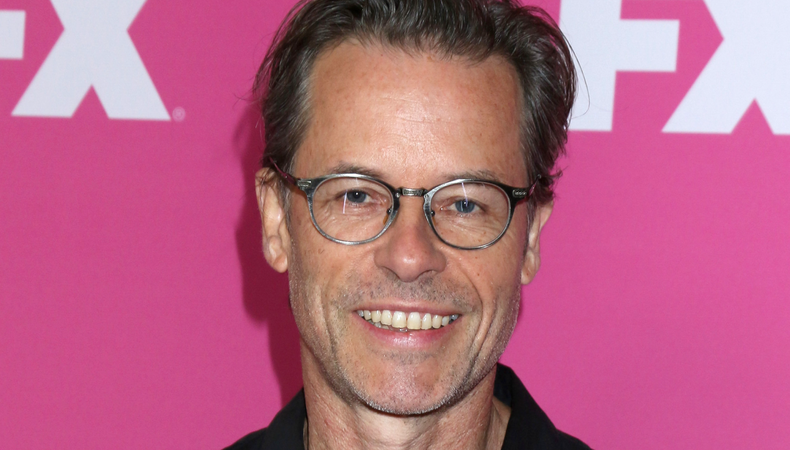
Guy Pearce joins In the Envelope: The Actor’s Podcast to discuss his extraordinary performance in Brady Corbet’s epic drama “The Brutalist” (in limited theaters Dec. 20), which has already earned him a Golden Globe nomination. The actor plays Harrison Lee Van Buren Sr., a wealthy industrialist who hires architect and Holocaust survivor László Tóth (Adrien Brody) to construct a massive community center. Pearce also digs into his early acting memories, the mid-career “sabbatical” that refreshed his view on the art form, and his candid thoughts on balancing acting as a craft and a job.
Listen and subscribe to In the Envelope to hear our full conversation with Pearce:
Pearce has always tried to avoid repeating performances.
“I remember when we did ‘The Time Machine,’ and one of the executives, early on, said to me something like, ‘You know, I loved you in “Memento.” Just do that thing you did in “Memento.” ’ And I really reacted badly to that. Well, not badly. But my hackles went up, and I just went: I’m going to do the opposite of what I did in ‘Memento,’ just because you said that. It was a real insult to me, in a way—not an insult, but it was a real affront.
And I remember when I did ‘Lockout,’ and I played sort of a big, buff action guy, with smart aleck-y lines. And after I did that and we did all the press for it, people kept saying to me, ‘All right, so you’re going to do more action roles from now on.’ And I went, ‘No—no more than I’m going to play more drag queens after having done “Priscilla.” ’ I get that playing an action hero is a sort of vessel that lots of guys want to do, but that to me was just as much of a character outside of myself as playing a cop from the ’50s or a guy who’d lost his memory. That’s why I never understand the question: What’s the one role that you really want to play? I don’t know what it is yet. There’s always one role out there that I really want to play, but that’s about the universe bringing it to me and me being surprised by it.”
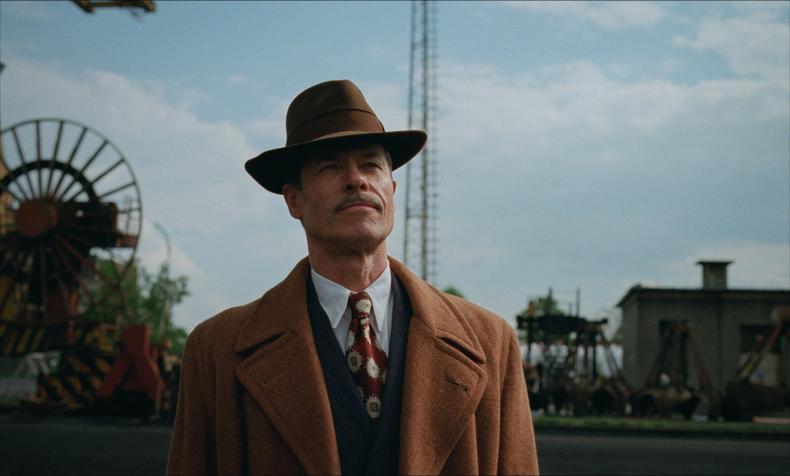
“The Brutalist” Credit: Lol Crawley
The actor found a distinctive voice for his character in “The Brutalist”—something he does for every role.
“[The character’s voice] is sort of the number one thing. That’s where a decision has to be made. It comes naturally. But I really need to know from my director that they agree, because I’ve got to lock that in early on. And I never want to get on set and have an executive or someone say to me, ‘Maybe just don’t do that voice thing. Can you change that?’ You know, in some insensitive, flippant [way], as if you can just switch on or switch off a light like that. So, early on, I’ve got to get the voice right and have our director agree—or disagree, but we work out, then, what it is I’ve got to do. It’s got to be my decision, but it’s got to be agreed upon. Because if it’s not agreed upon, then I’m just up shit creek, as we say.”
Early in his career, a comment from a journalist made Pearce re-evaluate the art form.
“I remember a journalist saying to me years ago, in the middle of a whole lot of interviews about ‘L.A. Confidential’—they said, ‘You’re an actor, so basically you’re just a liar.’ And it really struck me. That was in 1997; and then when I took that sabbatical around 2000 or 2001, that was one of those things that I really had to come back to and go: What did they mean by that? Am I just a liar? Is that what this is? It really was kind of a good prompter for me to question some stuff.
Because the thing is, the Dalai Lama will always say: You’ve got to fake it till you make it. So we always want to be better people than we are. We’re trying to act like we’re a better person or more of a good human being than perhaps we were yesterday. So, the purpose of acting, the reason it exists, is for us to actually better ourselves, I think. What we do as a job is a beautiful artistic outlet that takes that skill and turns it into an art form.”