From the shocking shower scene in “Psycho” to the claustrophobic third act of “Vertigo,” Alfred Hitchcock’s body of work is virtually unrivaled—and virtually inescapable. His fingerprints are on nearly every thriller, horror film, and psychological drama made in the last 60 years. Whether you’re an aspiring filmmaker or an actor hoping to make your name in the genre, you need to acquaint yourself with his work. Here are just a handful of his best.
1. “The Lodger: A Story of the London Fog” (1927): The birth of Hitchcock’s visual storytelling
Long before his Hollywood success, Hitchcock’s silent film “The Lodger: A Story of the London Fog” laid the foundation for his signature style. In this film, Hitchcock experimented with visual storytelling techniques that would define his career: subjective camera angles, expressionistic lighting, and the idea of aligning the audience with a character’s psychological state. One famous sequence uses a glass floor effect to show a lodger pacing above, with the camera shooting upward through a thick sheet of plate glass. It’s a visual solution that communicates tension without dialogue.
Lasting influence: It’s certainly not the most famous Hitchcock movie, but “The Lodger” helped establish the idea that cinema could tell complex psychological stories through purely visual means. That principle underlies everything from modern thrillers to prestige TV.
2. “The 39 Steps” (1935): The blueprint for the “wrong man” thriller
With “The 39 Steps,” Hitchcock refined a narrative structure that would become one of his most enduring contributions: the “wrong man” story. An ordinary person is falsely accused and forced to go on the run, before gradually uncovering a larger conspiracy. This structure combines suspense, humor, romance, and action, creating a dynamic pacing model that feels modern even today.
Lasting influence: This narrative blueprint appears in countless films and franchises, from espionage thrillers to action-adventure movies. It also shaped how actors approach these roles; the protagonist is not an all-knowing superhero, but an everyman reacting under pressure.
3. “Rebecca” (1940): Primacy of atmosphere
Hitchcock’s first American film, “Rebecca,” demonstrates the power of atmosphere in storytelling. Chiaroscuro lighting, eerie set design, and dreamlike sequences make the psychological drama haunting and immersive. The unseen presence of Rebecca becomes a narrative force, shaping the story without her ever appearing onscreen.
Lasting influence: “Rebecca” helped solidify the idea that mood and environment can function as storytelling tools, not just background elements. This influence extends to production design, cinematography, and performance, particularly in genres like psychological drama and horror.
4. “Shadow of a Doubt” (1943): Evil in the ordinary
Often cited by Hitchcock as his personal favorite, “Shadow of a Doubt” brings suspense into a familiar domestic setting. Instead of depicting exotic locations or elaborate conspiracies, the film explores the unsettling idea that danger can exist within the home. The tension arises not from action but from the slow realization that something is wrong.
Lasting influence: The film’s shift toward internal psychological suspense showed filmmakers how to build suspense through character-driven tension. It also shaped acting approaches requiring subtlety, restraint, and layered performances.
5. “Rope” (1948): The long take
“Rope” is notable for appearing to be a single continuous shot. Due to technical limitations, Hitchcock actually used hidden cuts, but the effect still creates a sense of real-time tension. The camera moves fluidly through space, turning blocking and performance into central storytelling tools.
Lasting influence: Later films that use long takes or simulate them, emphasizing the choreography between actors and camera, have “Rope” to thank. The movie also elevated the importance of performance timing and spatial awareness.
6. “Strangers on a Train” (1951): Duality and psychological conflict
In “Strangers on a Train,” Hitchcock explores the idea of mirrored characters: two individuals linked by a shared psychological tension. The film’s central concept of a criss-cross murder pact creates a dynamic in which antagonist and protagonist are psychologically intertwined.
Lasting influence: The exploration of duality has become a staple in modern thrillers. It also influenced how actors approach antagonists—not as purely external threats, but as reflections or distortions of the protagonist. If you love this film, check out another early Hitchcock train classic: “The Lady Vanishes” (1938).
7. “Rear Window” (1954): Voyeurism and the audience
One of Hitchcock’s most self-reflexive films, “Rear Window” centers on a photographer who observes his neighbors from his apartment window, gradually becoming convinced that a murder has occurred. The audience shares his perspective, effectively becoming voyeurs themselves. We live in the protagonist’s point of view.
Lasting influence: This film fundamentally changed how we think about spectatorship. It highlights the relationship between viewer and subject, a concept that continues to shape film theory and storytelling. It also influenced set design and cinematography by demonstrating how a single location can become a dynamic narrative space.
8. “Vertigo” (1958): Obsession and visual subjectivity
“Rear Window” is one of Hitchcock’s most self-reflexive films, but “Vertigo” takes the top prize. Often considered among the greatest films ever made, it pushes cinematic subjectivity to new levels. Hitchcock used various camera techniques—most famously the dolly zoom—to visually represent psychological states like paranoia, obsession, identity, and illusion. And the final third is unlike anything Hitchcock had done before or would do after. A deeply unsettling psychosexual dissection of control, it can be seen as a reflection of the director’s extremely troubled relationship with women, and particularly his female actors.
Lasting influence: “Vertigo” influenced both visual language and thematic ambition. Much is made of the dolly zoom, which has become a widely recognized cinematic tool, but the film’s exploration of obsession is what makes it one of the greatest cinematic works of all time. For actors, it also demonstrates how performance can align with visual style to convey internal states.
9. “North by Northwest” (1959): Set pieces and spectacle
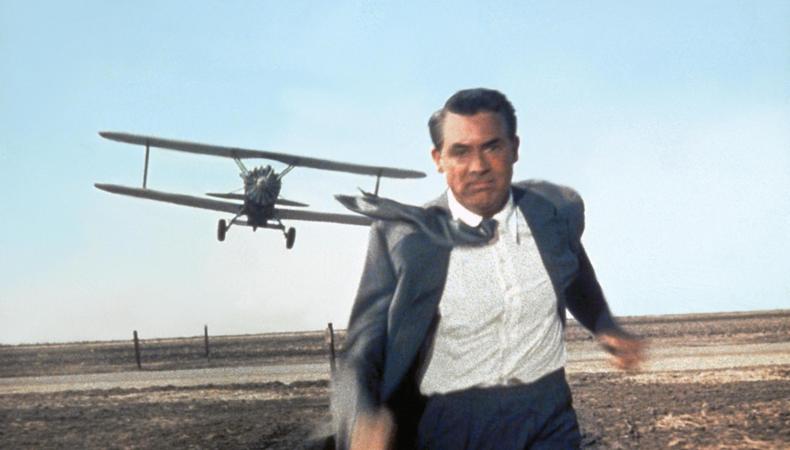
With “North by Northwest,” Hitchcock elevated the thriller into large-scale, proto-blockbuster entertainment. Scenes such as the iconic crop duster sequence demonstrate how suspense can be built through geography, pacing, and visual composition rather than dialogue.
Lasting influence: This film helped define the modern action-thriller. Its influence can be seen in everything from spy franchises to blockbuster filmmaking. It also shifted expectations for production scale, integrating spectacle into narrative-driven cinema.
10. “Psycho” (1960): Breaking rules and creating tropes
Few Hitchcock films have had as immediate and lasting an impact as “Psycho.”
From its shocking narrative structure—(spoiler alert) including killing off the apparent protagonist early—to its rapid editing and use of sound in the shower scene, “Psycho” broke conventions at every level.
Lasting influence: “Psycho” reshaped the entire history of cinema: It helped define the modern horror genre, demonstrated how editing can create fear, and established a new form of horror scoring. Many techniques introduced or popularized in “Psycho” have since become tropes, such as the decoy protagonist and the slasher-psycho killer.