
The CW’s “Sherlock & Daughter” premieres Jan. 1, 2025, promising a twist on the traditional case that even the renowned detective may be unable to solve. But if you were to audition for the show, would you even have a clue where to start?
We’ve done a little sleuthing of our own and uncovered everything you need to know about joining the “Sherlock & Daughter” cast. From an inside look into the casting director’s thought process to acting advice from the show’s seasoned talent, this guide covers it all.
JUMP TO
- What is “Sherlock & Daughter” about?
- Who is in the cast of “Sherlock & Daughter”?
- Who is the casting director for “Sherlock & Daughter”?
- How does the casting process work for “Sherlock & Daughter”?
- Where can you find “Sherlock & Daughter” casting calls and auditions?
- What are the best audition tips for landing a role on “Sherlock & Daughter”?
Inspired by the iconic character created by Sir Arthur Conan Doyle, “Sherlock & Daughter” finds Sherlock Holmes at a crossroads, as the famed detective can’t pursue a critical case without risking the lives of his nearest and dearest. But while Sherlock exists in this limbo, an American named Amelia enters the picture seeking his help—and possibly his affection, too. Not only does she believe Sherlock could be her long-lost father, but she’s also on the hunt for her mother’s killer. Together, the (maybe) father-daughter duo must work to solve a worldwide conspiracy, her mom’s murder, and whether they’re truly related.
Season 1 of “Sherlock & Daughter” will star:
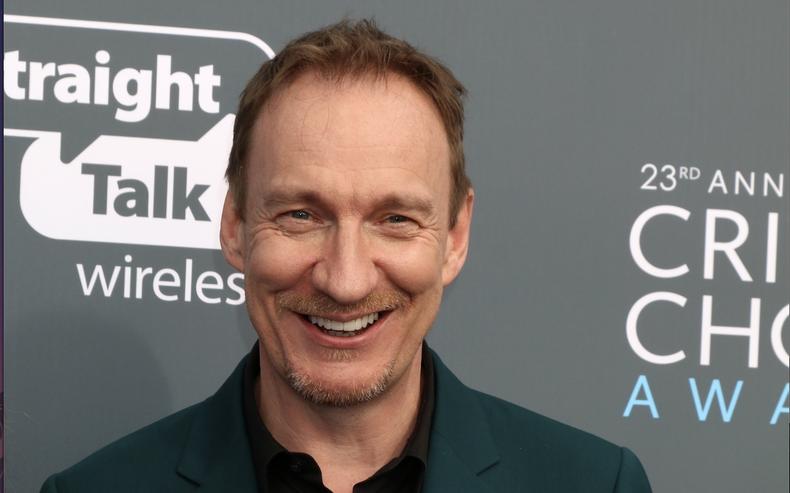
- David Thewlis as Sherlock Holmes
- Blu Hunt as Amelia Rojas
- Antonio Aakeel as Swann
- Orén Kinlan as Shaw McPherson
- Gia Hunter as Clara Anderson
- Shashi Rami as Bertram Birtwistle
- Kojo Kamara as Clarence Halfpenny
- Seán Duggan as Dr. Watson
- Allan Keating as Mr. Hopper
- Rose O’Neill as Emma
- Bryan Quinn as Smales
- Ruairí Heading as Pete Pound
- Lucas Fleisher as Brandon
- Mark P. O’Connor as Arthur
- Dougray Scott as Professor Moriarty
- Phillip P. Keene as Ambassador Anderson
Kathy Hutchins/Shutterstock
Louise Kiely and Karen Scully (“Normal People,” “The Watchers”) are the primary CDs behind Season 1 of “Sherlock & Daughter.”
While many casting directors prefer to audition actors who’ve been professionally trained or have agent representation, for Kiely, background doesn’t necessarily beget talent. “[I]f you have trained, that’s your journey and if you’ve decided to do that then good for you and I’m quite sure it’s been a rewarding experience,” Kiely told Spotlight. “And equally, you might never train, and you might do your first ad as the milky bar kid when you’re 4, and then never do it again. Everybody has a different experience. And at the end of the day, it’s my job to find you. So you don’t have to have a degree to come and meet me.”
As Kiely told us, she and her team audition unrepresented actors quite often. She welcomes CVs and reels from anyone, no matter the extent of their experience. But Kiely emphasized that if you are going to get your name in front of a casting director, you must demonstrate you know who you’re writing to when you send a cold email—that includes directly addressing the person you are messaging instead of simply writing, “Hi there,” she said.
“Take a little bit of extra time to make sure you address it personally,” Kiely said of writing a cover letter. “Sometimes what people do, which is really nice, is they might reference a job or two that I have worked on. ‘I enjoyed this film’ or ‘I enjoyed this television series very much, and please see attached my CV and my headshot.…’ Keep it businesslike, keep it personal, and just pleasant, I suppose.” Kiely added, “You might connect with a casting director every three to four months, or every five months, you know, check in every now and then, but not every two weeks.” She also noted that she receives about 10 emails per day from actors hoping to connect, and while those emails do add up, her team tries to respond to every single one.
For actors whose nerves are getting the best of them, Kiely advises them to do their homework.
“Preparation is absolutely paramount, whether that’s for a self-tape or coming in to meet a director,” she told us. “If you are coming in to meet a director, read anything you can. Read the book, read what’s on Wikipedia, watch the director’s work, and obviously prepare your sides as much as you can. The work has to happen outside. If you come in for a director and you haven’t seen their work when it’s available, that’s kind of crazy. Know your genre, know the thing, and be able to say to them, ‘I enjoyed this film.’ Because you’re there, we already think you’re terrific; we’re going to expect the sides to be read really well anyway, so make it even better by actually just preparing.” She added, “I tell them I’d never go to a meeting without preparation, [and] I expect the same from them. I think that really helps with nerves, as well.”
In the end, nerves and excitement often beget the same buzz internally, Kiely said, so if you can channel that feeling and use it to learn your lines, the preparation will ultimately come through in the room.
With Season 1 set to premiere on the CW in early 2025, “Sherlock & Daughter” hasn’t been renewed for a second installment just yet. Therefore, there are no active casting calls for the new series at the moment. While waiting for the new series to get renewed, it’s a good idea to keep your résumé fresh. For those hoping to add a few more gigs under their belt, we suggest bookmarking our main casting page for updates on the latest open calls. In addition, these casting calls are great for kick-starting anyone’s acting career.
Filming started last week on North Great George's Street in Dublin for "Sherlock & Daughter", an upcoming mystery television series created by writer Brendan Foley for CW. Here's a video of the street's transformation! pic.twitter.com/lqe4lkz6vz
— Yann M. Blake ???? (@realYannBlake) April 20, 2024
Improv will teach you to listen. While some actors find structured schooling beneficial, Thewlis thrived when studying improv—and it’s something he continues to channel as a professional actor, as it taught him how to listen. “I didn’t find a lot of drama school all that useful, to be honest. I found a lot of it very cerebral and too study-bound,” he told us. “I always liked improvisation.… Improvisation teaches you to listen properly, because you can’t say what you’re going to say next until you’ve really listened. I’ve worked with actors who don't listen. They’re too concerned with what they’re going to say next. They’re practicing their next line in their head. [Improvisation] makes you more daring. You’ll take more chances. You usually don’t use it as a performance piece; you usually do it as a class exercise. Before I went to drama school, I went to a technical college, whereby we did improvisation very much, and I think that’s where I learned to become an actor—through improv.”
You are not your profession. Having found success at an early age, Hunt has learned that who you are as an actor and who you are as a person are completely separate, and newcomers should do all they can to continuously nurture their personal identity. “[A]t the beginning of your career, when you’re an actor, you have to go with the flow for a while until you can, hopefully, take complete control,” Hunt told ScreenRant. “I had to let go of attaching myself to my acting career. Who I am as an actor and what I do as an actor has nothing to do with who I am as a person. That social group, and the things I love and I like, my personality, all of that has nothing to do with the movies I do, or my acting. Acting is my job, you know? That was something I didn’t realize. It’s a blessing to be able to act and get paid for it at all. But now I’m just going with the flow, seeing what’s next, trying not to put too much pressure on myself, and just experience and enjoy life. We only get one, maybe. At least one that we know of, or whatever!”
Rejection isn’t personal—really. For newcomers, rejection can feel like personal failure, but as Scott can attest, it’s truly just part of the process. It’s no reflection on your talent and you should simply use a “no” to fuel your pursuit of “yes.” “You get turned down so many times as a young actor, and [it’s easy] to take it personally and think it’s all about you,” Scott told us. “In my position now, I can see there are so many different reasons why you don’t get offered the part. Quite often it has nothing to do with your abilities as an actor, and that’s what you always think when someone says no. A lot of actors can doubt their talent, so I would say to my younger self, ‘Don’t ever doubt yourself. You get knocked down, you get up and you dust yourself off and you keep on going.’”