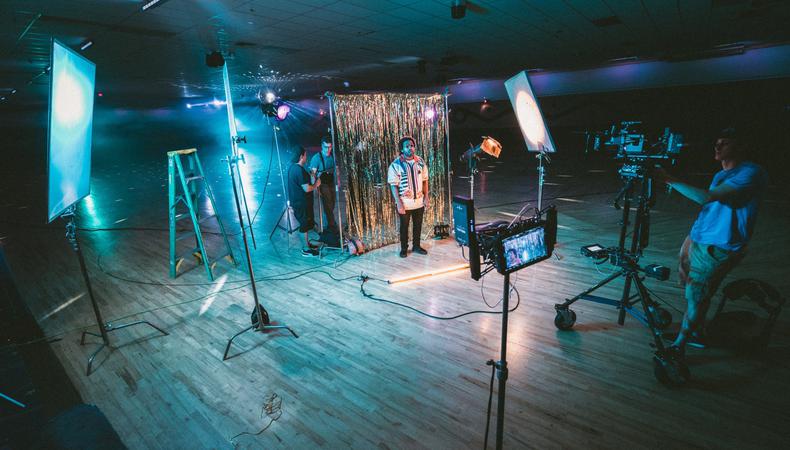
Good Eye Visuals producer-editor-cinematographer Allison Woest also casts the music videos and other projects the company produces. Woest has created music videos with artists like Clutch, Cannibal Corpse, Frank Lero and the Future Violents, Arch/Matheos, and Granny 4Barrel. As the company and their projects have grown, Woest found she needed to expand her pool of talent. “Sometimes you have to venture out and use a new tool to get your task done. Backstage did that for me.”
In addition to needing talent for the music videos, Woest says they started needing voiceover actors for corporate animations and multimedia projects. They’ve also expanded to producing narrative-based video projects across the U.S. Although Woest knows actors in the northeast, they didn’t have the same go-to list of talent for the rest of the country. “Backstage is a great way to cast multiple projects in multiple places at once, and keep it all organized so nothing gets confusing. When hundreds or thousands of actors are hitting your email inbox, it can get overwhelming if you don’t have an organization plan in place. Backstage is amazing because I can tell it to not email me at all, and keep all the information within their system that I can log into any time, and look just at what I need.”
After casting many projects using Backstage, Woest has some tips to offer actors about her process.
 How To Become an Actor
 Don’t underestimate the cover letter.
Woest says she gets most of what she needs to know from the actor’s cover letter and their first interactions. “Someone doesn’t necessarily need to be a seasoned actor to get cast by me. They just have to be able to communicate, and have enthusiasm about the project.” She intentionally asks specific questions in her casting call to help elicit responses from actors who have really read the notice and are interested in the job.
For Woest, the cover letter reflects the actor’s interest level. “If a person sends an impersonal cover letter that doesn’t touch on any of the points in the post or answer the questions outlined in the post, this sends a message to me that the person is not interested enough in the position to craft a personal response. This lack of interest will be apparent on screen.” She says the investment in the cover letter carries over to the project. “If you do not answer or at least address the questions in a casting call, that sends a message that you may overlook or not comprehend things when they are presented to you. These types of things tell us this person will be less likely to be able to follow direction on set.”
Be adaptable.
“Our projects are sometimes very unorthodox, so it depends on the situation,” Woest says. She notes that she changes her process for videos versus voiceover. “For videos, usually we will do a couple rounds of submissions and try to have great conversations with the applicants who are expressing genuine interest. Sometimes we will request a taping if we need something special for the role, such as fight sequences, and need to see the person do a specific thing. Most of the time we are able to cast based on the actor’s resume, reels, photos, and most importantly, quality communication with that actor.” With voiceovers, she casts in a more standard way, typically requesting a test read if she’s interested after the initial submission.
 6 Signs You’re Meant To Be an Actor
 Be enthusiastic.
“When someone is very enthusiastic about a part and tells me what other things they’ve done that are relevant to the part I’m casting, that helps me to know this person will be right for the role,” Woest says. She says it shows that they understand the genre she’s going for and can see how they’d work within that vision, which in turn helps her see how they would fit. “This is very important to us when casting projects that are counter culture or underground in nature.” She suggests that casting directors put an actor’s desire for the role first. “The actor’s attitude about a project will tell you a lot about how their performance will ultimately be.”
Embrace the new.
While the pandemic hasn’t impeded Woest since she’s been casting remotely for over 15 years, she is excited for the new technology and remote casting tools that have been developed, and about actors becoming more comfortable with remote casting.
Pay attention to detail.
Woest notes that she’ll often get out-of-area submissions even though the post says local submissions only. “If they don’t tell me specifically they can work as a local in the area I’m posting about, this applicant is actively wasting my time and will never be cast on a project I post.” Following instructions is important whether it’s what to write in a cover letter or what to record for your prescreen audition video. Woest says, “Make sure to carefully read the entire post, and answer any and all questions that are included in the post. More information is better. Ask questions about the role that make you seem genuinely interested in the project. Try to include a personal touch and express your interest in this particular role, not just acting in general.”
Looking for remote work? Backstage has got you covered! Click here for auditions you can do from home!