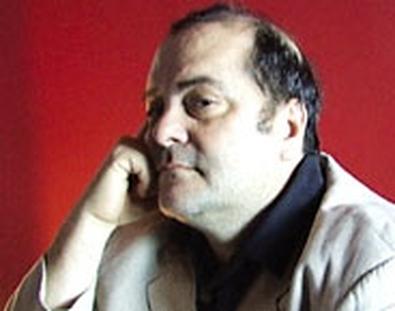
The model for Intar Theatre, a 40-year-old Off-Broadway group committed to producing new plays in English by Latino playwrights living in the United States -- both immigrants and American-born -- is, of all companies, the legendary Group Theatre. So asserts playwright Eduardo Machado, Intar's artistic director, who has held the post for two years and is getting ready to launch the company's new season.
"Like Intar, the Group Theatre was a political theatre made up of an ethnic minority," he says. "The company had a strong aesthetic that has had a lasting influence on American theatre."
Machado admits he is drawn to overtly political plays, though he suggests that "all literature is inherently political. And Latinos are political if for no other reason than the fact that we are perceived as Third World people. And that awareness has to influence what we write."
But what makes Intar unique, even among Latino theatre companies, is its central mission: to create an ethnic theatre that is fundamentally American and viewed as such by a broad-based audience, he says.
The plays may or may not be set in America and they may or may not explore the lives of Latinos. But contemporary Latinos, writing in English, must be the playwrights. "No other theatre is doing that," Machado contends.
At a recent cocktail party held in a Midtown restaurant to celebrate Machado's second year at the helm, he announced his plans for the upcoming season, and the operative word is eclectic.
The first play of the season will be Machado's "Kissing Fidel," a naturalistic family drama set in a Miami funeral home where tempers explode when the deceased's grandson announces that he is returning to Cuba to forgive Castro. Sylvia Bofill's "Windows," an absurdist piece about Puerto Ricans living in New Jersey, is next, followed by "Points of Departure" by Michael John Garcés, a documentarylike look at the lives of indigenous Mexicans who are not allowed to speak their native language by their own government. And finally, Intar will produce Jorge Ignacio Cortiñas' "Tight Embrace," a work that examines the everydayness of terrorism and killing in Colombia.
Machado insists that these plays are as different in subject, theme, and style as the works of British playwrights Sarah Kane and Simon Gray.
Nonetheless, he contends, the plays are unified in debunking myths that continue to be held about Latinos in general and Latino playwrights in particular.
Each play is a revelation, he says. "Kissing Fidel," for example, responds to the belief that all Cubans in Miami are conservative. (They're not.) "Windows," he says, will surprise those audiences who maintain that Puerto Ricans can't be intellectuals. "Tight Embrace" reveals power struggles in places outside the United States -- such as Colombia. And "Points of Departure," he continues, will be an eye-opener to those who argue that all Mexicans speak Spanish or want to speak Spanish. (Many would prefer to speak their native Indian languages.)
Playwright Michael John Garcés praises Machado: "The Latino community is a complex mosaic and we need someone like Eduardo, who has an expanded view of who we are. Before, mainstream or even Latino theatres would present the experiences of one or two groups -- Nuyoricans in the barrio or Cubans in Union City -- as representative. We're much broader than that. I, for example, grew up in Colombia with a Cuban father and a WASP mother."
He adds that Latino writers also suffer from stereotyping: "We're either supposed to write magical lyricism or the kitchen-sink drama, describing criminals in the Bronx."
Machado notes that he continues to be seen as "an exotic, not an intellectual," despite the fact that he has been writing plays since 1981 -- he has penned 27, which have been performed at major venues nationwide -- and is the head of Columbia University's graduate playwriting department.
"Latinos will soon be the largest minority in the country, yet we're not really seen, nor is Latin America," he says. "Many Americans believe that Europe is its nearest neighbor. Prejudice is so ingrained that many Americans are not even aware that they're prejudiced. And this prejudice is reflected in the lack of Latino work in many theatres."
That said, Machado admits that his own work has not been ghettoized. But he, along with José Rivera and Pulitzer Prize winner Nilo Cruz, are anomalies: "We're certainly not the norm. I was a member of the Ensemble Studio Theatre, where my plays were produced. Frank Rich gave me a good review, which set me off on a different path."
Machado remains convinced that there is a wide audience for Latino-American playwrights, citing the non-Latino audiences who have come to see his plays performed at Hartford Stage, Long Wharf Theatre, Actors Theatre of Louisville, and the Mark Taper Forum. He also points to Intar's audience demographics: "We have an audience base of 4,000, many from the Upper East Side and Connecticut."
Intar is very much a playwright's theatre. Down the road, Machado is hoping to nurture actors and directors of Latino descent, although aside from the playwright, the hiring of performers and the creative team will always be ethnicity-blind. At the moment, however, his first order of business is boosting revenue.
With a staff of six full-time employees and one part-timer, Intar operates on a budget of $750,000. Machado's goal is to raise $400,000 this year and start a membership drive.
But his long-term goals are cultural, looking forward to the time when Latino-American theatre "that is risky and eclectic is perceived as a reflection of the American experience."
Intar operates under an Equity LOA contract and this coming season its productions will be presented at the 99-seat Kirk Theatre on Theatre Row. Actors may send pictures and resumes to Attn: Casting, Intar Theatre, PO Box 756, New York, N.Y. 10108. Send manuscripts to the same address, Attn: Literary Manager.