Frustrated with the recurring lack of creativity offered in theater and film--especially for a Latino actors--New Yorker Jaime Velez took matters into his own hands with his one person show "Mi Familia". His incredibly diverse show, which delves into the trauma of reflecting on the modern family, has seen three prosperous runs in the last two months at HERE and The Variety Cafe. Through his moderate success Velez has gotten a handle on the business of art.
"You have big players that are constantly looking to put money into these big productions," says Velez. "Then you have independent films and Off-Broadway theater where you don't necessarily have that option of people throwing money at you. Now you go through trying to get it yourself, and the problem is there's never enough. The biggest help then is word of mouth. You spread the word as much as possible and then let the quality of the work sell itself.
"Producers have all this money and they want to put out this movie and there's a formula. They know if you have and you have X amount of crazy stunts, people are going to come watch it, and we know that formula works so we're going to stick to it. When you see a lot of independent movies being released, such as "Momento" and "Made," it's inspiring but also frustrating to see this person is doing it, and this person is doing it, there's got to be more people doing it, and then you forget about more people doing it and just do it yourself."
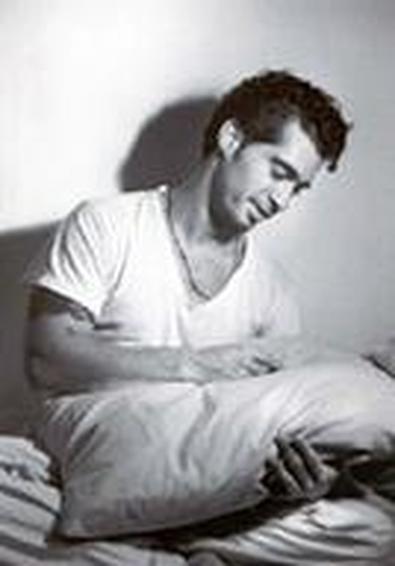
Velez takes the audience on a comic roller-coaster throughout "Mi Familia," with characters ranging from gay uncles to drunken grandfathers, gossiping elders to worried mothers. The play takes place in one white room where the main character is getting paid an exorbitant amount of money to be locked away for 21 days. This gives him plenty of room for self-reflection, not without irony relating to his career as an actor.
"The rebirth of my spirituality came hand in hand when I discovered I wanted to be an actor," he continues. "At one point I didn't know what I wanted to do in my life and I realized that my outlook was totally the wrong one. The more experiences I came across, through research, or writing the script, whatever it was, made me feel for the first time what it's like to be human. Before it was worrying about what I have to do with my life, my money, me me me, my my my. Now there's all these things I never thought I'd be looking into--whether it's research on a character or working on a new project--that really helped me look at these characters as people, and address the points that needed to be addressed with those characters, and then use that in interactions I have with people on an everyday basis."
Part of this understanding can be attributed to Velez's versatility, transitioning smoothly from theater to film acting, seeing them as communicative and not separate. Distinctions are evident, but interactive, if the actor is confident in their stature and craft.
"Although film, when released looks more `real,' the making of it is a lot more artificial," he says. "It's shot out of sequence, etc. What helps me as a film actor is the training I received in the theater. When you develop a relationship between yourself, the actor, and the director, it becomes very collaborative.
"With film you don't necessarily have that luxury because the director is being pulled in 18,000 different directions. They have to worry about so many things that if you, as an actor, haven't come and brought yourself into that shoot prepared with everything you're going to do and you're waiting for the director to tell you what to do, you're leaving yourself opened to be screwed. If they think they got everything they wanted and you're acting wasn't 100%, you can't blame them. But if you brought in your craft and worked on it all the way it helps you bring that to the shoot, so when you're standing around for 10 hours before the scene and then they call you, boom, you're ready right away."
While looking for new venues to show "Mi Familia," Velez is working on two independent movies, "Stray Dogs" by Robert Pietri and "Smokers" by Axel Foley, continuing to forge a path through the dark trenches of an uncharted forest, utilizing what he's learned in both in harmonious congruency.