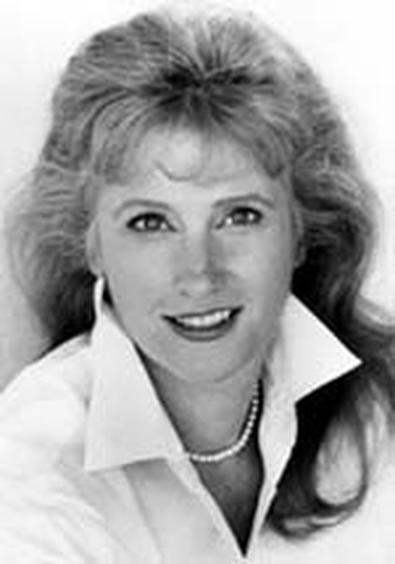
Widely known for her work with the Pearl Theatre Company, Joanne Camp's reputation for versatility, especially with the classics, is indisputable. And her resume reveals it: During last season's rotating rep of "Much Ado About Nothing" and "Romeo and Juliet," she played Beatrice and Lady Capulet; in prior seasons, she's essayed Madame Ranevskaya in "The Cherry Orchard," Madame Arkadina in "The Seagull," Clytemnestra in "The Oresteia," Millamant in "The Way of the World," and Rosalind in "As You Like It." And she's slain several champion heavyweights, namely Medea, Hedda Gabler, and Phaedra.
But Camp, who holds both a B.F.A. and M.F.A. in acting, received an "eclectic" training, as opposed to the rigidified, conservatory-style approach currently in vogue. She doesn't disdain such approaches, but also believes her own path into acting--from a Gainesville, Ga. junior college to Florida Atlantic University to George Washington University--provided her with a strong framework with which to do her work.
First, Camp says, came basic preparations. Being a native Georgian, she "had a southern accent and a wonderful teacher who advised me not to do Tennessee Williams until I learned how to be an actor"--until, that is, she could be reasonably assured of not being pigeonholed in Maggie the Cat-like characters. At one point, another teacher "would come to performances and make lists of the words I mispronounced and hand me those lists." And, in addition to "basic acting classes, theatre history, and doing a certain number of hours in technical theatre--lighting, set construction, costumes" at GWU, she "took singing, voice, and worked with the speech pathology department. I had a really tight jaw at the time and still had that very nasal, flat, southern accent that I worked on a lot."
Yet Camp says her most useful training came from "working with Robert Neff Williams," the renowned voice teacher now affiliated with Juilliard. Even today, with the Pearl soon to open its 19th season, Williams maintains an affiliation with the company, "and what's nice," Camp says, "is you can really discuss what a line means structurally with him. I'm at a point where I can ask for a line reading--I can say, 'Say the line for me,' and he'll say the line and I'll say 'Well, I hear it this way,' and nobody feels criticized. It's freeing."
And feeling freed ought to be the goal of any quality training. To illustrate what she means, she refers to her work last season playing Beatrice in "Much Ado," comparing it to playing Rosalind in "As You Like It," which she has now done in four separate productions, both Pearl and non-Pearl. "I think I have more of an idea of what [Shakespeare's] language does and how it's supposed to work than before--what the mood is of a scene. Shakespeare defines things for people: If you know how to listen, if you know how to read the language, then you can allow that to play you as an actor, and that's where the creativity comes in, because you and the language are working together."
Moreover, because she played Beatrice and Lady Capulet at the same time last season, Camp says her training, which is ongoing, involved setting some specific goals for herself with her two roles.
"I wanted to get to the point where speaking Shakespeare would just feel natural--where I'd feel as open to it and as receiving of it and as free with it as I would in a contemporary play or as I would with Chekhov. When you play Lady Capulet--who is not as naturalistic a character as Beatrice is--it's hard to actually embrace the fact that she's just not as fully fleshed out and have that be all right. But it was; I didn't have to make things up to play the character. And that's so important: It all comes down to realizing that if you can't find it, it's probably not there, so trust your mechanism as a receiver, and trust your script, and let your training do what it has prepared you to do."
Looking ahead, Camp admits that she'd "really like to play Medea again--the first time I played her I was scared to do it." And here, once again, she believes her training will serve her well, helping her avoid what she sees "a lot of other actors doing on stage, where you're working so hard and trying so hard that it's sometimes mistaken for great acting, which it isn't. You know, where everything's just so wrought that shouldn't be wrought, and where the audience ends up stepping back and watching the acting rather than have the playwright tell the story. That's not our job. The training teaches you what the job is."