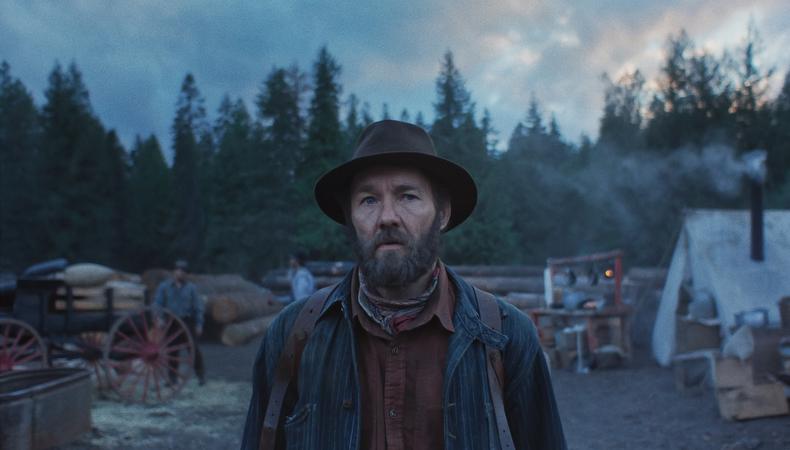
Joel Edgerton said a lot with a little in “Train Dreams,” Clint Bentley’s sweeping Netflix drama. As Robert Grainier, a taciturn logger reckoning with tragedy in the early 20th century, the actor’s quiet sensitivity echoed through Pacific Northwest forests and across railroads.
Your character spends a lot of the film in isolation. How did operating in such a quiet, internal space affect your approach?
It reminded me of a character that I played in Jeff Nichols’ movie “Loving,” who was in a different way very stoic, and someone like Robert that absorbs the blows of the world. What I found with Jeff's movie is how much focus it places on making sure that your thoughts are in order, so that the performance conveys specificity without having words to guide an audience as to what you’re thinking.
When it came to Robert, it was this feeling that if I did the job right—as in, move through all the experiences and don’t play any games, other than just think the right thoughts—then the camera would see what was going on in my mind, through my expression.
RELATED: 11 Award-Worthy Screen Actors on Their Favorite Performances of 2025
I had more similarities with Robert in my own life right now than most other characters that have come into my orbit. Looking beyond the surface stuff—of it being a period film, and that Robert was in the logging industry and building the railroads—he’s a contract worker who separates himself from family. I know what a farewell feels like. I know how sometimes saying goodbye to my kids becomes more about my own sadness. I know that being away from them, I fret about their safety.
What frightens me with work is being a bit more myself and exposing the things that I think and feel. Usually, I try and hide behind characters, which I love.
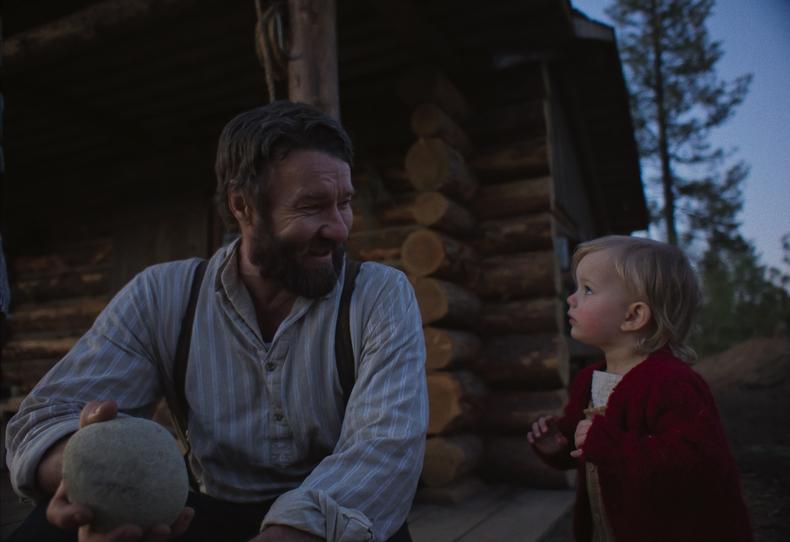
How did the natural beauty of the shooting location influence your performance?
The environment that Clint set up really supported truth. We could shoot in any which direction, almost at any time. The cabin we were living in for the shoot, every drawer was full of truthful, authentic artifacts of the time. You could actually cook and sleep and live in that cabin. It’s a real place. It’s not a flimsy set.
Being in nature changes your focus. I think an urban environment puts you in a bubble of frustration. Your focus is quite near. Being in a forest opens up your focus. It amplifies silence. You can hear the tiniest crackle of firewood, and breeze in the trees, and a woodpecker in the distance.
What’s one of the best acting lessons you’ve ever learned?
Never presume that you know everything. By that I mean be aware that you’re hopefully always a student. You can learn something new from anybody you encounter, and not even just other actors. Even children on the set, you learn from them. For me, it’s about remaining malleable.
Who gave one of your favorite 2025 screen performances?
It was a real joy to watch Sean Penn’s performance in “One Battle After Another.” The character was written with vulnerability that Sean showed so well. It actually amplified how dangerous he was as a character, because you feared even more what he was capable of doing.
This interview has been edited for clarity and length.