Joy Sunday had only a few weeks with the seven scripts of “DTF St. Louis” before
her first day on set—so she read through all of them every day, drilling them into her head to keep the timeline straight.
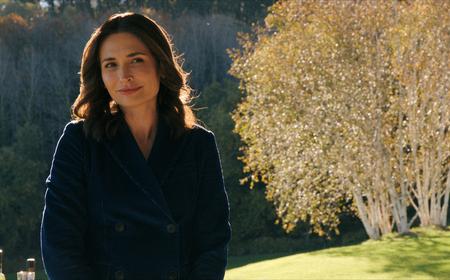
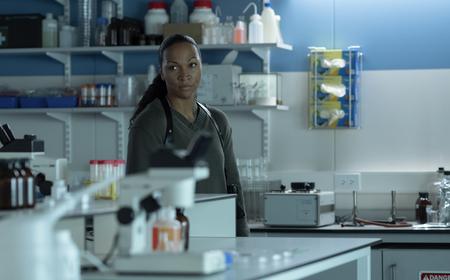
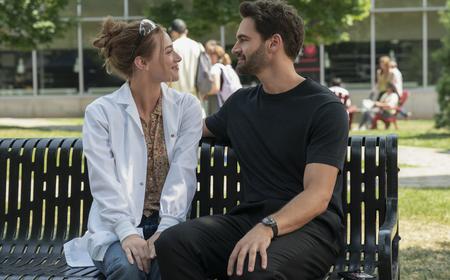
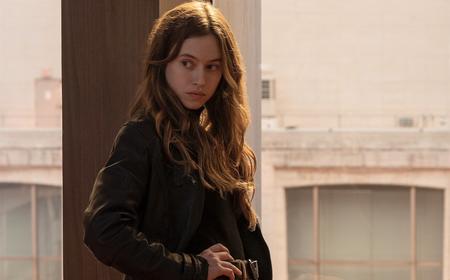
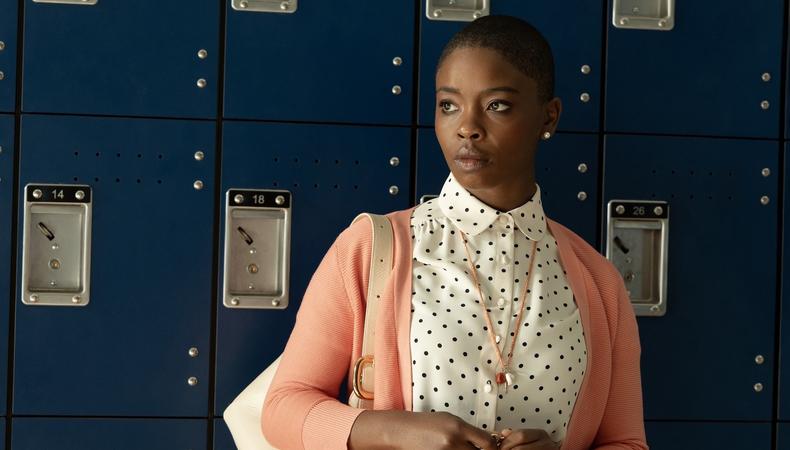
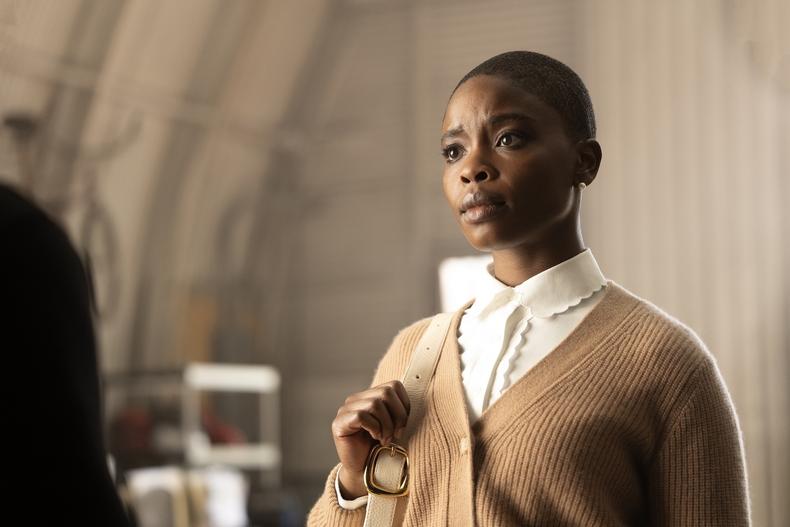
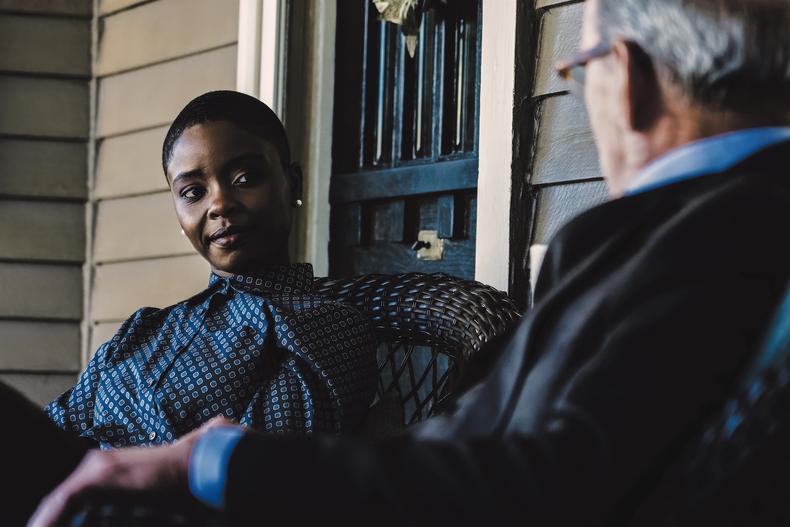
The payoff is Jodie Plumb, the special crimes officer who spends the duration of Steven Conrad’s HBO limited series interrogating St. Louis’ strangest suburban suspects in a bizarre murder investigation. Working alongside Richard Jenkins’ county detective Donoghue Homer, Plumb picks at the case with a trademark mix of empathy, deadpan humor, and cashmere sweaters.
In July, the series landed 13 Emmy nominations, including outstanding limited or anthology series and five for its cast: Jason Bateman, Linda Cardellini, David Harbour, Jenkins, and Sunday. It’s a first nod for Sunday, who broke out as siren Bianca Barclay on Netflix’s “Wednesday.” Here, she reflects on the process of building her delightfully subversive detective.
You were cast shortly before cameras rolled. How did you get to know Jodie that quickly?
I read those scripts, the seven episodes, at least once a day for two weeks, and I created this kind of mind map. Not only is the story told a lot in flashbacks, but there are pieces of information that the audience knows that Jodie wouldn’t necessarily be privy to. So I wanted to map out what was going on concurrent to the interrogations happening and what were the emotional beats that I had to correspond with those moments. Being a detective, you can very easily be very stoic and objective about how things are unraveling. It was really fun to find the meat in those moments, out of order.
What did you build for her that never makes it onscreen?
Jodie had such an interesting cadence. I wanted to understand why she was the way she was, while still being very empathetic and compassionate. I definitely built a background story for her, and you don’t necessarily become intimate with what that story is in the show, but it informed a lot of my choices and how I approached why she does what she does. Then, on the day [I] arrived, I took all that prep and let it all go.
Jodie doesn’t behave like your typical TV detective. How did you sidestep the procedural shorthand?
It largely comes from Steve’s writing. It’s so rich and textured, and it doesn’t allow room for the cliché. Going into my audition, I had a white button-down and a notepad, and it was very that. Then I get to my fitting and it’s just flowery skirts and cashmere cardigans. As soon as I walked into the room and saw that, I was taken aback—but I immediately understood the intention. This is someone who doesn’t mind taking who they are into a workplace that is unwelcoming to them. She doesn’t adhere to what the workplace expects of her; she carves her own path, and it works for her. [Conrad] wanted Jodie to feel separate from the environments she was in, which is why she is this extremely flowery presence in a brutalist setting.
The show is very funny—and also emotionally devastating. How did you navigate its shifting tone?
I could not stand to think about, oh, this needs to be funny or this needs to feel this way. It would be too much for me. There were so many lines that people apparently love that I was puzzling over how to say—how to make it feel like something I would just say. Then to find out that people find those lines funny? It wasn’t the intent. That speaks to Steve and how he captures how human these interactions are, because there are things to laugh about and cry about in almost every interaction we have.
You and Jenkins have great chemistry. How did you develop that rapport?
It’s funny, because the last scene we have together is the first thing that we filmed together. So I’m shaking in my boots the entire scene, because you’re asking me to get kinky with Richard Jenkins and I’d barely gotten to interact with him. We didn’t have rehearsals or anything like that. I think Steve had us meet for about 10 minutes and read a little something so we could get a sense of each other, but otherwise we hadn’t worked at all previously.
Before that scene, it was very commonplace: “Oh, hi, Joy, I’m Richard.” The relationship wasn’t there yet, obviously, because we’d just met. But after filming that scene, it just clicked, and we had this immediate trust in each other, and fun and playfulness that we were able to keep throughout production.
That’s the scene where Jodie finally smiles and opens up a little. Did shooting it first change how you played everything that came before?
I didn’t intend for that to be the case. My first day was in the bike shop, and my second day was that scene with Richard, so it was really at the top of the process. It happened because there’s this relief that comes with the end of the investigation, and also this rapport that I built with this person who I previously had kind of a cold shoulder with. So it wasn’t intentional.
Throughout being Jodie—the interrogations, how we come to know her—it was really just about trying to be a blank slate for these people who are such a puzzle to me. Especially with Richard’s character: His opinions are kind of known, or how he feels about things is flat out. So I wanted to be a kind of safe space for the folks that we were interacting with, just so that they feel like they could reveal themselves to me.
Have you received any advice, from fellow actors or otherwise, that really stuck with you?
I’m lucky and fortunate to have led a very artistic life, thanks to public arts funding—I’m a public school kid. The wisdom that I gather is from my artist community, and I think the more that we can do to foster and nurture working laterally among ourselves would really further everything that we’re doing.
I wish I had some lofty little actor trick, but what has stayed with me the most, especially after experiencing a set like this one, is that it really goes a long way for everybody to want to show up and do their best. I can’t ask anything more of fellow artists. It takes a lot of trust and openness and vulnerability to do that.
What’s your best advice for early-career actors?
Keep showing up [and] fostering, for sure; being aware of your resources and what’s available to you, to not only empower yourself but others. Actors are very much a cornerstone of this business; there’s nothing to put onscreen if there are no actors. So I hope that we can continue to take up space and stick up for each other throughout this process. I don’t want to put stock in competition or comparison, and I think that is a way that we can be kept divided. So lean on your fellow actors. Ask questions. Look into resources. Share resources. Share information.
In terms of the business, I was and still am such a Backstage reader myself. I loved Secret Agent Man—I loved that column. I went to [Fiorello H. LaGuardia High School of Music and Art and Performing Arts] in New York and [was] in the conservatory program. But I also would read Backstage, and you go to the back and there’s a directory of resources. A lot of that stuff got me so far in my career.
Anything else you live by?
Every single day, the world at large is so beautiful. We have to take that in every day as much as we can. Even the most ugly, burnt-out building is also beautiful in its own way, and just taking a moment to take that in and imagine what could have been, what will be, is a huge part of being an actor—just expanding your imagination and potentiality for what could come. So I’d say just take in the world and love the people next to you.
This interview has been edited for clarity and length.
This story originally appeared in the Aug. 17 issue of Backstage Magazine.