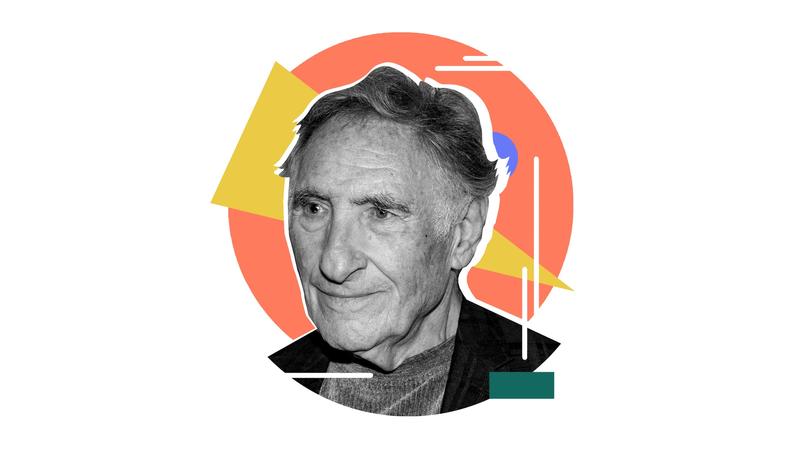
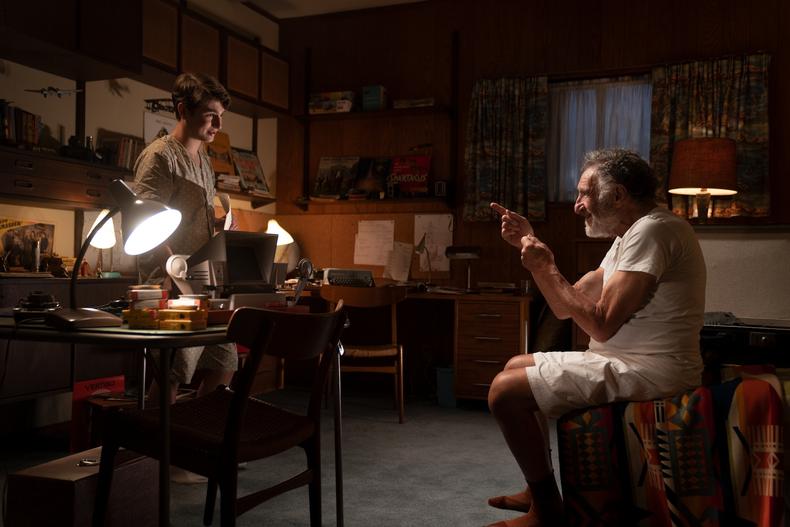
Judd Hirsch hits Steven Spielberg’s semi-autobiographical “The Fabelmans” like a lightning bolt; as the imposing Uncle Boris, he delivers a speech that proves to be formative for the director’s young avatar, Sam. Hirsch’s brief but pivotal appearance has earned the 87-year-old his first Oscar nomination in four decades. Here, Hirsch talks about his work on the film and the audition that landed him his first role on Broadway.
The exchange between Boris and Sam is so potent. What was your take on it?
He’s like an oracle who says, “You will [pursue your passions]. You won’t be able to do anything but that. And even though you will, you will face such struggle.” As the picture goes on, I’m looking for that sound of the heartbeat in his character. Every time Sammy sees something, I hear a sound which goes: Boris is talking to you from inside yourself. You know it. That’s how you got here.
Did you rehearse that scene at all before filming?
No. I think [Spielberg] was very interested in seeing what would happen. It’s not so much that he was saying, “I’m going to put you over here; the camera’s going to be over there.” It wasn’t that at all. It was, “Don’t worry about a thing. We’re covering it.” That’s when I got the clue: You could think up what you would like this guy to be. Is he going to be dangerous? Is he going to be funny? Is he both?
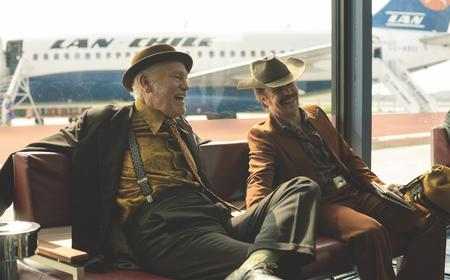
 “The Fabelmans” Credit: Merie Weismiller Wallace/Universal Pictures and Amblin Entertainment
What’s one performance every actor should see and why?
Walter Huston in “The Treasure of the Sierra Madre.” He’s playing this old codger who’s going to show them where the gold is in the mountain, and he has this big scene about how they found gold—they didn’t know it, but he did. He’s jumping up and down and saying, “You don’t even know how dumb you are! You don’t know that you’re standing right on it!” It’s so good.
What’s the wildest thing you’ve ever done to get a part?
My first Broadway part was the Telephone Man in “Barefoot in the Park.” He’s just a big schlub who comes in out of breath because he’s just walked up six flights. Well, I decided: I’m not going to get this part unless I do something special. So I decided to become a guy who has sort of a Habsburg jaw. In the middle of the [audition], the guy said, “Judd, could you do it like yourself?” I was mortified. So I did it as myself, and I got it.
 How ‘The Fabelmans’ Ensemble Makes Movie Magic Feel Real
 Do you have an acting horror story you could share?
It’s not horror, but I was playing understudy to Jerry Orbach in an Off-Broadway play called “Scuba Duba.” Jerry got laryngitis, so the next day, I was on. I’d never rehearsed it with the cast—only by myself. So we ran it fast, and they said, “You’re going to be great.” I’m the first guy onstage, and my first line is, “Oh, I needed this. I really needed this.” I turned to the audience and said [it], and they just applauded. I was so frightened, but I was determined to tell them, “It’s not the other guy; it’s me.” From then on, it was a glorious time.
How were you first approached about the film?
It sounded like a secret call. I get a call that says something like, “SS wants to talk to JH.” I went, “Who the hell is SS?” Finally, my agent says, “I think it’s Steven Spielberg.” I said, “What the hell? Well, why didn’t he just say Steven Spielberg?”
[Spielberg] said, “I need somebody to play a part in this movie that I’m doing about myself. It’s an ancient great-uncle.” I said, “Where’s he from?” He said, “I think he might have come from the Ukraine.” I said, “What did he sound like?” He said, “Well, we hardly understood anything he said. He was a family guy who scared everybody in the family for some reason.” That’s all he told me. So I read the script and found out I don’t know who the hell this guy is, either. I’ve never met anybody like him; I’ve never been like this in my entire life. So I had to do an idea of what I would be if I was a guy who came from the circus—[who] was a lion tamer and a silent film actor from way back.
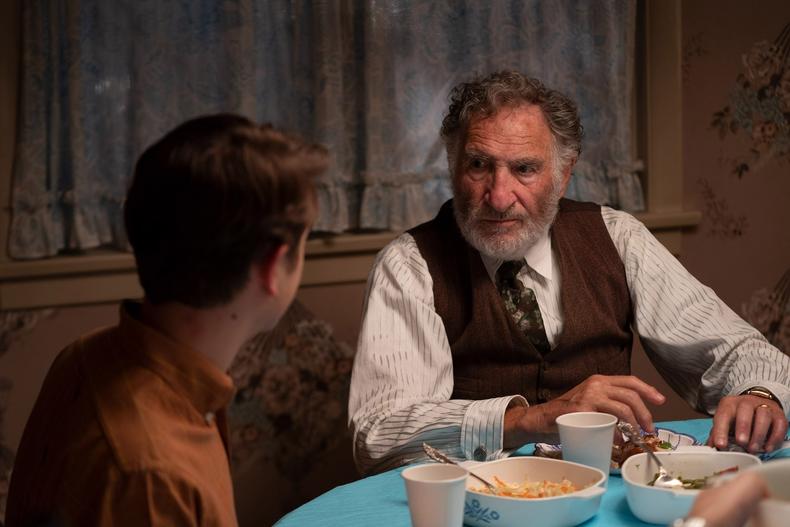 “The Fabelmans” Credit: Merie Weismiller Wallace/Universal Pictures and Amblin Entertainment
Everybody seems to have a Spielberg movie that’s been very impactful for them. Are there any you’re particularly fond of?
My knowledge of Steven started with “Jaws.” When I met him, we happened to be in the same office at the same time, and he was doing “Jaws.” We did not know each other. I was there to audition for something, and he was in the office because he was a guy who was writing and directing. It was one of his first things for Universal. The lady who was interviewing me for this part in a television movie that I was going to do, she said, “This is Mr. Spielberg, he’s going to be very big.” That’s all she said. And I said, “Hi there” and waved. He was, like, 26 years old, and I was about 36 years old. He was like a kid.
Then I saw “Jaws” and I went: So that’s what this guy did. Wow. And when I saw “Close Encounters of the Third Kind”—that [was] so intelligent, so real, and very cinematic. I love the images. I remember where it started. They were walking through some old airport with a bunch of World War II planes. I said, “That’s the kind of movie I would like to have been in.”
What was it like to work with him as a director, especially on a film that was so personal for him?
If I was in any of the other movies of his, I don’t think it would’ve been the same way. I would’ve been one of a number of characters who would fill the bill in some dramatic or humorous way, so it would be more of a plan. This one, I just think this guy just wanted to have a good time with me. Something in that little brain of his, I could smell it. I could see it. Because he’d come in, he’d fix something with Gabriel [LaBelle, who plays Sam]—and I’m standing there with my hands behind my back thinking, So what do you want me to do? And he’s like, “OK, let’s go.” And I [think], I didn’t join a Steven Spielberg movie not to be directed, for crying out loud. But he’s extremely friendly and very open. He’ll tell you anything about himself, which I thought was wonderful.
What advice would you give your younger self?
Dare to do the thing you think you can’t.
How did you get your Equity card?
My teacher directed an Off-Off-Broadway play, and I became the stage manager and the understudy. I think you could do two shows without being in the union, but I joined right away.
This story originally appeared in the Feb. 23 issue of Backstage Magazine.