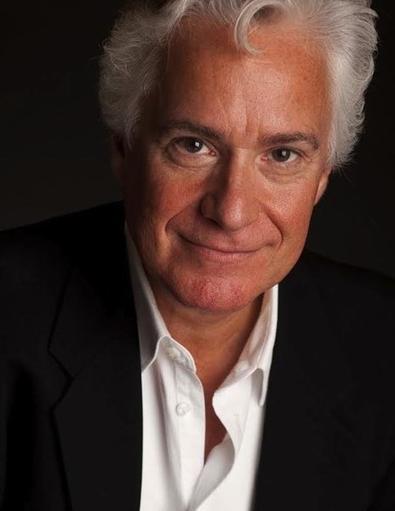
Dr. Lucien Douglas has been an acting and directing professor at the University of Texas at Austin for nearly two decades, where he’s served as Head of the Acting Program as well as Senior Associate Chair of the Department of Theatre and Dance. During his tenure, he’s also managed to ply his craft on stage and screen. We caught up with Dr. Douglas recently to discuss the business of acting, UT’s inter-departmental programs for young actors, and the best advice he ever got.
What has been the best part about teaching theater at UT?
The best part is the environment: We have excellent facilities and a professionally experienced faculty of artists-teachers who enjoy great passion and dedication for what they do. We also have excellent students, eager for education and training over a broad spectrum of theater arts. Our acting program has been greatly revitalized as we have turned our attention to undergraduate actor training—we no longer offer the MFA in acting. Our BFA in acting program has challenged us to broaden our curriculum and to rethink what young acting students need in a market where digital, film, television, stage, and voice-acting all intersect with greater opportunities for actors to pursue work.
UT’s Departments of Radio-Television-Film and of Theatre and Dance have been working toward building a more collaborative relationship. Describe that process.
RTF Professor Andrew Shea and I have been teaching a course in Acting-Directing and the Camera where we bring together 24 acting students from the theater program with 12 directing students from the film program. We use exercises identified with the Meisner Technique: Actors are taught to focus their attention on their partner (not their idea of the other “character,” but on the actual person who is sitting across from them), and to live fully and truthfully in each moment of personal connection. Both actors and directors learn about their respective disciplines, and—most importantly—about the actor-director relationship and the collaborative process.
The two departments have also started a new two-semester course called Script 2 Screen. The fall semester is about writers and directors developing scripts. The second semester brings those individuals together with actors and designers to produce those scripts. The intention is to teach skills beyond the respective disciplines through collaborations among theater and film artists.
How important is it to prepare acting students for the realities of getting a job?
Very important. It’s a business. The actor is marketing him- or herself. There are so many things to consider: relationships with agents, casting directors, directors, union contracts, advanced training. How to meet and stay connected with industry professionals. Proper headshots and resume formats. And the realities of getting the job are a long shot—but it happens! Industry personnel like making new discoveries, so be prepared.
Someone once said: Think of the audition as the job and the job as the reward. Good advice?
Sure, why not? I agree. You must bring relaxation and confidence into the audition room. I always like to think of the audition as though I’ve got the job and we are now shooting the scene. Bottom line: whatever works for you to be relaxed and confident. Be present. Be in the moment. And work off the person who is reading with you. Relate to the other person! And remember that you are trying to change something in him or her. Do that—really do it! An actor doesn’t always know what the auditioners are looking for. So, do your doings, give ‘em what you got. The job is, indeed, a reward.
What are the main differences between acting for the camera and for the stage?
There’s really no difference. Acting is about relating truthfully to another human being under a set of imaginary circumstances. Each actor must be personally invested. It doesn’t matter whether it’s Shakespeare, or Arthur Miller, or a comedy, or television, or film. You adjust to the space and the distance factor between you and the audience. Live theater is produced in 1,000-seat houses and in 99-seat houses; the actor adjusts to the distance factor. Obviously there can be greater intimacy with the camera, so the actor adjusts physically. But in all cases, the personal investment must be there. The “life of the human spirit,” as Stanislavski said, is what we are going after.
What’s the best advice you can offer students who want to enter an acting program?
It’s hard work. Like athletics. You have to put in the time with your acting partner outside the studio. Rehearsing, staying fit, reading plays, keeping up with what’s going on in the profession, and observing people and life. I always say, there are not enough jobs to go around to satisfy all the talented and deserving actors. But that’s the reality of the profession. The late Dame Judith Anderson told me over and over that you have to have the talent and “you have to have the luck.”
Other than Dame Judith, what’s the best advice you ever received?
The distinguished mystery writer Judson Philips also produced Equity summer theater in Connecticut, where I started. He said, “The best thing you can do for your career is to keep acting.” That, and what I said about preparation, are the best pieces of advice.
Inspired by this post? Check out our Texas audition listings!