
Eight days. That’s the longest amount of time Kieran Culkin can stand to be apart from his wife and kids. When an 11-day stretch of filming during the final season of “Succession” left him struggling, he made this a hard rule.
“I’ve talked to other actors who have kids, and they’ve said, ‘You have to make it work, even if that means you’re flying back for five hours to be with your kids and then getting back on a plane,’ ” he tells me during a recent video chat from London.
Recently, the 42-year-old actor has received widespread acclaim for his performance in Jesse Eisenberg’s “A Real Pain,” including a nomination for best supporting actor at the 97th Academy Awards. He and the writer-director costar as a pair of cousins who travel to Poland to see their grandmother’s birthplace and visit Jewish heritage sites alongside a group of fellow tourists. Culkin plays Benji Kaplan, a seemingly free-spirited guy whose inner woes rise to the surface over the course of his time with Eisenberg’s levelheaded, apprehensive David.
Culkin has also earned SAG and Critics’ Choice Award nominations for his supporting turn, as well as wins at the Golden Globes, the Los Angeles Film Critics Association Awards, and the New York Film Critics Circle Awards. This hefty collection of accolades has made him a frontrunner for Oscar glory.
But the role almost slipped through his fingers when he learned that the film’s shooting schedule would take him away from home for almost a month. “You have to consider life over career,” he recalls thinking. “I knew that I couldn’t do 11 days; so how am I going to do 25? But ultimately I got talked into doing it, and I’m very glad I did.” It took a thoughtful phone conversation with Emma Stone, who’s a producer on the movie, to convince him to stay on board. “I didn’t miss much at home,” he says. “I wouldn’t have done it if I was going to miss one of my kids’ birthdays or something like that.”
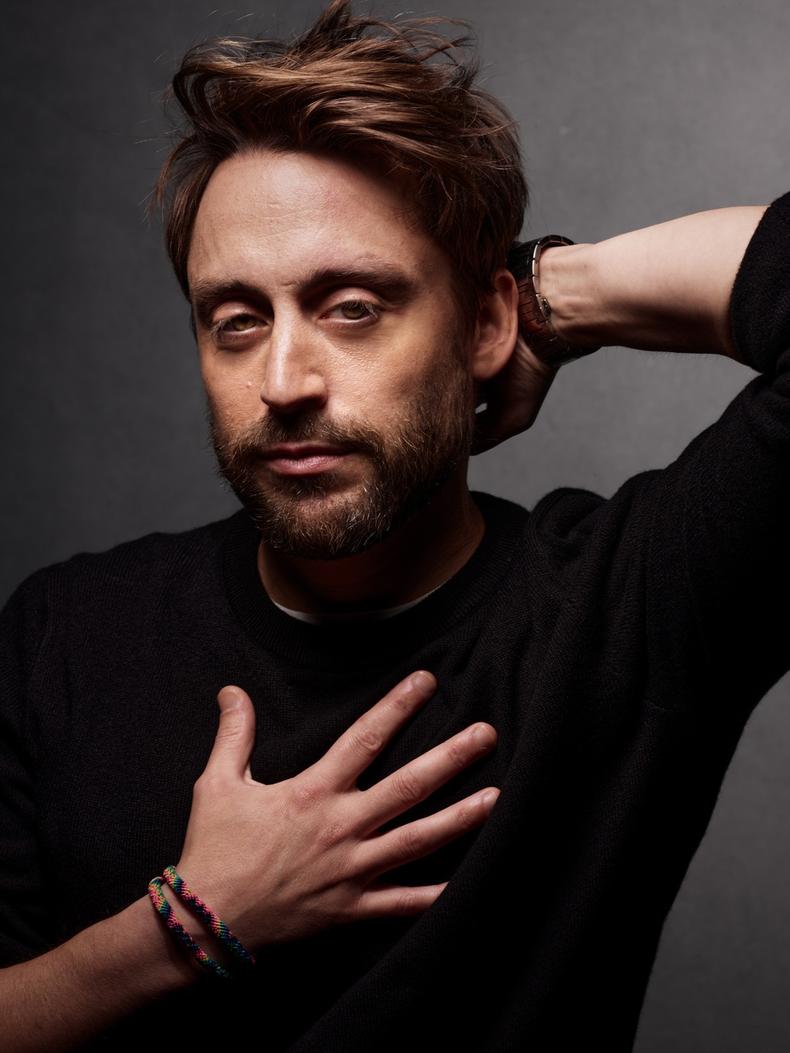
Prioritizing his personal life has made Culkin a rather selective artist. This kind of family-first conviction goes against traditional Hollywood expectations. But the actor, who regularly attends awards shows sporting colorful temporary tattoos given to him by his kids, seems to do better and better the more judicious he is about the roles he takes.
When the screenplay for “A Real Pain” made him laugh out loud, it was reason enough for him to be interested. He says that the dynamic between David and Benji was instantly clear to him. “I could visualize their past, and I thought I had a real lock on who Benji was. But then 10 or 15 more pages in, I would be really surprised by a reaction Benji had. He was constantly surprising me. He seemed quite unpredictable and spontaneous.” Playing a guy who “doesn’t think before he speaks” appealed to Culkin, particularly since the character frequently shocked himself with his own volatile behavior.
“With Roman and Benji, I don’t want to know more than the character knows about himself. I only want to know as much as he knows in real time.”
Given Benji’s erratic nature, the actor decided to tackle the part by not preparing. He didn’t have any notes or questions for Eisenberg after reading the script—a rarity for him. Each day on his way to set, Culkin would ask the filmmaker, “What scene are we doing?” He would then learn his lines as quickly as possible before shooting began.
“I thought, I don’t want to say the words out loud until I’m on set. I don’t want to know what the set looks like. I don’t want to know anything about the situation. Let’s just go in there and do it,” he recalls. “Because I think Benji is the kind of guy who can just be thrust into any situation and he’ll just figure out how to get right to the meat of the thing.”
This way of working made Eisenberg, whom Culkin describes as an assiduous planner—incredibly anxious. Since there was no rehearsal period—the actor arrived in Poland the day before production got underway—Eisenberg had mapped out a rough version of the entire movie on his cellphone. This careful preparation clashed with Culkin’s instinct to let scenes emerge in the moment.
The actor avoided analyzing Benji too much; but when he watched the movie for the first time—more precisely, an early scene set at airport security—something about the character felt familiar. “I realized: Oh, my God, this is exactly like a friend of mine,” he says. “I didn’t know that when I read it, and I didn’t know that when we were shooting it. But I must have been channeling that friend the entire time without realizing it.”
Since the film’s release, people have been coming up to Culkin to tell him they have someone like that in their own lives, expecting the actor to be the Benji whisperer. “They want to talk to me about it as if there’s some way I can help, which I just can’t,” he says with a puzzled expression.
His approach to Benji was similar to the one he used for his role on Jesse Armstrong’s “Succession” as Roman Roy, the youngest scion of a family at the head of a powerful media empire. Culkin won a lead actor Emmy for the part in 2023. Prior to being cast on the series, Culkin’s process involved spending weeks with a screenplay, breaking it down scene by scene. But since the “Succession” actors often received scripts only a day before shooting an episode, that method wouldn’t work this time. He couldn’t veer off-book or predict where the character was going, since rewrites tended to happen up until the very last second.
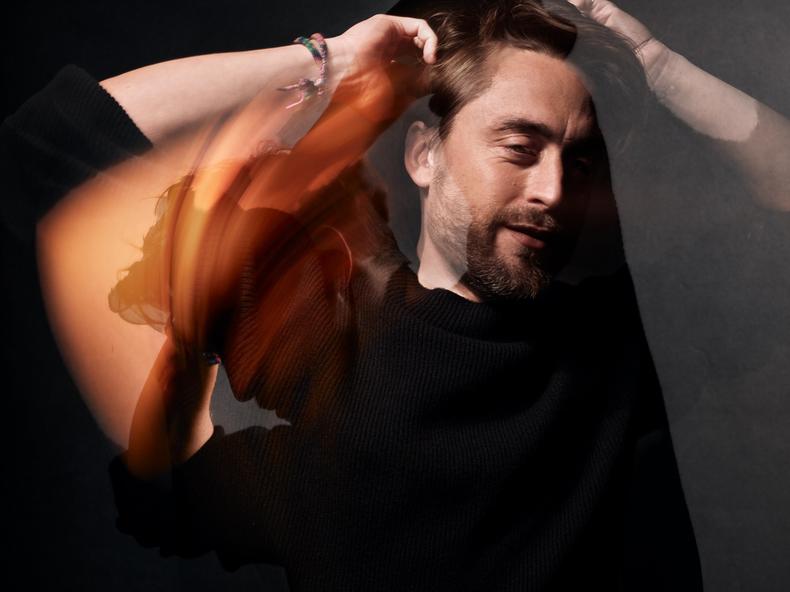
Because Roman is a cocky, immature guy who can talk his way out of any conundrum, Culkin opted to wing it just like his character would whenever he found himself in an uncomfortable situation. Under most circumstances, coming to set unprepared would spell disaster. But the quality of the writing in both “Succession” and “A Real Pain” gave Culkin the freedom to surrender to what was on the page without much discussion or second-guessing.
“I had to completely rewrite how I work, which I found very freeing. I felt unencumbered,” Culkin recalls. “With Roman and Benji, I don’t want to know more than the character knows about himself. I only want to know as much as he knows in real time.”
The key difference in “A Real Pain”? Eisenberg was both his costar and director. It was a difficult adjustment for Culkin, who says it’s a major no-no for actors to offer each other notes. “You just don’t do that. That’s fisticuffs.” Each time Eisenberg gave him a direction after a take, Culkin’s defenses went up—fists clenching, chest puffing out. “I’d think, Oh, you’re going to give me notes? I’ve got notes for you, too; I can also tell you how you can do better,” he remembers thinking. “I had to remind myself that this is the director giving me a note, not my scene partner giving me a note. That’s a bit of a headfuck, to be honest.”
“My manager used the word ‘career,’ and I went, like, ‘What? Hold on. Sorry. I have a career?’ I panicked, because I never made this decision myself. ”
This willingness to adapt and recalibrate has become central to Culkin’s approach, leading him to trust both his instincts and seek counsel from the people who are important to him. “A couple years ago, I was asking my friend Michael Cera about whether or not I should do this movie,” the actor says. “And he told me, ‘Look, if you don’t do it, your life is going to be fine; it’s going to be the same. But if you do it, then all this stuff happens, and it could change your life.’ And I said, ‘That’s really good advice!’ And he goes, ‘You gave me that advice.’ And I was like, ‘Really? I did? Wow! I should take that.’ ”
The two actors became close when they were making Edgar Wright’s 2010 film “Scott Pilgrim vs. the World”—another project Culkin almost turned down. “I’m very proud of that movie,” he says. “I’m glad I did it, because I got a lot of friendships out of it; Michael’s one of my closest friends now.”
Culkin made his film debut alongside his brother Macaulay in Chris Columbus’ 1990 holiday classic “Home Alone,” a movie he still holds dear. “Growing up, I used to watch it every Christmas,” he says. “Now, I give it a two- or three-year break every now and again.”
He remembers feeling that he’d finally made the transition from child star to real actor when he led Burr Steers’ 2002 coming-of-age comedy “Igby Goes Down” as an acerbic teenager from a dysfunctional family. Though Culkin shot the movie at 18, it wasn’t released until he was 20.

Jesse Eisenberg and Kieran Culkin in “A Real Pain” Courtesy Searchlight Pictures
It’s the one role the actor did deliberately chase. After auditioning and getting rejected multiple times, he finally landed the job thanks to his ability to take notes—and because his smug remarks reminded Steers of Igby himself. “I had only done kid acting, and Burr Steers really wanted me to do scene work and be an adult and be an actual actor who understands what the scene is and what’s happening and what you’re feeling,” Culkin says. “He wanted to work with me.”
Playing Igby had a profound impact on the actor’s personality, particularly when it came to the character’s sharp, mordant communication style. “There are friends of mine who’ve seen that movie and said, ‘That’s just like you.’ And I say, ‘It wasn’t at all like me, but it influenced my life thereafter.’ I loved the way Igby spoke, and I stole a lot of that.”
Around this time, Culkin began to garner serious attention in the industry. “My manager used the word ‘career,’ and I went, like, ‘What? Hold on. Sorry. I have a career?’ I panicked, because I never made this decision myself. I was 6 when I started. I was in school and doing jobs, and now suddenly I had a career?”
Culkin is conscious of the fact that, at that moment, he was at an age when most people are trying to figure out what they want to do with their lives. The difference was that he’d already been in the business for 14 years. “I had a backdoor in,” he says. “I had been doing it since I was a kid, so there was never the pursuit of it. It was just a thing that happened every now and again.”
Ultimately, he chose to continue acting while mulling over other roads he might be interested in following. It wasn’t until he was halfway through shooting the first season of “Succession” that he finally realized he wanted to be an actor—never mind that he’d been doing it for nearly three decades already. “Because I’d now decided that this is what I want to do, it felt odd to actually pursue it, because I wasn’t accustomed to pursuing it,” he explains. “I’m still having a hard time with that.”
At any point in Culkin’s life, was there another vocation that might have lured him away from acting? “I never figured out what that could be or what [else] I have a knack for. I barely know how to read emails,” he says earnestly. “I don’t know how tech works; I have no background in anything; I have no skills, none. I’m a high school dropout, so without an education and a means to do anything, I’d be screwed.”
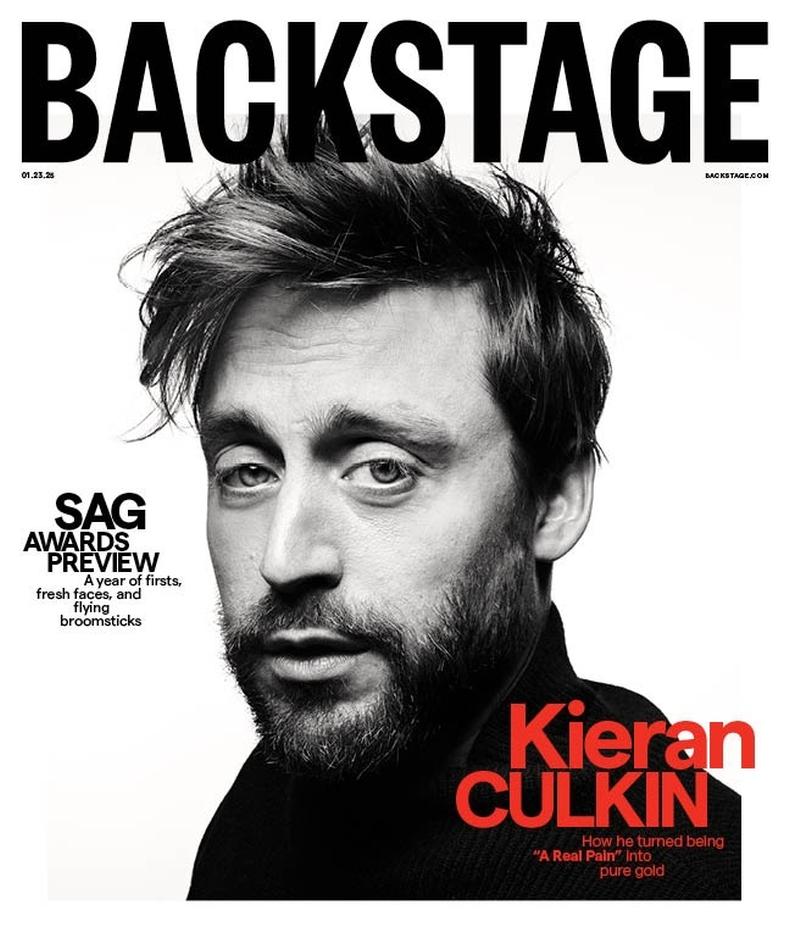 I’m a bit taken aback by this response; so I ask if he feels comfortable with the idea that, for better or worse, acting is his only viable career path. “As long as I can feed my family doing it, then it should be OK,” he says. “And I hope we don’t get to a place where I need to do something else for a living, because I wouldn’t know how to.”
These days, Culkin is more proactive about pursuing roles he’s interested in. But he tries to stay detached when it comes to opportunities that don’t pan out. “I remember being taught at a very young age that when you audition for something, the moment you leave the room, you have to let it go; it’s not your part,” he explains.
Even when he does land a role, he often still needs some convincing. “I’ve said no to things where I’m like: I know this is great, but I’m not right for it,” he says. “I’m going to say no despite what my manager tells me.” Making those calls is a bit more straightforward now—because for the foreseeable future, Culkin’s most important consideration is whether a job will take him away from his family.
“I decided I wanted to be an actor, and then, like, a year later, I became a father. I still think that I can pick jobs the way I would when I was 26, which is like: I’m right for this part; let’s do it,” he tells me. “And I forget to factor in: Well, where does it shoot? How long? Can I bring the kids?”
It seems the reason that Culkin is so charmingly unfazed by professional triumphs and disappointments alike is because he’s already been cast in the role of a lifetime: dad.
This story originally appeared in the Jan. 23 issue of Backstage Magazine.