It’s been many years. He admits that memory could be playing tricks. But Kit Harington recalls reacting to his first audition rejection with a certain four-letter word, followed by “you.”
“No, I know I can do this,” he remembers his teenage self thinking after losing a part he thought was in the bag. “I’ll show you what I can do.”
Harington didn’t lash out at anyone; it was an internal dialogue. Still, that prove-’em-wrong instinct lit the fuse to an explosive career.
Global stardom came before 30, thanks to playing Jon Snow on the HBO phenomenon “Game of Thrones.” Since 2024, Harington has starred as Sir Henry Muck, an aristocrat of great ambition but scant success, on “Industry,” Mickey Down and Konrad Kay’s HBO financial thriller. His portrayal of Henry’s tragicomic hubris has earned raves and awards buzz.
One could see a dark reflection of Jon in Henry. Both are hunks of noble blood. Both strain to meet the expectations of their lineage—just to opposite results. Harington will soon embody another character with choice words for the circumstances that separate him from destiny: Sydney Carton, the booze-soaked Dickensian hero, on the upcoming “A Tale of Two Cities” limited series for MGM+ and the BBC.
The 39-year-old didn’t seek out roles connected by some existential thread. He does remember reading both Jon Snow and Henry Muck on the page and thinking: “Yeah, I know that guy.”
“At times, I feel like the character is sort of within me somewhere,” he says. “I just need to find him.”
Like his characters, he envisioned a horizon broader than the one put in front of him. And after two decades in the business, he’s still showing what he can do.
On early acting rejection: “I remember it being like a sledgehammer”
Christopher Catesby Harington grew up in Worcestershire, England, the son of a businessman father and a playwright mother. A self-described attention seeker, he first got a taste for drama while attending Chantry High School and Worcester Sixth Form College. His mother, Deborah Jane Catesby, recognized her son’s acting ambition and suggested he apply for National Youth Theatre, the training ground that nurtured talents like Helen Mirren and Daniel Day-Lewis.
He got in. For a moment, everything seemed to be falling into place.
“That just affirmed to me that I was the best actor there had ever been,” he says with the kind of wry perspective only time can buy. “I was the best in my year at school, [out] of 30 students in my class. Now I was in National Youth Theatre, which you have to audition for.”
Then Harington tried out for his first show. He did not get the role. “I didn’t even get in the show,” he says. “I remember it being like a sledgehammer.”
He pressed on, eventually applying to drama schools when the time came. Most turned him down.
“If you can’t deal with rejection—that painful feeling of rejection early on—you’re not going to get particularly far,” he says. “You’re not going to enjoy it.”
Harington kept going, enrolling at the prestigious Royal Central School of Speech and Drama. Before graduating in 2008, he landed the lead role of Albert Narracott in “War Horse” at the National Theatre, a production that transferred to the New London Theatre (now the Gillian Lynne Theatre) in 2009, marking his West End debut.
The experience remains a career highlight. He performed alongside marvels of puppetry that captivated the audience every night.
“Their faces were just in astonishment, and some people were crying,” Harington says. “Because no one was looking at me, I could look freely at them. I’ll never have a theatrical experience like that again.”
Then, destiny came calling. Dragons, too. David Benioff and D.B. Weiss cast Harington in their fantasy drama “Game of Thrones,” which debuted in 2011. He played Jon Snow as a brooding protagonist caught between humble beginnings and a royal, fiery birthright.
The show made him a household name and one of the highest-paid actors on television. He earned two Emmy nominations, a Golden Globe nod, and several shared SAG nominations for outstanding ensemble.
“Game of Thrones” ended in 2019, but his character opened doors for the young actor. He played a would-be knight in Chloé Zhao’s 2021 Marvel flick, “Eternals.” The London stage welcomed him back for high-profile returns in shows like the 2016 modern revival of “Doctor Faustus,” written by Christopher Marlowe, for whom he was named (down to the nickname “Kit”), and the 2022 production of “Henry V,” a Shakespearean turn that still makes him proud. Dipping his toe into development, he executive produced and starred in the 2017 historical miniseries “Gunpowder.”
Then came a new HBO sensation, another tortured son of nobility, and one of his most rewarding roles to date.
Enter “Industry” and Henry Muck‚ “a powder keg ready to go off.”
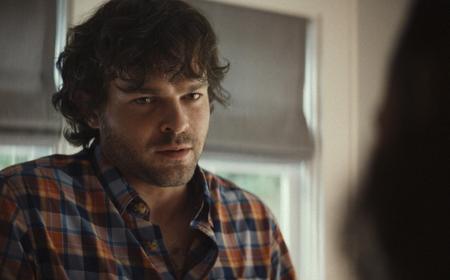
“Industry” viewers first met Henry Muck, a wealthy entrepreneur given to dark moods, on the show’s third season. Henry is the founder and CEO of green energy startup Lumi, and his company’s disastrous IPO drives the season’s overarching plot. Flailing investment banker Yasmin Kara-Hanani (Marisa Abela) works to salvage the IPO and becomes sexually entangled with Henry in the process.
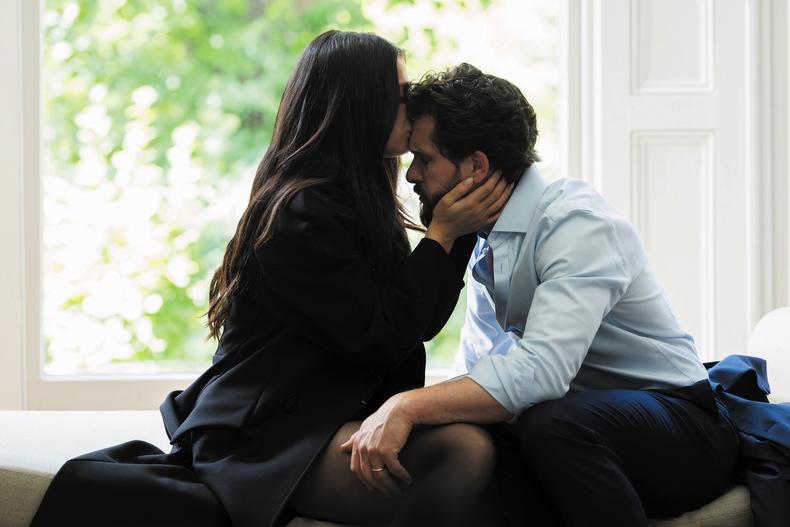
Marisa Abela and Kit Harington Credit: Simon Ridgway/HBO
The fourth installment elevates Henry’s role, only to devastatingly, deliciously tear him down. After multiple humiliations, the ne’er-do-well noble sinks into a deep depression. Yasmin, now Henry’s new bride, pushes him to restore their fortunes, installing him as the CEO of a shady financial app where he’s easily manipulated by amoral CFO Whitney Halberstram (Max Minghella).
Harington didn’t expect his character to last past Season 3, so he told the showrunners to throw everything at Henry on Season 4—and they did.
Exhibit A: “The Commander and the Grey Lady,” the second episode, feels more like a gothic play than a finance drama. Over the course of an hour, Henry spirals into a drug-fueled nervous breakdown behind the gates of his grand family estate.
“I felt like he had the capacity to go on that roller coaster, that he was a febrile and chaotic person, and that we could have fun with those elements of him,” Harington explains.
Henry’s onscreen battles with substance abuse also gave the actor a welcome opportunity to turn inward. Harington has openly discussed his own history with alcoholism. He’s sober now. The episode provided a safe space to explore those experiences through his craft.
“So often, addiction is shown as this absolutely terrible thing where people get to the rock bottom, and then they go to rehab, and they come out, and they’re good, and they’re solved,” Harington says. “And it’s not like that. It’s messy and mad and chaotic and fun. That’s why people stay in it for so long. But it is unsustainable and eventually will eat you alive, if you don’t deal with it.”
The character’s volatility often required big acting choices. Henry’s acid-tripping dinnertime tirade in Episode 2 kept Harington up at night as he agonized over just how far to go in the scene.
“He’s a powder keg ready to go off, but all they give you in the stage direction is ‘Enters the party,’ ” the actor says. “That’s like—what do you do? You’ve got the lines, you’ve got that it’s meant to be embarrassing, but what does it look like?”
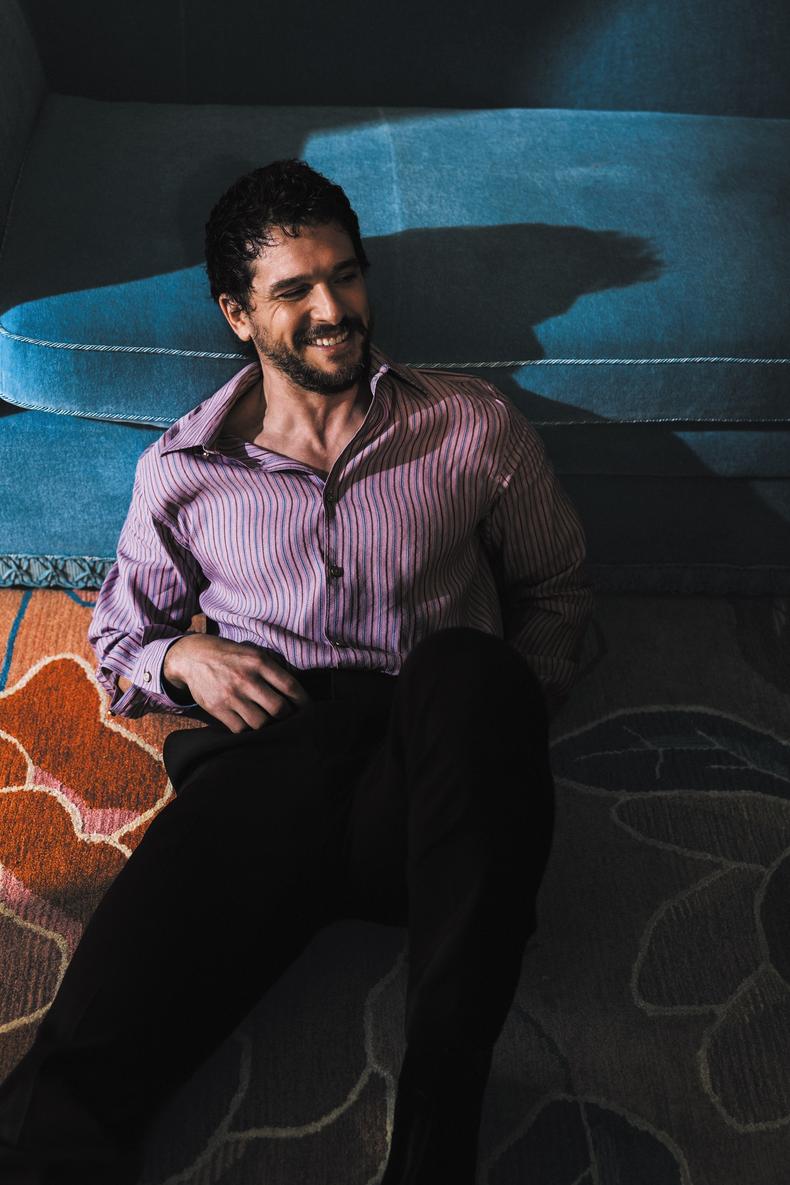
Harington played with countless deliveries. He started extreme and pulled back when needed, calibrating until Henry’s wildness felt rooted in reality. The almost-too-big performance brings to mind Al Pacino’s work in “Heat,” one of Harington’s all-time favorites.
In the sixth episode, “Dear Henry,” Whitney sinks his hooks deeper into the title character, taking his puppet CEO out to a gay bar and pushing him off the wagon. Minghella and Harington devilishly poke and prod at their characters’ wants and needs.
“I don’t think Henry is entirely a narcissist, but he’s definitely an egotist,” says Harington. “He loves being loved. He loves being the center of things.”
Viewers watch Harington yank that attention-hungry thread until Henry’s key relationships unravel. The actor sees Yasmin and Whitney as the emotionally stunted baronet’s enablers, likening them to “the world’s worst parents.”
The story also required Harington and Abela to cut open their TV marriage with a thoroughness rarely seen outside of autopsies. Henry and Yasmin engage in power-couple scheming, scream devastating abuse at each other, and make love on the hood of a sports car.
Harington gushes about the talent and generosity of his onscreen spouse and most frequent scene partner.
“I feel like she could have good chemistry with anyone,” he says. “With a plank of wood, she could have good chemistry.”
Whether his character will return for the fifth and final season remains to be seen. In the meantime, Harington’s got more stories to tell—including one long-brewing “Tale.”
Next stop: the guillotine
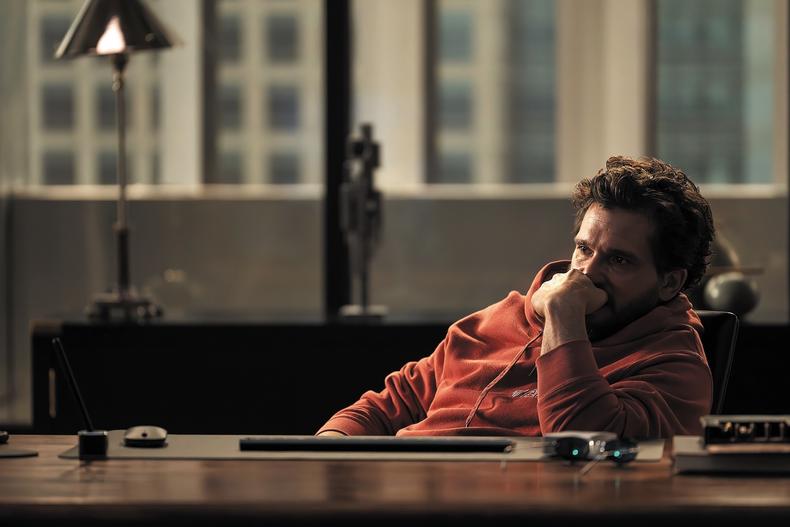
Kit Harington on “The Industry” Credit: Simon Ridgway/HBO
Harington believes he grew up—as a person and as an actor—at 33. That’s when he stopped drinking. With the monkey off his back, he started focusing on work in a healthier way. Then came his kids with Rose Leslie, his “Game of Thrones” costar whom he married in 2018.
“A combination of becoming a father and sorting my shit out—that made me go, OK, this is actually really enjoyable,” he says of his craft. “It doesn’t have to be torturous.”
Leslie recently asked him about his happy place. After rethinking his initial reply (a field bathed in sunshine), the answer became obvious—even if it sounds a little “wanky,” he admits. It’s in the theater, as the lights go down just before the play’s about to start, when the quiet descends. Everything else falls away.
“My head is like a washing machine. It is nonstop,” he says. “The only time I can quiet it is stepping onstage, or when they roll camera. It’s just about the scene.”
That sense of presence is what continues to draw Harington back to the stage. He tries to do a play every couple of years. It’s the best way to keep learning, he thinks, and always makes him a better actor.
Or, if he doesn’t have time for an acting tuneup on the boards, he could rewatch the work of his favorite performers: Edward Norton in “25th Hour” or Jared Harris on “Chernobyl,” perhaps. For a master class, though, he cites Emma Thompson in “Love Actually,” specifically the iconic moment when she receives that Joni Mitchell CD from her philandering husband.
“She goes up the stairs, and she cries, and she comes back down again. That’s got everything you need to know as an actor in it, just one moment,” he says.
It’s a quality Harington would soon need for his next alter ego, Sydney Carton—a man quietly frustrated in love.
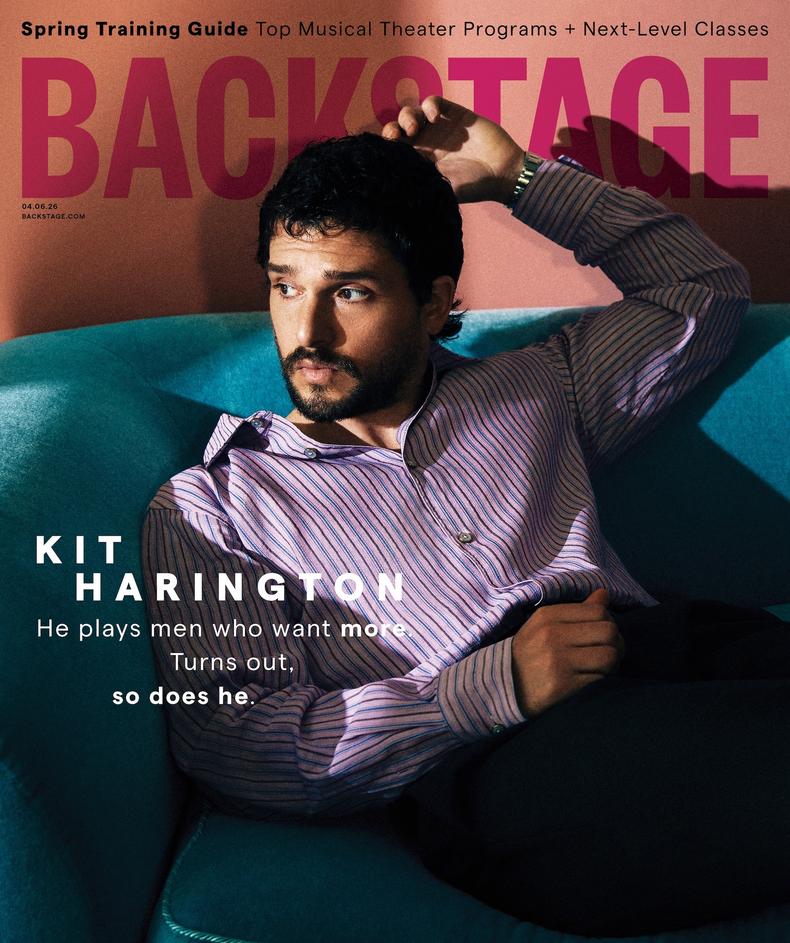 For years, the actor and his producing partner, Daniel West, have been pitching their adaptation of “A Tale of Two Cities,” Charles Dickens’ 1859 masterpiece set amid the French Revolution. The four-episode miniseries, filmed late last year, is currently in postproduction. A release date has yet to be announced.
Harington was dying to play the tragic Sydney, a brilliant but alcoholic barrister whose unrealized potential weighs on him, leading him to heroic sacrifice. While taking the place of romantic rival Charles Darnay (François Civil) under a guillotine, the character utters one of the most immortal lines in literature: “It is a far, far better thing that I do, than I have ever done; it is a far, far better rest that I go to than I have ever known.”
“It really is the Dickens of our time,” Harington says. “It’s this beautiful love story, but with the backdrop of a chaotic and dangerous world.”
Sydney, like Henry and Jon, lives in a canyon between his potential and his reality. Harington knows that there will always be things that feel out of his control as an actor, too.
But when he pushes through, the Worcestershire kid left off the cast list usually finds his own far, far better things.
This story originally appeared in the April 6 issue of Backstage Magazine.