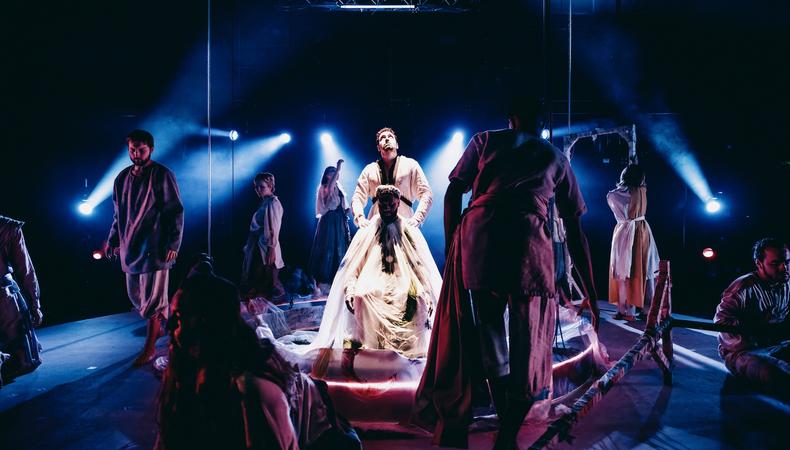
To train as an actor in London is to immerse yourself in the living history of theatre. From the legacy of William Shakespeare and his contemporaries to the city’s world-renowned stages, London offers a uniquely rich environment in which classical performance continues to thrive. Classical actor training in London, that is to say training focused on the works of the first Elizabethan and Jacobean periods, remains vivid, and is being reimagined by a whole new generation of actors.
It has been said that to train in the canon of Shakespeare provides a grounding for virtually any genre of performance, such is the range of the work, the space to interpret these 400-year-old texts, coupled with the precise rhythm of the language.
Classical actor training in the UK, particularly in London, has a global reputation for its rigorous and collaborative approach. Today, classical acting courses attract students from around the world, particularly those seeking to deepen their relationship with British and European texts from the era Shakespeare was writing in.
Intensive postgraduate, study abroad or summer courses complimenting undergraduate studies in conservatoire conditions offer demanding and deeply supportive student experiences. This training provides a foundation from which careers can be created through building confidence, unlocking instinct, and developing a strong technical foundation.
Performance sits at the heart of the training. Students regularly have the opportunity to showcase their skills and what they have learned on the stage, culminating in projects, which can include applying voice, movement and text learnings in front of an audience.
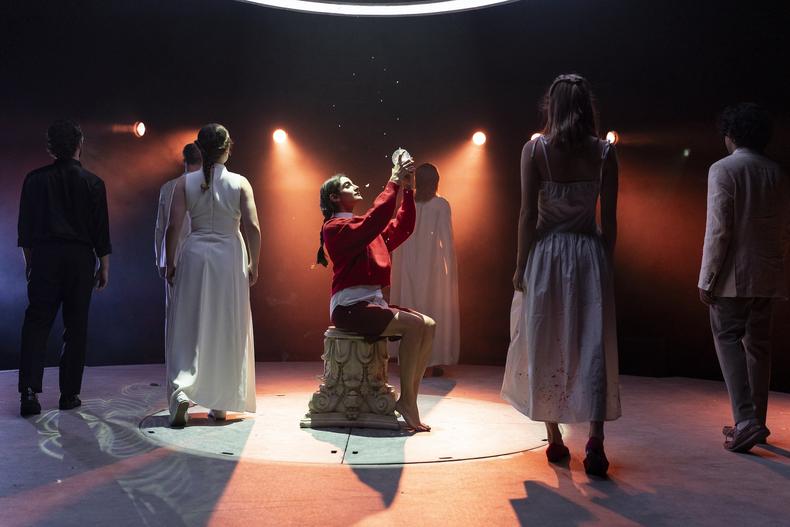
MA Classical Acting students performing The Winter’s Tale in LAMDA’s flagship Sainsbury Theatre. Credit: Sam Taylor
As an example, last year's LAMDA productions of King Lear, Measure for Measure, Love’s Labour’s Lost and The Winter’s Tale offered students the chance to inhabit some of the most demanding and rewarding roles in the classical repertoire.
Stage combat also forms a vital part of the actor’s toolkit, and some conservatoires invest in training the fundamentals of safe and compelling fight work of the period, learning key principles such as eye contact, distance and spatial awareness. Through partner-based exercises, they develop not only technical precision but a deep sense of trust and connection with their scene partners. From unarmed combat to working with weapons ranging from rapiers to halberds, and even the occasional light sabre, students can discover how physical storytelling heightens drama.
Approaches might differ. Those with the longest history of training in this arena blend discipline with discovery. Training is rooted in a playful ethos, encouraging actors to take risks, experiment and explore. It’s important to balance a rigorous approach with playfulness and relaxation. In classes, exercises and games – sometimes even without text or language – help students relate to and see the structure beneath the narrative.
Joseph Reed, who teaches stage combat at LAMDA says, “What we always come back to is storytelling. We aren’t training stunt people or professional fighters, we are training actors, so story is everything. We ask ourselves, ‘how can these basic skills contribute to our role as storytellers?’”
Training in London allows students to study classical texts in the same city where many of the plays were first performed. Even today, Shakespeare’s legacy in London endures, and students are encouraged to explore everything the city has to offer, from historic landmarks to electrifying West End shows. These experiences complement students’ training and serve to strengthen their engagement with the places, language and characters that sit at the heart of their classwork. By day, students could be immersed in textual analysis or recite an iconic Shakespeare scene; by night, they could watch it unfold on stage.
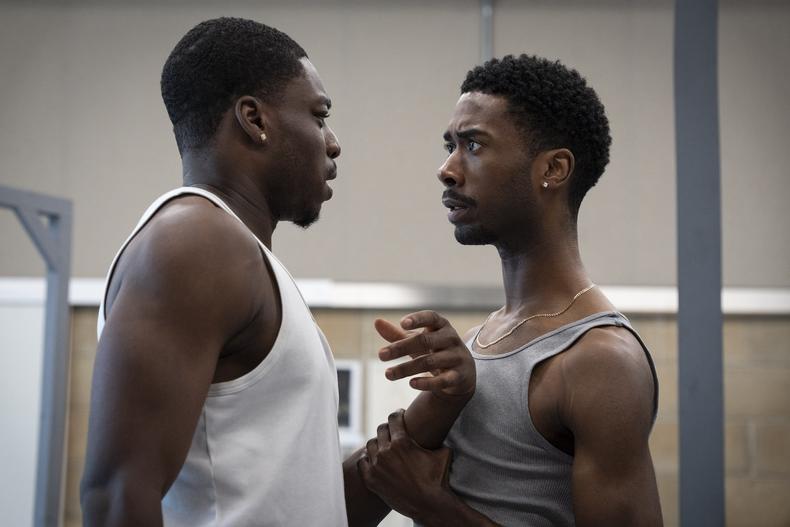
LAMDA’s MA Classical Acting students in rehearsals for their production of King Lear. Credit: Sam Taylor
Some conservatoires even support group visits to Shakespeare’s Birthplace and Anne Hathaway’s Cottage, both in Stratford-upon-Avon, where students see behind the curtain of Shakespeare’s life before he emerged as a playwright. In London, Shakespeare’s Globe blends modern performance with traditional staging, retaining many of the original conditions that viewers would have experienced in Shakespeare’s time, including offering standing tickets and holding performances in an open-air theatre. The context gained through these visits helps unlock meaning in classical texts and deepens students’ understanding of the world in which Shakespeare lived, providing a real enrichment to the learning experience.
2016 LAMDA graduate, Leah Harvey, forged a successful career on stage and screen – including a BAFTA-nominated role in Apple TV’s Foundation and London theatre roles including Small Island at the Royal National Theatre and As You Like It in the West End. For Leah, there is an enduring value to conservatoire training that endures, even when preparing for self-tape auditions. “I use classical text techniques within my everyday practice, especially when it comes to understanding any script,” Leah says. “The more I engage with these plays, the more I grasp just how much there is for an actor to mine in the words… My training provided me with a toolbox I'll never stop opening.”
Dr. Philippa Strandberg-Long, LAMDA’s Vice Principal of Actor Training and Drama School, sees the ensemble ethos promoted through LAMDA’s Classical Acting training programmes as an important part of preparing actors for the slings and arrows of a multi-hyphenate career. “Collaboration is at the heart of everything we do. We believe every voice matters and every role – on stage or off – is essential to the creative process.” Something the Lord Chamberlain’s Men, Shakespeare’s theatrical troop, would certainly understand.
To learn more about training in London and life at LAMDA, visit the LAMDA website.
Sponsored by LAMDA