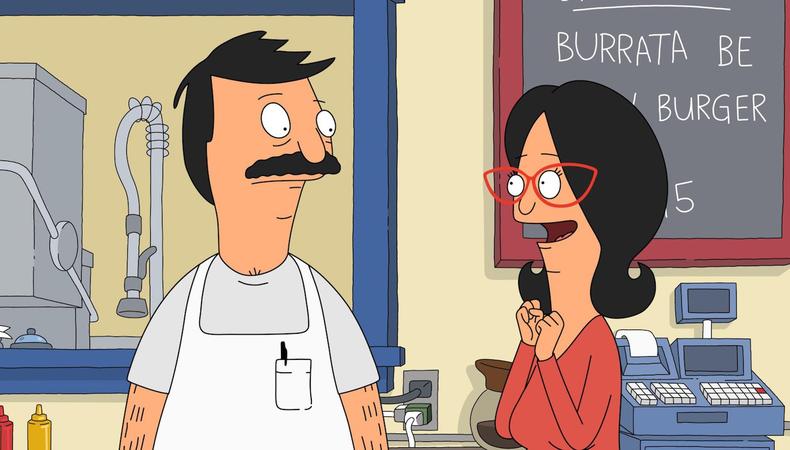
How does one convey emotion with only their voice? How does an actor build the sound of a character on beloved shows like “Bob’s Burgers,” “Archer,” or even “The Handmaid’s Tale.” Seven actors describe their experience perfecting the vocal art form.
Amber Nash, “Archer”
“I always have water with me, especially when I’m recording. I’ll do some vocal warm-ups, nothing too strenuous. Preparing for an audition is more about preparing character-wise than it is preparing myself physically as an actor. If I’m lucky enough to get an audition for an animated series that has a picture of the character, that’s so helpful for me. You get to see what they look like and you can decide what you think that character will sound like.
“Everybody has a different way that they got into voice acting, but one of the things I often tell people is you have to be so patient. With regular acting, there are so many people auditioning for a role. With voice acting, it’s even crazier because of technology. I can audition for a role from my closet, and so can many people all over the world. It can be a tough place to break in. To get into it in the beginning, you have to have a reel. A lot of people are like, ‘You can’t have a reel if you haven’t booked anything,’ but I think in the very beginning you have to put stuff on your reel, whether you’ve booked that job or not.”
Elisabeth Moss, “The Handmaid’s Tale”
“I sort of started to find June in that little dark studio and I got a chance to practice and explore who she was before I got on camera.... The voiceover was also extremely helpful in the sense that in a scene you’re always supposed to have some sort of inner life. You’re not supposed to just be standing there like a statue and for me, I had this beautiful voiceover written out in the script that I could memorize or I could listen to or say in my head as I was doing a scene, so it was kind of perfect for me as an actor because what’s better than that: having this sort of inner life written out for you on the page.... We treated, and I treated, every voiceover like it was a shooting day or an acting session.”
READ: The Skills + Traits Voiceover Artists Need to Be Successful
Lake Bell, “In a World”
“I had these things I wanted to discuss with myself about challenging feminist or sexist questions I had, or just cultural questions about the vocal trends.... I used this script to knead out a lot of ideas and thoughts and conversations and discussions. If a man is doing a car commercial, you hear a deep booming voice instructing you, ‘If you buy this car, you’ll be like me. This will be you. You will have my life.’ And when it’s a woman doing a voiceover for a car commercial, the instruction there is ‘If you buy this car, you’ll get me.’ It’s seductive. And that’s perhaps controversial but an interesting discussion.”
H. Jon Benjamin, “Bob’s Burgers”
“At the time, it was conceivable that [voice acting] could be a profession, but that was years of kind of not paying attention to that idea. I think there were certain people who were among that group of comedians and actors who I was hanging out with at that time who had their eye toward that. I didn’t, so I was sort of learning through them [what] this could be. My foray into comedy was to avoid getting a job. I just thought if I can continue doing this, and I’ll forage for food and figure it out.”
Pamela Adlon, “Better Things”
“For me, I feel that if anyone’s listening to this and wants any kind of pro tips, which is so valuable to me: If you have confidence it gets you. I know that’s a boring old adage, but it’s true. Literally, I could be in a booth with John Dimaggio, Billy West, Jeff Bennett, and Kenneth Michael Richardson. If you’re completely laying yourself bare and trying everything and not being self-conscious, you’re going to do as well as everybody. I feel that with voiceover, I’ve always said this: my voice is what got me in the door, but it’s really about my ear. You can hear something and you have a fine-tuned sense—I think that voiceover artists have the best ears.”
Lucie Pohl, “Hi, Hitler”
“For voice work, you really have to be aware of every little thing reading and you have to be aware of the fact that you only have your voice to convey emotion and anything [else] you want to convey. So the preparation is obviously getting your voice warmed up and making sure that you take care of your voice, but also just learning how, like, if you smile, how that makes your voice sound different than if you [scowl], how your voice sounds when it’s very heady compared to when you really let it blast out of your diaphragm.”
Phil Matarese, “Animals”
“I hate cartoon voices.... Inorganic is awkward, especially in comedy. Who wants to hear a fucking cartoon voice in a comedy? A lot of times people will come in with the big voice and we have to chip away at it and get to the truth of the person.”
Check out Backstage’s voiceover audition listings!