You’ve no doubt heard of the “male gaze”—it has, after all, been the backbone of art and entertainment since man first put pen or paint to paper. Conversation around the concept has had a particular resurgence as modern filmmakers aim to subvert long-held tropes. But what is it, exactly? And how can we work against its grip on Hollywood and beyond? Read on.
In the simplest of terms, it is the male point of view as shown onscreen. More specifically, it’s the way male storytellers write and frame women to service the desires and worldview of men. The male gaze has existed in the art world for centuries, but the term itself was coined by British film theorist Laura Mulvey in a 1973 essay, “Visual Pleasure and Narrative Cinema.” In it, she notes that the “male gaze projects its fantasy onto the female figure, which is styled accordingly.”
To understand the concept, you must first acknowledge the context: We live in a society that overwhelmingly prioritizes male wants and needs as the “average” point of view. (This is also known as patriarchy.)
 What Is the Bechdel Test?
 “Things as they are and as they have been, in the arts as in a hundred other areas, are stultifying, oppressive, and discouraging to all those, women among them, who did not have the good fortune to be born white, preferably middle-class, and, above all, male,” wrote art critic Linda Nochlin in her landmark essay “Why Have There Been No Great Women Artists?” “The fault, dear brothers, lies not in our stars, our hormones, our menstrual cycles, or our empty internal spaces, but in our institutions and our education—education understood to include everything that happens to us from the moment we enter this world of meaningful symbols, signs, and signals.”
We see this reflected in our film and television, which has largely been written and directed by heterosexual men, for other heterosexual men, telling mostly heterosexual mens’ stories. For example, a 2023 study by the USC Annenberg Inclusion Initiative looked at 1,600 top-grossing movies from 2007 to 2022 and found that only 88 were directed by women. Of the top-grossing films of 2023, the overall percentage of women in speaking roles was 35% (down from 37% in 2022), and the percentage of movies with female protagonists was 28% (down from 33% in 2022).
What does the male gaze look like?
The male gaze often reduces women to props and set dressing—objects of wish fulfillment and lust, no matter their status. Hallmarks include close-ups on body parts, framing that accentuates sexuality outside the proper context, and slow-motion camera movements (running, bouncing, etc.). A 2018 study conducted by Plan International and the Geena Davis Institute on Gender in Media found that female characters in a position of authority are more likely to be shown in revealing clothing (30% versus 7% for male characters). They are also nearly twice as likely to appear partially nude (15% versus 8%) and completely nude (2% versus 0.5%).
Watch the particularly male gaze-y choices made throughout this conversation scene in Michael Bay’s “Transformers” (2007).
The male gaze isn’t always overtly sexual (just often!). It also comes in the form of particularly helpless or passive female characters, as evidenced by centuries of the damsel in distress trope. It also sometimes looks like a manic pixie dream girl who exists solely to further a tragic man’s arc. And it can just mean a male creator fundamentally (but confidently) misunderstanding or misrepresenting an aspect of the female experience.
Think of Bryce Dallas Howards’ Claire Dearing keeping her high heels on throughout the entirety of Colin Trevorrow’s “Jurassic World” (2015).
How the male gaze impacts storytelling—and the world
The male gaze has had a huge impact on the world and storytelling, with both influencing the other in equal measure. Its ubiquitousness conditions women to adhere to a patriarchal conception of how to look and act. Similarly, it reaffirms to men that this is how women should be viewed and treated.
“A woman is always accompanied, except when quite alone, and perhaps even then, by her own image of herself. While she is walking across a room or weeping at the death of her father, she cannot avoid envisioning herself walking or weeping,” said influential critic John Berger, speaking on the effect of the male gaze in art. “From earliest childhood she is taught and persuaded to survey herself continually. She has to survey everything she is and everything she does, because how she appears to others—and particularly how she appears to men—is of crucial importance for what is normally thought of as the success of her life.”
 How to Become an Actress
 By placing women in subservient roles, it subliminally—or otherwise—endorses the idea that they are secondary creatures in the human hierarchy. A study that looked at award-winning and shortlisted Cannes Lions Film and Film craft creative work from 2006 to 2023 found that “female characters in 2023 creative work were portrayed as having less independence than male characters, particularly in regards to occupation and work status.”
How to subvert the male gaze
In short: Watch more film and television made by and for women! There are plenty of ways to get yourself acquainted with the female gaze. Directors like Agnès Varda and Céline Sciamma have done brilliant work that upends the typical narratives afforded women. Films like Varda’s “Cléo From 5 to 7” (1962) and “Lions Love (...and Lies)” (1969), or Sciamma’s “Girlhood” (2014), “Portrait of a Lady on Fire” (2019), and “Petite Maman” (2021) put the female gaze front and center in a way that subverts our more traditional (and therefore traditionally male) visual points of view. The more you watch and study, the more you will understand the difference.
“The voice of the male gaze is so loud, it can send a small representative to live inside your brain, to tell you what you should do, and how you should value yourself, and what actions aren’t worth causing a fuss over,” actor Betty Gilpin (“Glow,” “Mrs. Davis”) told Harper’s Bazaar. “I think that it’s up to us to kill that representative in our own brains. I know I’m trying to do it every day. Maybe our granddaughters won’t have it at all.”
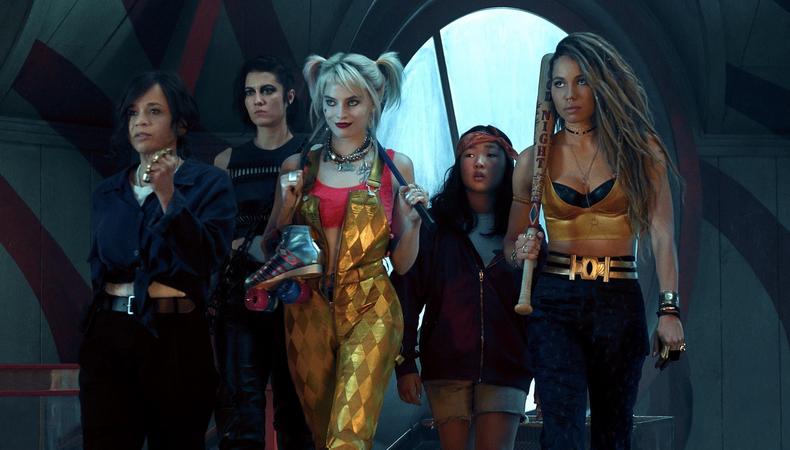
A good starting point is to compare the way Margot Robbie’s Harley Quinn is portrayed in David Ayer’s “Suicide Squad” (2016) versus Cathy Yan’s “Birds of Prey” (2020). The character’s not only more provocatively dressed and framed in the former, but her style and actions are all tied back to her relationship with Jared Leto’s Joker. (Her shirt throughout the film famously reads “Daddy’s Lil Monster.”) In “Birds of Prey,” the way Harley dresses and acts all represent her newfound independence.