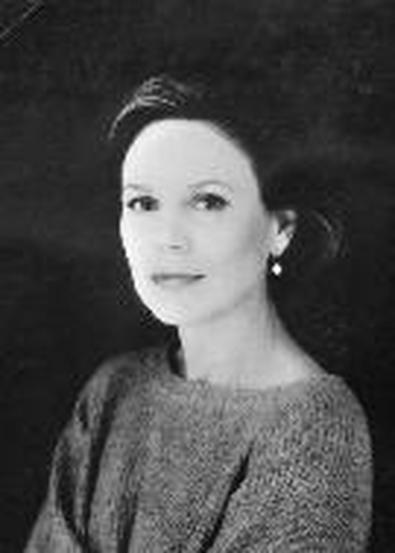
Actress Marthe Keller believes the time is ripe for "Judgment at Nuremberg," an emotionally charged play that examines the culpability of German judges who sent hundreds, if not thousands, of innocent people-gypsies, gays, but mostly Jews-to their deaths in concentration camps during the Nazi regime.
The play, by Abby Mann, slated to open on Broadway at the Longacre Theatre on March 26, is inspired by the legendary Nuremberg trial (1947), and is an adaptation of Mann's Oscar-winning movie (1961). The National Actors Theatre (NAT), founded and headed by Tony Randall, mounts the production.
The material is not unfamiliar to many theatergoers, and Keller knows there is the possibility that some individuals may respond with a collective "Haven't we heard this all before? It's enough."
"I think there might have been more of that reaction 20 or 30 years ago when we were closer to the actual event," says Keller, a Swiss-born, attractive, middle-aged actress who is speaking to us over the phone. She is of German descent and talks with a marked German accent.
"But I feel that now enough time has passed to look at that period again," she continues. "There's distance and the millennium is a good time for a wake-up call to learn from the past and make sure the same atrocities do not happen ever again."
Keller plays Mme. Bertholt, the widow of an executed German officer; she is tormented by his death and convinced that his sentence was immoral. The play itself-more than the character of Mme. Bertholt-drew Keller to the project. Indeed, as she tells it, she felt compelled to appear in this work for a variety of profound and complex reasons, not least the ongoing anti-Semitism in Germany today among the young on the far right, and the lingering anti-Semitism among some of the elderly.
TOO MUCH LOVE IS A DANGEROUS THING
Keller is keenly aware of her German heritage and the long dark shadow it casts, no matter how unfairly. And she knows that her German accent-which clearly gives the play authenticity-may unwittingly set off alarm signals among a New York audience that is, by her own estimation, largely elderly and 90% Jewish.
"This is very hurtful to me, but of course I was uncomfortable in the beginning to come here and be in a play like this. I know some of the audience will see me with my German accent playing a character who was the wife [and defender] of a German officer. And some of the audience will have a reaction. One of the reasons you want to be an actress is that you want to be loved...
"Look, I was not even born at the time. I did nothing wrong. And even those who were alive were not all monsters," she asserts. "My father left Germany in 1930 because he knew there was something terribly wrong. He always said, "Love of fatherland is great. But too much love is a dangerous thing.' " She pauses to add, "If he knew I was doing this play, he'd be very proud of me."
A passionate advocate of humanistic ideals, Keller insists that to this day, she is uncomfortable in Germany and Austria. "There are some wonderful things there, but something of the past remains. I don't know what it is, but I have never been able to stay in those countries for too long."
Keller has spent the last 30 years of her life living in Paris (she speaks four languages). Even in France, she almost refused to perform the title role in Shaw's "St. Joan" one night because the anti-Semitic fascist Le Pen was scheduled to be sitting in the first row.
"I was under a lot of pressure because, if I refused to go on, the whole cast would have been out of work that night. And maybe I was giving Le Pen too much significance. It was not as though I was going to pose for pictures with him. It was a real conflict for me. As it turned out, he never showed up anyway."
Keller, who has appeared in all media, is perhaps best known for her movie work. Among her film credits are "Marathon Man" (with Dustin Hoffman), "Black Sunday" (with Al Pacino), "Fedora" (with William Holden), and "Formula" (with Marlon Brando). She also directs opera; indeed, she recently won the Critic's Prize in Paris for her production of Poulenc's "The Dialogue of the Carmelites."