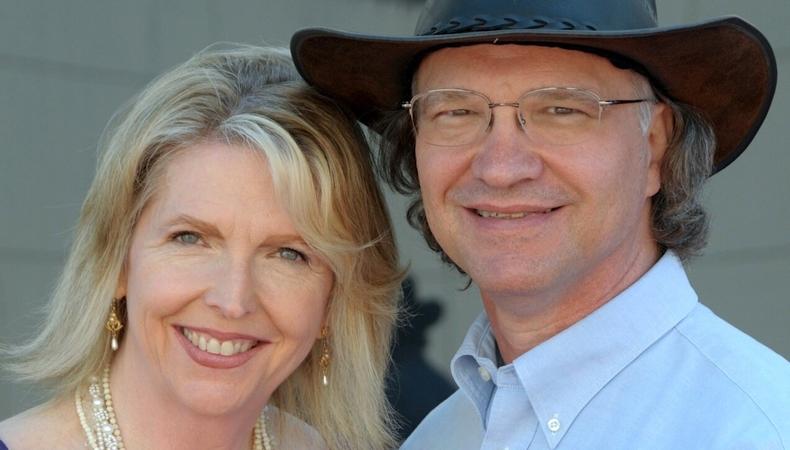
The transformative power of compassionate, intimate relationships drives husband-and-wife Dallas filmmakers Mike Henricks and Melody Brooke. It’s the cornerstone of Mike & Melody Films, which melds Henricks’ technical expertise with Brooke’s background as actor, acting coach, and marriage and family therapist.
“Our mission is to change the way people see the people around them,” explains Henricks.
Shining a new light on men is the hallmark of their work. “The media shows men as monsters or imbeciles,” Brooke observes. “We don’t get to see the inside of a man, his heart.”
In their films, “everyone gets to be more human,” Henricks adds. Their scripts do that by encouraging snap judgments, then supplying information that changes them. “The key to changing our conflicts,” he says, “Is to move people out of pigeonholed roles into something that’s more complex.”
Stories use a model that Brooke developed in her counseling practice, which also formed the basis of her four books. “The model is about how our brains work in conflict and how they drive us to behave in ways that could create more conflict and more distance,” she explains. The model—and the films—explores “how to begin to shift out of our own survival egocentric position and into a more compassionate place.”
Their projects usually start with a long road trip, a rough idea and “a whole bunch of 3x5 cards,” says Henricks. “As we’re going down the road we start framing out what the events are that will carry the story.”
Henricks works behind the camera, while Brooke handles the production side and sometimes acts. They collaborate on, and often trade off, writing, editing, and directing.
“Film school people don’t necessarily technically like the way we do things,” Henricks notes, “But it has an impact on the people watching.” Brooke chalks that up to multiple factors. The couple’s communication with the cast is unusual, both because of her background and because they are the writers and know what each line means. She also credits Henrick’s moving the camera in a way that propels the emotion of the story.
Their shorts have tackled a spectrum of relationship issues: mother/daughter, nonromantic male/female, the impact of war on families, even domestic violence. Their first feature, “Promises,” centers around relationships with parents and friends over the years.
Advice to aspiring filmmakers? “The most difficult part is finding the people who can share your vision, get behind you 100 percent and trust you,” says Brooke. “Because if you don’t, you’re going to have people sabotaging you, consciously or unconsciously.”
According to Henricks, “You’ve got to have something you’re trying to say.” That has to come through in everything—the script, the lighting, the camera, wardrobe, what the actors do and how they approach it. “If you’re just trying to make a movie,” he advises, “Go do something else.”
Inspired by this post? Check out our Texas audition listings!